What Are the Top Water Purification Systems for Home?
Choosing among water purification systems for home begins with one practical question: what is actually in your water? Municipal supplies, private wells, and rainwater systems can present very different risks. A clear glass does not prove safety.
The WHO/UNICEF Joint Monitoring Programme reported that 2.2 billion people lacked safely managed drinking water in 2022. In developed markets, the concern may be narrower. Lead, PFAS, chlorine by-products, nitrates, and microbial contamination still require different treatment methods. The U.S. Environmental Protection Agency recommends testing water before selecting a household treatment device. That advice is often ignored.
Water-treatment scientist Dr. Joseph Cotruvo has emphasized, “There is no one-size-fits-all solution to water treatment.” That principle should guide every buying decision. Activated carbon may improve taste and reduce some chemicals. Reverse osmosis can remove many dissolved contaminants, but it wastes water and needs filter replacement. Ultraviolet systems can address microorganisms, yet they do not remove metals or salts.
Certification matters. NSF/ANSI standards help verify whether a product addresses specific contaminants, rather than offering vague “purification” claims. Look for documented performance, replacement costs, flow rate, and independent testing. A filter sitting beneath a kitchen sink is only useful when maintained properly.
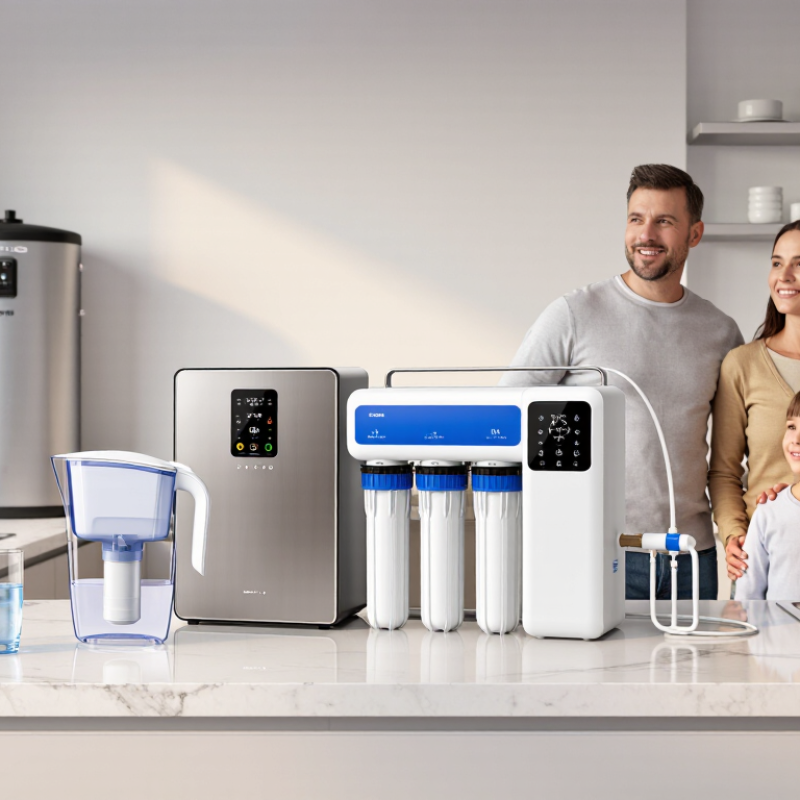
This guide compares leading water purification systems for home use, including countertop filters, under-sink units, reverse osmosis systems, and whole-house solutions. The “best” option may be less impressive than expected. It should match your water report, household size, budget, and maintenance habits.
Types of Home Water Purification Systems
What Are the Top Water Purification Systems for Home?
Types of Home Water Purification Systems
Choosing a home water purification system starts with the water problem, not the device. A laboratory test can reveal lead, bacteria, hardness, nitrate, or unpleasant odors. Taste alone is unreliable. It can even hide a serious issue. Activated carbon filters help reduce chlorine, many organic chemicals, and muddy flavors. They are simple, affordable, and often installed under the sink. However, carbon does not reliably remove dissolved salts or every microorganism. Filter replacement matters. An old cartridge may become a dirty hiding place.
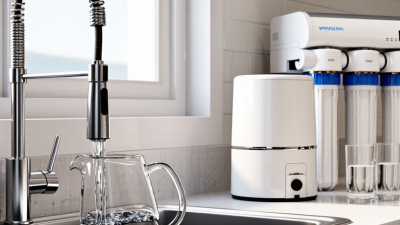
Reverse osmosis systems push water through a very fine membrane. They can reduce salts, some metals, fluoride, and several other contaminants. These systems usually need prefilters, a storage tank, and regular servicing. They also waste some water and remove minerals that affect taste. A remineralizing stage may help, but it is not automatically necessary. Ultraviolet purification uses light to inactivate many bacteria and viruses. It works best with clear water and electricity. UV does not remove chemicals or sediment. That limitation is easy to overlook.
Distillation boils water and collects condensed vapor. It can reduce many dissolved contaminants, but it uses energy and may produce flat-tasting water. Whole-house sediment filters protect plumbing from sand and rust. Whole-house carbon units can improve bathing water and household odors. For private wells, combining sediment control, carbon, and UV may be practical, but testing should guide the design. I would not choose a system from marketing claims alone. Check flow rate, maintenance records, independent performance data, and local water reports. A perfect system on paper can fail when nobody changes the filter.
Key Factors for Choosing a Home Water Purifier
Choosing a home water purifier starts with the water entering your house. A clear glass does not reveal dissolved metals, microbes, or excess minerals. Review a recent laboratory report or arrange independent testing before buying equipment. Test results should guide the treatment method, not attractive claims. Activated carbon can reduce chlorine, odors, and some organic compounds. Reverse osmosis can remove many dissolved contaminants, but it may waste water and require storage space. Ultraviolet treatment targets microorganisms, yet it does not remove chemicals.
Capacity matters in daily life. A family of four may need faster flow than a single resident. Check the purifier’s rated output, filter life, replacement cost, and pressure requirements. Measure the cabinet carefully. I once focused on filtration performance and overlooked the space needed for a separate storage tank. That mistake made installation awkward.
Look for transparent testing evidence from an independent laboratory and standards recognized in your region. Certification should match the specific contaminant claim, not merely the product category. Ask who services the system and how quickly replacement filters arrive. Maintenance is part of purification. A neglected filter can become a hygiene concern, even when the original system performs well. Keep a simple replacement record on the cabinet door. It sounds minor. It helps. Also consider wastewater, electricity use, noise, and emergency operation during outages. The most advanced system may be unsuitable if nobody maintains it consistently.
Installation, Maintenance, and Operating Costs
Choosing a home water purification system starts with installation, not advertising claims. Under-sink systems usually need a shutoff valve, drain connection, and a nearby electrical outlet. Whole-house units need more space, a bypass line, and sufficient water pressure. A licensed plumber should confirm these points before purchase. The U.S. Environmental Protection Agency’s WaterSense guidance notes that conventional reverse-osmosis systems may waste about five gallons for every gallon treated. Efficient models reduce that burden, but rarely eliminate it.
Maintenance creates the real long-term difference. Sediment and carbon cartridges commonly require replacement every six to twelve months, while membranes last longer under suitable water conditions. The Centers for Disease Control and Prevention advises following filter replacement instructions and maintaining treatment devices carefully. A neglected filter can restrict flow and reduce confidence in water quality. Keep a dated replacement note near the cabinet. Simple, but often forgotten.
Operating costs include cartridges, electricity, wastewater, testing, and occasional service calls. EPA WaterSense criteria limit reverse-osmosis wastewater to 2.3 gallons or less per gallon treated for qualifying systems. That figure can materially reduce utility use. Still, actual costs depend on local water hardness, usage, and filter prices. Testing untreated and treated water through an accredited laboratory adds useful evidence. I would not trust a low purchase price alone; installation surprises and missed maintenance can quietly cost more. Some homes may need only targeted filtration, not a complex system.
Top Water Purification Systems for Home: Installation, Maintenance, and Operating Costs
Typical U.S. household cost estimates for non-branded residential systems. Actual prices vary by water quality, household size, installation complexity, filter life, and local labor rates.
How to read the chart: Under-sink reverse osmosis systems generally provide strong drinking-water purification at a moderate installation cost. Whole-house carbon filtration covers more water outlets, while ultraviolet systems are useful for microbial control but require regular lamp replacement. Maintenance includes filters, membranes, lamps, and related consumables; operating cost estimates cover typical electricity and water use.
Comparing the Best Systems for Different Household Needs
What Are the Top Water Purification Systems for Home?
Choosing a home water purifier depends on water quality, household size, and daily habits. Test first. A recent municipal water report can reveal chlorine, lead risks, or hard-water concerns. Private well owners need certified laboratory testing because underground conditions can change after heavy rain.
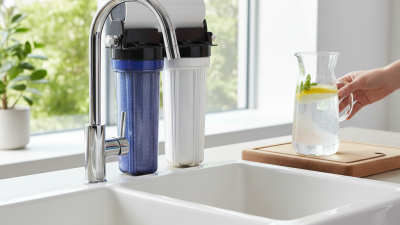
For a small apartment, a countertop or pitcher filter may reduce unpleasant tastes and odors. It needs frequent cartridge replacement, though, and forgotten filters can weaken performance. Space matters. An under-sink carbon system suits families wanting better-tasting drinking water without losing counter space.
It usually produces less wastewater than reverse osmosis, but it may not remove every dissolved contaminant. Check the product’s independently verified performance claims.
Homes with high mineral content may benefit from reverse osmosis at the kitchen tap. It can improve drinking water, yet it requires storage space, maintenance, and proper drainage. For bacteria concerns in treated well water, ultraviolet treatment may help, but it does not remove sediment or chemicals. Whole-house filtration is more suitable when every shower and appliance needs protection. It costs more and demands careful sizing.
I have seen homeowners focus on impressive filtration claims while ignoring installation quality. A poorly fitted system can leak beneath a cabinet. Keep test records, replace filters on schedule, and reassess the setup when water taste, pressure, or household needs change.