What Are China’s Top 10 Water Filters for Home?

Choosing a water filter for home is not about buying the most expensive unit or trusting a bold label. It starts with the water itself. A family in an older apartment may worry about lead from plumbing, while a rural household may need to check for different contaminants. Taste matters, too. A glass that smells of chlorine can make the issue feel urgent, even when testing is the better first step.

Water-quality researcher Dr. Shane Snyder’s work supports a practical principle: match treatment to identified contaminants, rather than broad marketing claims. That distinction matters. Look for independent certification, such as NSF/ANSI standards relevant to the specific contaminant, and check replacement costs and filter capacity. A product certified for one substance may not reduce another. Read the label carefully.

This guide compares ten water filters available to home users in China, including countertop, under-sink, pitcher, and whole-house options. It will consider filtration claims, maintenance, installation, and the needs of different households. Some systems suit renters; others require space beneath a sink and regular cartridge changes. Small details count.

No single model fits every home. Even this comparison has limits: local water quality varies, and product specifications can change. Use it as a shortlist, not a substitute for testing or checking current certification. The right choice should make everyday water safer and more convenient, without promising more than the evidence supports.
What Are China’s Top 10 Water Filters for Home?

How Home Water Filters Work and What They Remove

A home water filter is a treatment device, not a universal purifier. Sediment cartridges trap visible particles such as rust and sand. Activated carbon adsorbs chlorine, odors, and some organic chemicals, improving taste. Reverse-osmosis membranes reduce many dissolved salts and metals, while ultraviolet units inactivate microbes but do not remove chemicals. Different jobs.

The World Health Organization and UNICEF reported that 2.2 billion people lacked safely managed drinking water in 2022. That figure describes global access, not the risk in a particular tap; local water reports and testing matter more when choosing a filter. NSF/ANSI standards help clarify performance: Standard 42 covers aesthetic effects, Standard 53 addresses specified health effects, and Standard 58 applies to reverse osmosis systems. Check the exact contaminant-reduction claim, not just a filter’s general certification. A clear glass proves little. I used to treat better taste as proof of safer water; that was a weak assumption. Filters also need timely cartridge changes, and some systems discard water or reduce beneficial minerals. A forgotten replacement cartridge can undermine the whole setup.

How to Evaluate China’s Leading Home Water Filter Brands

Comparing China’s home water-filter brands takes more than checking prices, polished taps, or “99% removal” claims. Start with the target contaminant: chlorine taste, sediment, lead, and dissolved salts require different treatment methods.

WHO/UNICEF’s 2023 Joint Monitoring Programme report estimated that 2.2 billion people lacked safely managed drinking-water services in 2022. That is a global figure, not evidence of unsafe Chinese tap water. Local utility reports and, where needed, a household water test offer better guidance.

Compare model-specific lab results with China’s GB/T 30307-2013 standard and relevant NSF/ANSI certifications. Check the tested contaminant, starting concentration, test conditions, and remaining level; a broad “purification rate” can hide important differences.

Record daily output, wastewater ratio for reverse-osmosis units, cartridge life, replacement costs, and local service access. Small details matter. Read maintenance instructions and published test methods, not just labels or countertop demonstrations.

Even a neat comparison table can overstate certainty; I would want the raw test conditions before ranking any product. Certification cannot predict every home’s water chemistry, and advertised filter life may assume ideal use.

Ten Water Filters for Chinese Homes: Features and Uses

China’s household water conditions differ by city, building, and source. A municipal supply may still pass through an aging apartment tank or pipe. Ten filter types offer different uses, not a universal ranking.

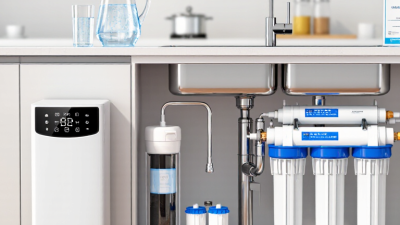
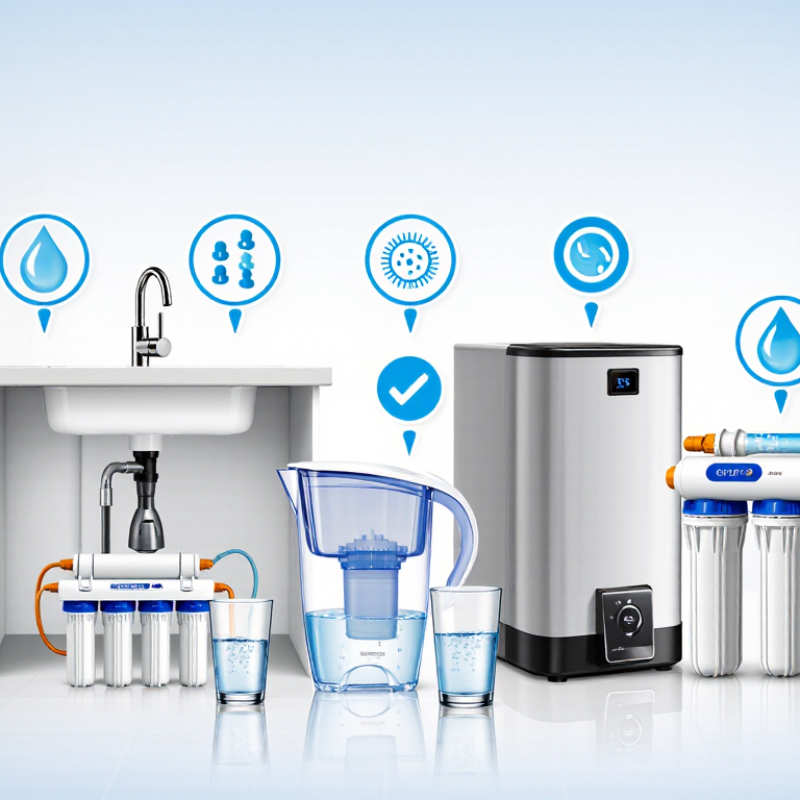
A sediment prefilter catches visible grit and rust flakes. A pitcher with granular activated carbon can improve taste and reduce some chlorine-related odors. Faucet-mounted carbon filters provide quick access at the sink. Under-sink carbon block systems offer higher capacity for drinking and cooking water.

Ultrafiltration membranes help remove fine particles and some microorganisms, but not dissolved salts. Ceramic filters trap particles and certain microbes; careful cleaning matters.

Small details matter.

Reverse osmosis systems reduce many dissolved substances, including salts, though they produce wastewater. Ultraviolet units can inactivate microorganisms when water is clear, but do not remove chemicals. Ion-exchange softeners reduce hardness that leaves scale on kettles and taps; they are not microbial protection. Countertop distillers separate water from many contaminants through evaporation, but use electricity and take time.

Choose based on a recent water test or reliable local water-quality information, rather than taste alone. Check replacement intervals, filter certifications, and whether cartridges are readily available. A filter can be poorly maintained, even when the technology is sound. That part is easy to overlook.

Comparing Filter Types, Costs, and Replacement Needs

Choosing among China’s ten common home filter styles means comparing more than the purchase price. Sediment filters catch visible particles, while activated-carbon units can reduce chlorine taste and odor. Their upfront costs are often modest, but cartridges may need replacement every few months, depending on water quality and use. Ceramic filters can be scrubbed in some designs, though their flow may feel slow. Ultrafiltration systems remove many suspended particles but do not reduce dissolved salts. Reverse-osmosis systems offer broader reduction of dissolved substances, yet usually cost more and send some water to drain. It depends.

Before buying, check local water-quality information and the filter’s independently verified performance claims. A kitchen tap supplied with treated municipal water may need different filtration from a home using a private well. Replacement schedules vary; follow the manual and watch for slower flow, taste changes, or a filter-life indicator. Count the annual cartridge cost, installation, and any replacement membrane—not just the box price. A low-cost unit can become expensive if its cartridges are hard to find. Not always. Keep a simple date label under the sink, and confirm compatible parts before ordering; I would not assume every advertised filter fits every household.

How to Choose, Install, and Maintain a Home Water Filter

Choosing among China’s top home water filters starts with knowing what is in your water. Check your local water-quality report; private-well users should arrange laboratory testing. The WHO/UNICEF Joint Monitoring Programme’s 2023 report estimated that 2.2 billion people lacked safely managed drinking water in 2022. That global figure is context, not proof that your tap water is unsafe. Match the filter to specific test results. NSF/ANSI 42 covers aesthetic effects such as taste and odor; NSF/ANSI 53 addresses specified health effects. Verify the exact contaminant claim, not just the standard number.

Installation affects performance. Follow the unit’s instructions, use the recommended fittings, and flush new cartridges as directed. After connecting an under-sink system, run water and inspect every joint with a dry tissue for leaks. Small details matter. Replace cartridges by the stated capacity or schedule, whichever comes first; sediment or unusual taste can signal a problem, but taste alone cannot confirm safety. Keep records.

Tips: Measure cabinet space before buying. Check whether your tap needs an adapter. Don’t skip filter changes, even when water still looks clear. Maintenance can feel easy to postpone; that is worth reconsidering. A filter only reduces the contaminants it is designed and certified to reduce.

Build your system. Protect your boat. Join the movement.

Compare Products
Talk to Sales