Top Water Purifier Systems for Home and Business

Clean water supports cooking, drinking, bathing, and daily business operations. Yet water quality can vary by neighborhood, building age, plumbing condition, and local supply. A reliable water purifier system should address those differences instead of promising one universal solution.

For homes, the right choice may be an under-sink filter, countertop unit, or whole-house system. A family with hard water may need scale reduction, while a household concerned about chlorine taste may prefer activated carbon filtration. Look for independently tested performance, clear replacement schedules, and suitable flow rates. Certification standards such as NSF/ANSI can provide useful guidance, but certification does not remove the need to check actual household conditions. Test the water first.

Businesses face different demands. A small café may need consistent water for coffee machines and ice makers. An office may prioritize low maintenance and dependable drinking stations. Restaurants, clinics, and property managers also need records, sanitation routines, and professional installation when required. Capacity matters. So does downtime.

This guide compares top water purifier system options for residential and commercial settings. It considers filtration performance, operating cost, maintenance effort, installation limits, and long-term reliability. Real experience often reveals details that product pages overlook, such as awkward filter access or slow refill speed. No system is perfect. Even this comparison has limits, because local water reports and user habits can change the result. Choose carefully, measure actual needs, and review performance after installation.

Top Water Purifier Systems for Home and Business

Water Purifier Systems: Types, Technologies, and Core Functions

Water purifier systems differ by contaminant, flow demand, and maintenance capacity.

The WHO and UNICEF Joint Monitoring Programme reported that 2.2 billion people lacked safely managed drinking water in 2022. That figure makes treatment selection more than a convenience issue.

Sediment filters capture sand and rust.

Activated carbon reduces chlorine, odors, and some organic chemicals.

Reverse osmosis removes many dissolved salts, but it also wastes water and needs pressure.

Ultraviolet treatment can inactivate microorganisms without adding chemicals.

Each technology has a core function.

Pre-filtration protects pumps and membranes from clogging.

Carbon improves taste and protects sensitive equipment.

Ultrafiltration retains many particles and microorganisms while keeping useful minerals.

Distillation uses heat, demanding more energy.

No single system is perfect. That is easy to forget.

For homes, flow rate, storage space, and filter replacement access matter. A small kitchen unit may struggle during simultaneous showers and cooking.

Businesses need higher throughput, continuous monitoring, and clear maintenance records.

The U.S. Environmental Protection Agency recommends testing source water before choosing treatment, because untreated assumptions create poor results.

Certification against relevant NSF/ANSI standards can strengthen purchasing confidence, but certification does not guarantee every contaminant is removed.

I would also inspect wastewater ratios, sensor calibration, and operator training. These details are less attractive than glossy specifications, yet they often determine reliability.

How to Assess Water Quality in Homes and Businesses

Top Water Purifier Systems for Home and Business

Assessing water quality should begin before choosing a purification system. Clear water is not always safe water. Taste and smell can offer clues, but they cannot identify every contaminant. Check the water source, plumbing age, storage tanks, and recent maintenance records. Municipal water reports can reveal common treatment results. Private wells need regular laboratory testing, especially after flooding or construction nearby.

A useful test may include pH, hardness, turbidity, chlorine, lead, and microbial indicators. The correct panel depends on local geology and the building’s water source. Collect samples with clean containers and follow the laboratory’s instructions carefully. A poor sample can produce misleading results. That detail is easy to overlook. Businesses should also test water at several points, such as kitchens, bathrooms, production areas, and drinking stations. Different pipes can create different results.

Use certified laboratories and keep dated records for comparison. If lead appears, test both incoming water and first-draw samples after overnight stagnation. If bacteria are detected, avoid guessing at the cause. Contact qualified water professionals and follow local public health guidance.

A purifier should match the verified problem, not a sales claim. Carbon filtration may improve taste and chlorine levels, while membrane systems can address certain dissolved contaminants. Disinfection equipment may suit microbial concerns. However, every system needs correct installation, replacement schedules, and performance checks. My initial preference might be the simplest system, but water chemistry can prove that assumption wrong.

Selecting a Purifier Based on Capacity, Contaminants, and Usage

Choosing a home or business water purifier starts with capacity, not appearance. A small household may need 150–300 liters daily, while a café or office may require far more. Check peak demand, not only average consumption. A purifier that works well at breakfast may struggle during a busy lunch period.

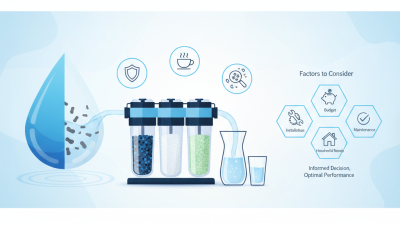
Contaminants should guide the treatment method. Sediment filters help remove sand and rust. Activated carbon can reduce chlorine, odors, and some organic compounds. Reverse osmosis may suit water with high dissolved solids, but it also wastes water and removes useful minerals. Ultraviolet treatment can address microorganisms, yet it cannot remove chemicals or sediment. Test the source water before choosing equipment. I once underestimated seasonal changes in supply quality, and the filter needed replacement earlier than expected. That mistake was avoidable.

Tips: Measure daily usage for one week. Review an independent water report or arrange laboratory testing. Match filter life with maintenance capacity, especially in a workplace. Keep a simple replacement log. Small details matter. Also check flow rate, storage-tank size, installation space, and electricity needs. A high-capacity system is not automatically better; it may cost more, occupy valuable space, and receive poor maintenance. For drinking water, verify that the purifier has credible safety testing and clear performance claims.

Top Water Purifier Systems for Home and Business

Select a purifier based on capacity, contaminants, and usage. The chart shows WHO guideline values for selected drinking-water contaminants.

How to use this information: Choose a purifier certified to reduce the contaminants found in your water test. For homes, prioritize adequate daily output and storage capacity; for offices, restaurants, and other businesses, also check peak flow rate, continuous operating capacity, and maintenance requirements. The values shown are health-based WHO guideline values, not purifier-removal percentages.

Installation, Maintenance, and Replacement Requirements

Choosing a water purifier for home or business is only the beginning. Installation must match incoming pressure, pipe size, drainage access, and electrical safety requirements. A certified technician should test the source water before selecting filtration stages. The WHO/UNICEF Joint Monitoring Programme reported that 2.2 billion people lacked safely managed drinking water in 2022. Treatment needs vary greatly by location.

Maintenance protects performance and hygiene. Replace sediment, carbon, or membrane elements according to measured flow, pressure, taste, and the manufacturer’s schedule. Do not rely on taste alone. The U.S. Environmental Protection Agency advises following product instructions and maintaining treatment equipment properly. The Centers for Disease Control and Prevention also warns that filters can require regular replacement and may not remove every germ. A neglected cartridge can become a hidden contamination point. I have seen maintenance plans fail because replacement dates were recorded, but pressure changes were ignored. That is an imperfect system.

Tips: Keep a service log near the unit. Record installation dates, filter changes, pressure readings, and unusual odors. Sanitize housings during scheduled service, using approved procedures. Test treated water after major plumbing work or long shutdowns. For businesses, keep spare cartridges available and train more than one employee. Replacement is necessary when flow drops sharply, leaks appear, seals harden, or testing shows declining performance. Do not force old fittings; a small crack can damage cabinets, flooring, or electrical components.

Top Water Purifier Systems for Home and Business - Installation, Maintenance, and Replacement Requirements
System Type Typical Use What It Can Treat Installation Requirements Routine Maintenance Typical Replacement Guidance
Under-sink reverse osmosis (RO) Point-of-use drinking and cooking water in homes, offices, and small food-service areas. Can reduce many dissolved salts and selected contaminants, depending on the system design and certification. Usually includes sediment and carbon prefilters. Requires space beneath a sink, a cold-water connection, a dedicated faucet, and a drain connection. Some models also need an electrical outlet. Check for leaks, monitor water quality or system indicators, and sanitize the storage tank and lines as directed. Prefilters and postfilters are commonly replaced about every 6–12 months. The RO membrane often lasts about 2–5 years; actual intervals depend on feed-water quality, use, and manufacturer instructions.
Whole-house sediment and carbon filtration Homes and businesses seeking treatment at the building’s incoming water supply. Sediment filters capture particles; activated carbon can reduce chlorine, taste, and odor. These stages do not remove every dissolved contaminant or disinfect water. Installed on the main water line, typically near the point where water enters the building. Requires suitable plumbing access and correctly sized flow capacity. Inspect the housing and connections, check pressure drop, and monitor for leaks or reduced flow. Sediment cartridges are often changed every 3–12 months, depending on sediment levels and use. Carbon cartridges may last around 6–12 months; larger media tanks can last longer and require service based on media type and water conditions.
Ultraviolet (UV) disinfection Homes, clinics, and businesses using a water source where microbial disinfection is required. UV light can inactivate susceptible bacteria, viruses, and protozoa when the unit is properly sized and operated. It does not remove particles, salts, or chemical contaminants. Usually installed in-line after suitable prefiltration. Water clarity and flow rate must be within the unit’s operating limits; an electrical supply is required. Clean the quartz sleeve as directed, check the lamp-status indicator, and ensure the water supply does not exceed the unit’s rated flow. UV lamps are commonly replaced about once a year, even if they still illuminate. Replace sleeves or other parts when indicated by the system instructions or when damaged or fouled.
Ultrafiltration (UF) Point-of-use or point-of-entry treatment where particulate and microbial barrier filtration is needed. UF membranes can reduce suspended solids and many microorganisms, depending on pore size and system validation. They generally do not remove dissolved salts. May be installed beneath a sink or on a supply line. Requires adequate pressure and, for some units, periodic flushing or a drain connection. Flush the membrane if required, check for leaks and reduced flow, and replace prefilters according to water conditions. Prefilters are often replaced every 6–12 months. Membrane service life varies widely with water quality, use, and cleaning; follow the system’s maintenance schedule.
Commercial reverse osmosis Restaurants, laboratories, hospitality facilities, and other businesses with higher or continuous water demand. Can reduce dissolved solids and selected contaminants when designed for the source water and application. Treatment performance depends on pretreatment, membrane selection, and operating conditions. Requires water-quality assessment, flow and capacity sizing, pretreatment as needed, a drain for concentrate, and usually electrical power. Installation and commissioning should be handled by qualified personnel. Track feed and product-water quality, pressure, flow, and recovery. Sanitize the system and inspect pretreatment, pumps, valves, and connections on a scheduled basis. Pretreatment cartridges may need replacement every few months to a year. Membranes are commonly serviced every 1–3 years, but replacement depends on performance data, feed water, and operating conditions.
Water softener with filtration pre-treatment Homes and businesses with hardness-related scale problems in plumbing, boilers, or appliances. Ion-exchange softeners reduce calcium and magnesium hardness. They are not general-purpose purifiers and do not, by themselves, remove most chemical or microbial contaminants. Installed on the main water line with a nearby drain and access to salt or regeneration supplies. A bypass valve and appropriate sizing are recommended. Check salt levels, inspect for salt bridging, and confirm that regeneration is operating properly. Clean the brine tank as needed. Resin can last many years but may require service or replacement based on water chemistry and performance. Salt is replenished as needed; any prefilter follows its own replacement schedule.
Planning note: Replacement intervals shown are typical estimates, not guarantees. Actual schedules depend on source-water quality, daily volume, system capacity, and operating conditions. Test the water and follow the system’s instructions; use appropriately certified treatment equipment for the specific contaminant and application.

Safety Standards, Operating Costs, and Long-Term Performance

Top Water Purifier Systems for Home and Business

Safety Standards, Operating Costs, and Long-Term Performance

Choosing a purifier starts with the water, not the product category. The WHO/UNICEF Joint Monitoring Programme reported that 2.2 billion people lacked safely managed drinking water in 2022. That global figure cannot predict a particular tap’s risks, but it underlines why local water reports and laboratory tests matter. A system certified to NSF/ANSI standards should be checked for the exact contaminant-reduction claims needed; certification does not mean it removes every contaminant.

Operating costs extend well beyond the purchase price. Add replacement cartridges, electricity, servicing, and, for reverse-osmosis units, water sent to drain. Keep a dated log beside the unit. A slow stream or overdue filter can signal a problem, but neither proves the water is unsafe. The U.S. EPA’s 2023 Drinking Water Infrastructure Needs Survey and Assessment estimated $625 billion in drinking-water infrastructure needs over 20 years. This is not a household purifier cost estimate; it does show why maintenance cannot be treated as an afterthought.

For homes and busy workplaces, compare expected filter life with actual daily demand, then confirm replacement parts remain available. A small café may need higher flow than a household, while a low-use office can still require timely sanitation. Check performance after installation and follow the maker’s service schedule. Small details matter. Even careful owners can miss a change in source water, so periodic testing remains a sensible check.

Build your system. Protect your boat. Join the movement.

Compare Products
Talk to Sales