China Top Water Purifier System Manufacturers and Suppliers

China has become a major manufacturing base for residential, commercial, and industrial water treatment equipment. Its suppliers produce reverse osmosis units, ultrafiltration systems, activated carbon filters, ultraviolet sterilizers, and integrated water purifier system solutions. However, factory scale alone does not prove product quality. Buyers should examine test reports, material traceability, membrane performance, production controls, and after-sales support.

Dr. Peter Gleick, a respected water expert and co-founder of the Pacific Institute, said, “The world’s water crisis is not about having too little water to satisfy our needs. It is a crisis of managing water so badly.” His observation remains relevant when evaluating purification equipment. A reliable system must respond to actual source-water conditions, not only impressive catalog claims. Hard water, sediment, chlorine, bacteria, and seasonal changes can affect performance differently.

Details matter. Look for clear flow-rate data, replacement-filter intervals, pressure limits, and documented contaminant reduction results. Suppliers with practical engineering experience can recommend suitable combinations instead of selling oversized equipment. Certification may help, but it should be checked against the intended market and application. No supplier is perfect. That is uncomfortable, but useful. A careful buyer should compare factory audits, installation records, warranty terms, and customer feedback before making a decision. This guide reviews leading Chinese manufacturers and suppliers through those practical, evidence-based considerations. The goal is not to promise flawless purification. It is to identify dependable partners that can deliver safe, consistent, and maintainable water treatment solutions.
China Top Water Purifier System Manufacturers and Suppliers

What Are Water Purifier Systems and How Do They Work?

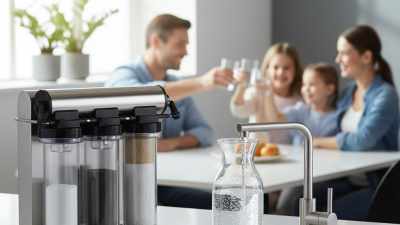
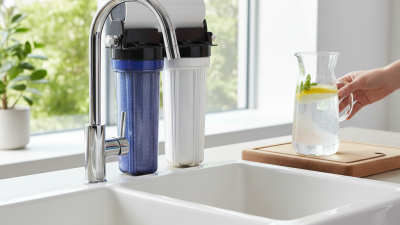
A water purifier system is a group of treatment stages that improves water quality. It does not simply make water “clean.” It targets specific impurities. In a typical household unit, a sediment filter catches sand, rust, and visible particles. An activated carbon filter reduces chlorine, odors, and some organic compounds. The system design depends on the source water and the intended use.

Water moves through each stage under controlled pressure. Reverse osmosis pushes water through a fine membrane, leaving many dissolved salts, metals, and microorganisms behind. The rejected water flows to a drain or recovery line. Ultraviolet treatment uses light to reduce viable microorganisms, but it cannot remove dirt or dissolved chemicals. Some systems add minerals after filtration. This can improve taste, although mineral balance requires careful control.

No system is perfect. A high-pressure rating does not guarantee better drinking water. In practical installations, blocked prefilters often reduce flow and shorten membrane life. Regular testing matters more than attractive specifications. Suppliers should provide clear flow rates, replacement intervals, test methods, and material information. Users also need to match the system with local water conditions. A unit designed for municipal water may perform poorly with well water. Small installation errors can create leaks or allow contamination after treatment. That detail is easy to overlook.

Key Types of Water Purifiers Made in China

China’s water purifier manufacturers supply several systems for homes, offices, factories, and hospitality projects.

Reverse osmosis systems remain widely used for drinking water. They reduce dissolved salts, heavy metals, and many unwanted impurities. However, they need electricity, regular membrane replacement, and proper wastewater control.

Ultrafiltration systems use fine membranes without removing most natural minerals. They suit municipal water with relatively stable quality.

Activated carbon purifiers improve taste and reduce chlorine, odors, and some organic compounds. Many models combine carbon with ultrafiltration.

Ultraviolet purifiers use light to control microorganisms, but they do not remove sediment or dissolved chemicals.

Ceramic filters can support basic treatment in smaller systems. Whole-house units often add sediment, carbon, and softening stages. Different water problems need different designs.

The best Chinese suppliers usually provide flow-rate data, filter-life estimates, installation drawings, and test documentation. Buyers should compare results against their own water analysis, not only product advertisements.

Check the housing material, replacement availability, pressure limits, and sanitation requirements. A practical factory inspection may also review leak testing and batch records. Small details matter.

No purifier is perfect. A high-capacity system can still perform poorly when filters are neglected or water pressure changes. Supplier claims also need independent verification, especially for contaminant reduction and service life.

How to Evaluate Chinese Water Purifier Manufacturers

China Top Water Purifier System Manufacturers and Suppliers

Evaluating Chinese water purifier manufacturers requires evidence beyond factory photographs. The WHO/UNICEF Joint Monitoring Programme reported that 2.2 billion people lacked safely managed drinking water in 2022. That gap increases demand, but it also attracts suppliers with weak verification systems.

Request current test reports for contaminant reduction, flow rate, recovery rate, and filter life. Match each claim with relevant standards, such as NSF/ANSI 42, 53, or 58, and China’s GB 5749-2022 drinking-water requirements. A certificate alone is insufficient. Check the testing laboratory, sample model, test conditions, and report date. During a factory audit, inspect injection-molding areas, membrane assembly, pressure testing, and final inspection records. Ask to trace one finished unit back to its raw-material batch.

Look closely at after-sales controls. Does the supplier record serial numbers, replacement-filter shipments, leakage complaints, and corrective actions? These details reveal operational maturity. The World Health Organization’s Guidelines for Drinking-water Quality emphasize risk management from source to consumer, not merely end-product testing. A supplier should therefore explain maintenance intervals and disinfection procedures clearly.

My own checklist would still miss something: long-term field reliability. A perfect laboratory report cannot prove five years of household use. Request pilot installations, independent user feedback, and periodic performance data. Be cautious with unusually low prices. They may reflect thinner housings, inconsistent membranes, or limited technical support. Clear documentation is less impressive than a showroom, but usually more valuable.

Leading Manufacturing Regions and Supplier Capabilities

China’s water purifier manufacturing base is concentrated in several distinct regions. Guangdong is known for complete supply chains, including plastic molding, pumps, valves, electronic controls, and final assembly. Zhejiang has strong capabilities in stainless-steel housings, faucets, fittings, and compact household systems. Jiangsu often supports membrane production, precision components, and automated testing equipment. Shandong also contributes to larger commercial and industrial filtration projects.

Regional strengths affect purchasing decisions. A supplier near component makers may shorten development time and reduce transport between production stages. Many experienced factories offer OEM and ODM services, engineering drawings, prototype samples, and small pilot runs. Their laboratories may test flow rate, pressure resistance, leakage, material safety, and cartridge performance. Ask for recent test records, not only presentation files. This detail matters.

Supplier capability varies sharply. Some factories manage injection molding and assembly internally, while others subcontract critical parts. Subcontracting is not automatically weak, but it requires traceability. Buyers should review quality-control checkpoints, batch coding, inspection frequency, and corrective-action records. Factory audits can reveal practical conditions: clean assembly benches, sealed packaging areas, calibrated instruments, and trained operators. A supplier may claim fast customization, yet tooling changes can still take weeks. Regional reputation helps, but direct verification remains essential. No cluster fits every project.

China Top Water Purifier System Manufacturers and Suppliers - Leading Manufacturing Regions and Supplier Capabilities

Manufacturing Region Primary Product Strengths Typical System Capabilities Common Production Advantages Quality and Compliance Focus Best Suited Applications
Guangdong Province Residential reverse osmosis units, under-sink purifiers, countertop systems, filter housings and replacement cartridges RO, ultrafiltration, activated carbon, UV and alkaline filtration configurations; smart monitoring and automatic filter reminders are widely available Large electronics, plastics and appliance supply chains; strong private-label and OEM/ODM support; efficient access to export ports Material traceability, leak testing, electrical safety testing, incoming inspection and production-line water-quality testing Households, apartments, offices, hospitality and retail water-filtration programs
Zhejiang Province Water dispensers, countertop filtration appliances, commercial drinking-water equipment and stainless-steel components Hot-and-cold dispensing, direct-flow RO, tank-based RO, carbon filtration and integrated dispensing systems Strong appliance manufacturing base, mature metalworking capabilities and broad component availability Food-contact material control, pressure testing, electrical testing, sanitation procedures and packaging inspection Homes, offices, schools, clinics, hotels and small commercial facilities
Jiangsu Province Commercial and industrial RO skids, water-treatment modules, membrane systems and stainless-steel process equipment Multi-stage pretreatment, membrane separation, dosing, disinfection, monitoring and customized water-treatment lines Engineering-oriented manufacturing, metal fabrication, automation integration and capacity for larger system projects Design documentation, pressure-vessel controls, component testing, commissioning procedures and process validation Factories, laboratories, food processing, hotels, hospitals and municipal or decentralized treatment projects
Shandong Province Commercial RO systems, packaged water-treatment plants, pretreatment equipment and industrial filtration assemblies Sand and multimedia filtration, softening, activated carbon, RO, ultrafiltration, ozone and ultraviolet disinfection Experience with agricultural, industrial and municipal water-treatment requirements; suitable for project-based customization Flow-rate verification, pump and piping inspection, control-panel testing, installation documentation and after-sales commissioning Industrial water reuse, agricultural facilities, food and beverage production, commercial buildings and packaged plants
Fujian Province Household filtration appliances, compact RO systems, pump assemblies, filter cartridges and small commercial units Compact RO, ultrafiltration, carbon filtration, remineralization and space-saving point-of-use designs Flexible production for small and medium batches, appliance assembly capabilities and convenient coastal logistics Pump durability testing, electrical safety, leak testing, filter-life verification and packaging quality control Residential kitchens, rental housing, offices, cafés and compact commercial installations
Shanghai and Yangtze River Delta Engineering-led purification systems, laboratory water equipment, commercial skids and integrated control solutions High-purity water, RO and deionization combinations, monitoring instruments, automation and customized process treatment Access to engineering talent, automation suppliers, testing services and advanced industrial infrastructure Process qualification, instrument calibration, documentation control, clean assembly and application-specific testing Laboratories, electronics manufacturing, pharmaceuticals, research facilities and high-specification commercial projects
Supplier Evaluation Criteria: Confirm source-water analysis, rated flow, recovery rate, membrane and cartridge specifications, applicable electrical and drinking-water approvals, factory quality-management procedures, spare-parts availability, installation support and warranty terms before placing an order.

Certifications, Quality Control, and Export Considerations

When selecting top water purifier system manufacturers and suppliers, verify certifications before discussing price. ISO 9001 can indicate a structured quality management system. Product-specific approvals may include NSF/ANSI standards, CE marking, or local drinking-water requirements. Confirm the certificate number, scope, issuing body, and expiry date. A logo on a brochure is not enough.

Experienced buyers should inspect factory controls, not only finished samples. Check incoming material records, membrane and housing specifications, pressure testing, electrical safety, and leakage inspection. Each unit should carry a traceable batch or serial number. Water-contact materials need documented safety evidence. Ask for recent test reports from recognized laboratories. Still, paperwork can hide weak execution. An excellent sample may not represent every production batch. Random third-party inspections provide stronger evidence.

Export planning requires practical details. Confirm the supplier’s experience with your destination’s customs documents and labeling rules. Review commercial invoices, packing lists, certificates of origin, and test documentation early. Packaging should protect fittings, cartridges, and control panels from moisture and impact. Request photographs before container loading. Clarify warranty terms, spare-part availability, installation guidance, and response times across time zones. Language differences can create small but costly errors. One missing voltage label may delay installation. Some suppliers also underestimate local water conditions, which can shorten filter life. A reliable partner should discuss feed-water testing, replacement schedules, and realistic performance limits instead of promising perfect results.

China Top Water Purifier System Manufacturers and Suppliers

Certifications, Quality Control, and Export Considerations

Selected World Health Organization guideline values for drinking-water contaminants provide useful reference points for purifier quality-control testing and export documentation. The values are shown on a logarithmic scale because the recommended limits vary significantly. Export suppliers should verify applicable destination-market requirements and product certifications, such as NSF/ANSI 42, 53, 58, 55, or 401, according to the treatment technology and performance claims.

Source: World Health Organization, Guidelines for Drinking-water Quality, fourth edition incorporating the first and second addenda.

Build your system. Protect your boat. Join the movement.

Compare Products
Talk to Sales