2026 Top Water Filter for Home Options What Should You Choose?
Choosing the best water filter for home use can be overwhelming. With the market full of options, making the right decision is essential. The quality of water we consume directly impacts our health and well-being. A good water filter for home ensures that you enjoy clean and safe drinking water daily.
In 2026, innovation in water filtration has advanced significantly. New technologies promise better purification and improved convenience. You may find options like reverse osmosis, activated carbon filters, or UV purification devices. Each type has its pros and cons, making your selection challenging.
Consider the specific needs of your household. Think about your water source, local water quality, and consumption habits. Some families might prioritize taste, while others may focus on removing contaminants. Reflect on your priorities, and ask yourself: what does clean water mean to you? With careful consideration, you can find the perfect water filter for home that meets your family's needs.
Top Considerations When Choosing a Home Water Filter in 2026
Choosing a home water filter in 2026 requires thoughtful consideration of several crucial factors. One must assess the specific contaminants present in their local water supply. Testing your water can unveil hidden issues. A filter's effectiveness can vary based on what it targets. Look for options that remove chlorine, lead, and bacteria, depending on your needs.
Tips: Always prioritize filters with clear certifications. This ensures you choose a reliable product. Understand the maintenance needs, too. Some filters require frequent replacement, while others may last longer. Evaluate your lifestyle to determine what works best.
Cost is another significant aspect. Quality filters often come at a higher price. However, cheaper options may not deliver satisfactory results. Don’t be swayed just by budget. Consider the long-term benefits of investing in a more efficient system. Reflect on how much clean water means to your health and well-being.
Consider the size and capacity of the filter. A compact filter may suit smaller households, while larger families might need more extensive systems. Remember, the right fit provides optimal convenience. Always think critically about your choices and watch for changes in water quality over time.
Types of Water Filters: Overview of Popular Options Available
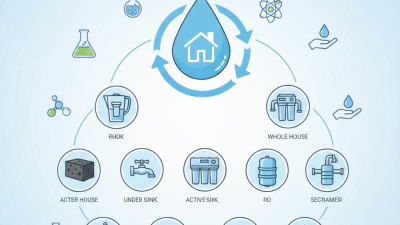
When selecting a water filter for your home, understanding the types available is crucial. There are several popular options to consider. Pitcher filters are simple to use. They can improve taste and remove some contaminants. However, they cannot handle large volumes of water.
Under-sink systems offer a more permanent solution. These filters connect directly to your plumbing. They provide high-capacity filtration and can remove a wider range of impurities. Installation can be tricky, and they take up cabinet space. It's easy to overlook regular maintenance.
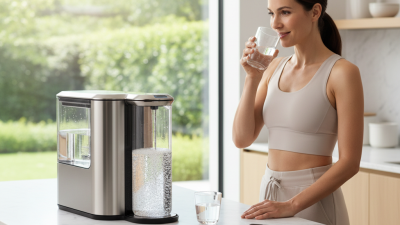
Countertop filters are another choice. They are portable and easy to install. While they improve water quality, their design might not fit every kitchen. It's important to evaluate your specific needs. The right filter varies based on water quality and daily usage. Consider these factors when making your choice.
Key Features to Look for in a Home Water Filter System
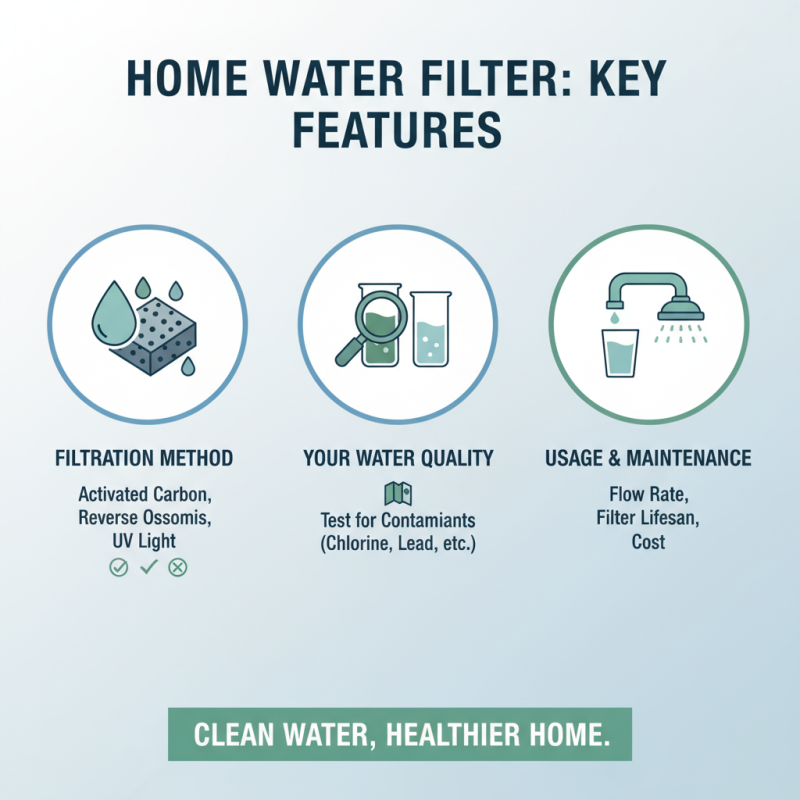
When choosing a home water filter system, there are several key features to consider. First, think about the filtration method. Many options use activated carbon, reverse osmosis, or UV light. Each method has its pros and cons. Knowing your water quality can guide your choice. For example, activated carbon filters are effective for chlorine and odors, but they may not remove heavy metals.
Another vital feature is the system's capacity. Some filters handle larger volumes of water, which is beneficial for bigger households. If your family uses more water, opt for a model with a higher flow rate. Flow rate is important in ensuring you have clean water on demand. Many families find themselves frustrated when filters slow down unexpectedly.
Don't forget to consider maintenance and replacement costs. Some systems require regular filter changes, which can add up over time. Be aware that a cheap filter might not be economical long-term. Installation ease is also a key factor. Some systems can be installed by the homeowner, while others may need a plumber. Sometimes, what seems like a perfect filter can become a burden if complicated. Keep these aspects in mind during your decision-making process.
Evaluating Filter Performance: What Do Water Quality Tests Reveal?
Choosing the right water filter for home use is crucial. The effectiveness of a filter can significantly impact your water quality. Recent industry reports indicate that nearly 70% of household water contains contaminants. These include lead, chlorine, and bacterial elements. Water quality tests reveal the concentration of these pollutants. They often surprise homeowners.
Filtration systems vary widely in performance. Some may remove 99% of contaminants, while others do less. A report from the Environmental Protection Agency highlights that many popular filters do not meet stringent removal standards. It's vital to choose one that has been independently tested. Often, homeowners overlook this aspect. They may assume all filters are equally effective, but that's not the case.
Some users experience sediment issues, even after filtration. This can arise from aging pipes or inadequate maintenance. Regular testing of your water can reveal ongoing risks. It's not just about drinking water; showering in contaminated water can also pose health risks. Many individuals remain unaware of these factors. A well-informed choice can lead to safer, better-tasting water at home.
2026 Top Water Filter for Home Options
| Filter Type |
Filtration Method |
Contaminant Reduction (%) |
Filter Lifespan (months) |
Price ($) |
| Activated Carbon |
Adsorption |
85% |
6 |
30 |
| Reverse Osmosis |
Membrane Filtration |
98% |
24 |
250 |
| Ultrafiltration |
Membrane Filtration |
90% |
18 |
150 |
| Ceramic |
Microfiltration |
95% |
12 |
50 |
| Ion Exchange |
Chemical Process |
80% |
24 |
75 |
Cost Analysis: Budgeting for Your Home Water Filtration Needs
When considering home water filtration, budgeting is crucial. The cost of systems can vary widely. Some options are very affordable, while others demand significant investment. It’s important to analyze your needs before making a choice.
Understanding your water quality helps. Is it hard water? Are there contaminants? Research local water reports. This can guide your selection and protect your investment. A basic filter might suffice for some households, while others may require advanced systems.
Tips: Look for systems that have low maintenance costs. Always consider long-term expenses. Sometimes, a cheaper filter may require more frequent replacement parts. Also, factor in installation costs. You might need a plumber if the system is complex.
Lastly, don’t forget energy usage. Some filters use electricity. This could affect your monthly bills. A holistic view of costs helps in the end. Don't rush your decision. The right choice can save money and improve health. Choose wisely.