Top IML Container Manufacturers for Global Buyers

Global packaging buyers are paying closer attention to in-mold labeling (IML). The reason is practical: IML containers can combine decoration, molding, and product protection in one streamlined process. Labels become resistant to moisture, scuffing, and temperature changes. That matters on supermarket shelves, warehouse pallets, and refrigerated transport routes.

Market evidence supports this shift. Grand View Research estimates that the global in-mold labels market reached approximately USD 1.2 billion in 2023, with continued growth expected through 2030. Smithers’ packaging forecasts also point to sustained demand for lightweight, recyclable, and digitally traceable packaging. These are forecasts, not guarantees. Buyer results still depend on mold design, resin selection, production volume, and regional compliance requirements.

Mark Searle, an IML packaging specialist formerly associated with MCC Verstraete, described the core advantage clearly: “The label becomes part of the container.” That principle sounds simple. It is not always simple in production. A capable Iml Container Manufacturer must manage label fit, electrostatic positioning, cycle time, ink adhesion, and food-contact documentation. Small errors can create visible seams, weak stacking performance, or costly waste.

This guide reviews leading Iml Container Manufacturer options for global buyers. It considers manufacturing experience, material capability, quality systems, export support, customization, and sustainability evidence. Samples deserve attention. A glossy catalog cannot reveal how a container performs after filling, transport, and repeated handling. The strongest suppliers provide test data, realistic lead times, and clear technical answers. Some comparisons remain imperfect, because supplier disclosures are not equally detailed. That limitation should be acknowledged before any purchasing decision.
Top IML Container Manufacturers for Global Buyers

What IML Containers Are and Why Global Buyers Use Them

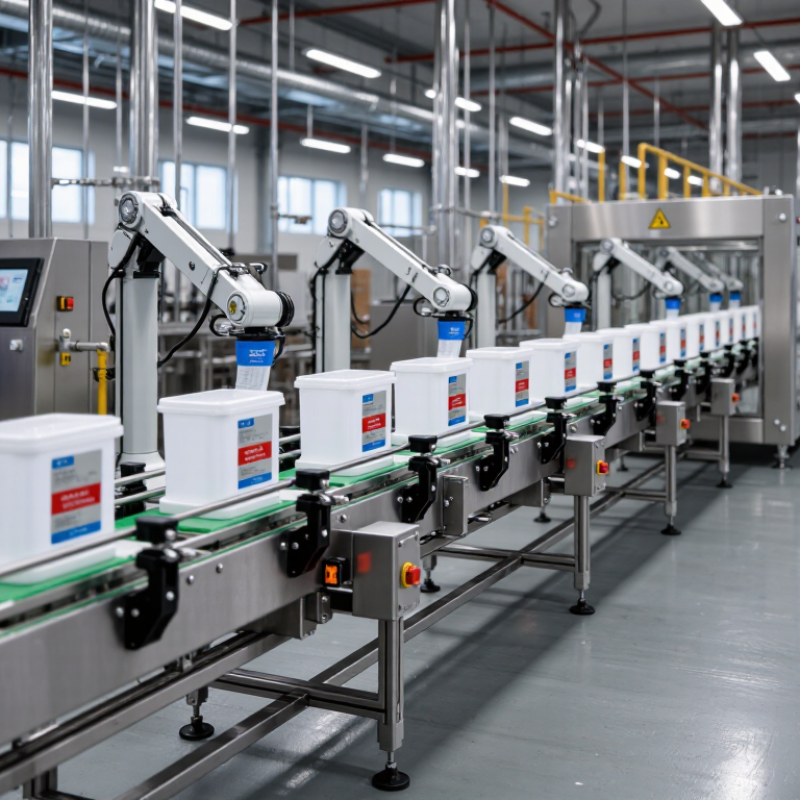
An IML container uses an in-mold label during the manufacturing process. The label is placed inside the mold before plastic is injected. Heat and pressure then bond it to the container surface. This creates a clean, durable decoration without a separate labeling step. The label does not easily peel, wrinkle, or trap moisture.

Global buyers choose IML containers for practical reasons. They support sharp graphics, consistent color, and efficient high-volume production. A container can leave the line ready for filling, packing, and distribution. This can reduce handling time and improve shelf presentation. Smooth surfaces also help with barcode scanning and product information. Small details matter.

The process is not flawless. Color matching may shift between production batches. A glossy sample can also hide problems seen under warehouse lighting. Experienced buyers request production samples, label adhesion tests, drop tests, and dimensional reports. They should confirm resin type, food-contact suitability, recycling guidance, and destination-market requirements. These checks reduce costly surprises. Packaging teams should also review stacking strength and temperature exposure during shipping. A container that performs well in one climate may deform in another. Clear specifications, traceable test records, and regular supplier communication make purchasing decisions more dependable.

Key Criteria for Evaluating IML Container Manufacturers

Top IML Container Manufacturers for Global Buyers

Key Criteria for Evaluating IML Container Manufacturers

Selecting an IML container manufacturer requires more than comparing unit prices. Experience with similar products matters. Review sample containers under real filling, stacking, and transport conditions. Check wall thickness, lid fit, label placement, and surface consistency. Small defects can become costly during high-speed production. Ask for documented quality procedures, inspection records, and traceable material information. Reliable manufacturers should explain their process without vague promises. Their technical team should understand mold design, injection parameters, decoration accuracy, and dimensional control.

Capacity deserves careful attention. A factory may show excellent samples but struggle with repeated orders. Request evidence of stable output across several production runs. Confirm equipment capability, maintenance practices, and backup planning. Lead times should include tooling, testing, production, and shipping. Communication is another practical test. Clear responses usually reveal stronger internal control. Still, no evaluation is perfect. A confident supplier can miss a detail, and buyers can overlook one too.

Tips: Test samples with your actual contents and filling process. Ask for a pre-production inspection. Compare measurements, not impressions. Verify food-contact or other applicable certifications through current documents. Keep approved samples for future production checks. Also, question unusually low quotations. They may exclude tooling, testing, packaging, or quality controls. Factory visits can help, but a visit alone does not prove long-term reliability. Combine observations with records, references, and measurable acceptance criteria.

Leading IML Container Manufacturers by Region and Capability

Top IML Container Manufacturers for Global Buyers

Leading IML Container Manufacturers by Region and Capability

Regional capability matters when selecting an in-mold labeling container manufacturer. European suppliers often emphasize premium surface finish, automated inspection, and lightweight designs. North American producers commonly support short lead times, high-volume food packaging, and domestic tooling service. Asian manufacturers frequently compete through scalable production, mold engineering, and flexible export capacity.

Industry data supports this regional view. Smithers’ packaging research identifies continued growth in lightweight rigid plastic packaging, driven by material reduction and automation. MarketsandMarkets estimates the in-mold labeling market will expand at a strong single-digit compound annual growth rate through the late 2020s. These figures are useful, but they do not replace factory-level verification.

Capability should be checked through measurable details. Ask about annual output, cavity count, cycle time, label positioning tolerance, and resin compatibility. A reliable plant should provide recent quality records, trial samples, and clearly defined corrective-action procedures. Inspect the production floor if possible. Look for clean label storage, controlled humidity, robotic handling, and calibrated vision systems. Small defects matter. A shifted label or warped rim can stop an entire filling line. Cost remains important, yet the lowest quotation may hide slower tooling support, higher scrap, or uneven color control. That is where many purchasing evaluations become too optimistic.

Top IML Container Manufacturers for Global Buyers

Leading IML container manufacturing regions compared by practical capability across food packaging, household care, personal care, and industrial applications. The index reflects commonly reported industry strengths in automation, material processing, decoration quality, and production scalability; it does not represent any individual company.

Capability index: 0–100. Higher values indicate broader manufacturing capability and application coverage for IML containers.

Comparing Product Quality, Customization, and Production Capacity

For global buyers, IML container quality starts with material control, mold accuracy, and label adhesion. A reliable manufacturer should show drop-test results, wall-thickness data, and batch traceability. These details matter when containers face hot filling, cold storage, or long-distance shipping. Smithers reports that packaging performance and lightweighting remain major investment priorities through 2028. Thin walls alone are not enough.

Customization must also be practical. Buyers can request matte or gloss finishes, tactile effects, barrier layers, and precise color matching. However, complex decoration may increase mold changes, inspection time, and minimum order quantities. MarketsandMarkets estimates that the in-mold labels market could grow from about USD 2.1 billion in 2023 to USD 3.0 billion by 2028, at roughly 7.1% annually. That growth encourages more suppliers to offer advanced visual effects, but not every sample reflects stable mass production.

Production capacity should be measured beyond monthly output. Ask about press size, automated inspection, resin sourcing, mold maintenance, and backup equipment. A facility producing 500,000 containers daily may still struggle with urgent design changes. Independent audits and recent production records provide stronger evidence than attractive factory videos. One overlooked issue is consistency between pilot samples and full runs. It deserves closer review.

How Global Buyers Select the Right IML Container Supplier

Global buyers selecting an IML container supplier should examine more than catalog photos and attractive prices. The right partner understands molding, label placement, resin behavior, and export handling. Ask for samples close to the intended container size, such as a 500 ml tub with a thin-wall structure. Details matter.

A reliable manufacturer should provide material specifications, dimensional tolerances, production records, and relevant food-contact documentation. Buyers should review label adhesion after refrigeration, stacking, vibration, and humidity exposure. Request a pilot run before approving mass production. Check color consistency under standard lighting, not only on a phone screen. Test it twice. Supplier audits also reveal practical strengths, including clean production areas, trained operators, mold maintenance, and traceable inspection procedures.

Commercial reliability matters just as much. Compare tooling ownership, minimum order quantities, lead times, loading methods, and protective export packaging. A supplier may promise fast delivery, yet capacity can change during seasonal demand. Ask how delays are communicated and how defective units are handled. A low quotation can hide expensive mold changes or weak quality control. No supplier is perfect. One missed label detail can affect an entire shipment, so written approval samples and measurable acceptance standards are essential. Buyers should also verify whether the supplier can adapt container dimensions, decoration requirements, and regional compliance documents without disrupting production. That gap matters.

Top IML Container Manufacturers for Global Buyers - How Global Buyers Select the Right IML Container Supplier

Selection Dimension Practical Buyer Benchmark Recommended Verification Evidence Why It Matters to Global Buyers Suggested Weight
IML Process Capability In-mold labeling integrated with injection molding, including automated label placement and vision inspection. Process flow, machine list, sample containers, quality-control records, and production photographs or video. Confirms that the supplier can deliver consistent decoration quality rather than relying only on secondary labeling. 15%
Container Material Options Common materials include polypropylene and polyethylene grades selected according to stiffness, impact resistance, barrier needs, and end-use requirements. Material technical data sheets, resin traceability records, migration documentation, and compatibility-test results. Material selection affects product protection, filling performance, recyclability, and regulatory acceptance. 12%
Food-Contact and Product Safety Compliance Documentation should address the destination market, such as applicable United States food-contact requirements or European Union food-contact regulations. Declarations of compliance, migration-test reports, approved-material lists, and batch traceability procedures. Incomplete compliance documentation can delay customs clearance, customer approval, or market launch. 15%
Dimensional Consistency Critical dimensions should be defined on approved drawings, with agreed tolerances for height, diameter, wall thickness, lid fit, and sealing areas. Engineering drawings, dimensional inspection reports, capability studies, and retained samples from production batches. Stable dimensions reduce filling-line stoppages, leakage, stacking problems, and closure-fit complaints. 12%
Decoration and Print Quality Evaluate color consistency, registration, image sharpness, label adhesion, scratch resistance, and appearance after filling and transport testing. Color references, approved artwork proofs, print inspection criteria, rub tests, and filled-container samples. High-quality decoration supports shelf appeal and reduces rejected packaging caused by visual defects. 10%
Production Capacity and Lead Time The supplier should demonstrate sufficient molding capacity, planned maintenance, mold availability, and a documented production schedule for forecasted volumes. Capacity statement, monthly production plan, equipment utilization data, lead-time history, and business-continuity plan. Reliable capacity is essential when orders are seasonal, multinational, or tied to fixed product-launch dates. 12%
Tooling and Design Support Capabilities should cover design-for-manufacturing review, mold-flow assessment, prototype sampling, mold maintenance, and engineering changes. Tooling specifications, prototype reports, mold-maintenance records, change-control procedure, and ownership terms. Early engineering support helps prevent short shots, warpage, label distortion, and unnecessary tooling changes. 8%
Quality Management System A documented quality system should include incoming inspection, in-process controls, final inspection, nonconformance handling, and corrective-action procedures. Quality manual, audit results, control plans, inspection forms, corrective-action records, and calibration certificates. A repeatable system provides measurable control over defects and supports supplier audits. 8%
Sustainability and Recyclability Assess mono-material design, recycled-content feasibility where legally permitted, lightweighting potential, scrap reduction, and compatibility with local recycling systems. Material composition statement, lifecycle information, recycled-content documentation, waste records, and design assessment. Packaging sustainability requirements vary by market and can affect retailer acceptance and compliance costs. 5%
Export Logistics and Service Evaluate export experience, packaging efficiency, palletization, shipping terms, documentation accuracy, communication speed, and after-sales support. Packing specifications, export references, shipping documentation samples, service-level agreement, and escalation contacts. Efficient logistics reduce transit damage, landed cost, customs issues, and replenishment risk. 3%
Total Evaluation Weight 100%

Buyer benchmark note: Final requirements should be confirmed against the product specification, destination-market regulations, filling process, forecasted volume, and approved packaging samples.

Build your system. Protect your boat. Join the movement.

Compare Products
Talk to Sales