Top Covered Casserole Pan Manufacturers for Global Buyers?

Choosing the right Covered Casserole Pan manufacturer requires more than comparing catalog photos or attractive prices. Global buyers need evidence of production capability, material consistency, and dependable export service. A pan may look polished online, yet its lid can rattle, its handles may loosen, or its base may heat unevenly.

This guide examines manufacturers through practical purchasing criteria. These include stainless steel or aluminum quality, coating durability, lid design, handle attachment, packaging, and batch inspection. Buyers should also review factory experience, production capacity, minimum order quantities, and documented quality controls. Details matter. A sample pan should be tested on a real stovetop and inside a working kitchen.

Compliance is equally important for international trade. Reliable suppliers should provide relevant food-contact documentation, test reports, labeling support, and packaging information for the destination market. Requirements vary by country, so buyers must verify current rules independently. A supplier’s confident sales language is not proof of compliance.

No ranking is perfect. Manufacturer performance can change with materials, staffing, or order volume. For that reason, this overview treats reputation as a starting point, not a final decision. It combines observable product details, sourcing experience, and technical considerations to help importers compare leading Covered Casserole Pan manufacturers more carefully. Some smaller factories may deserve more attention than famous names. That is worth remembering. The strongest choice is usually the supplier that communicates clearly, controls quality consistently, and solves problems before shipment.
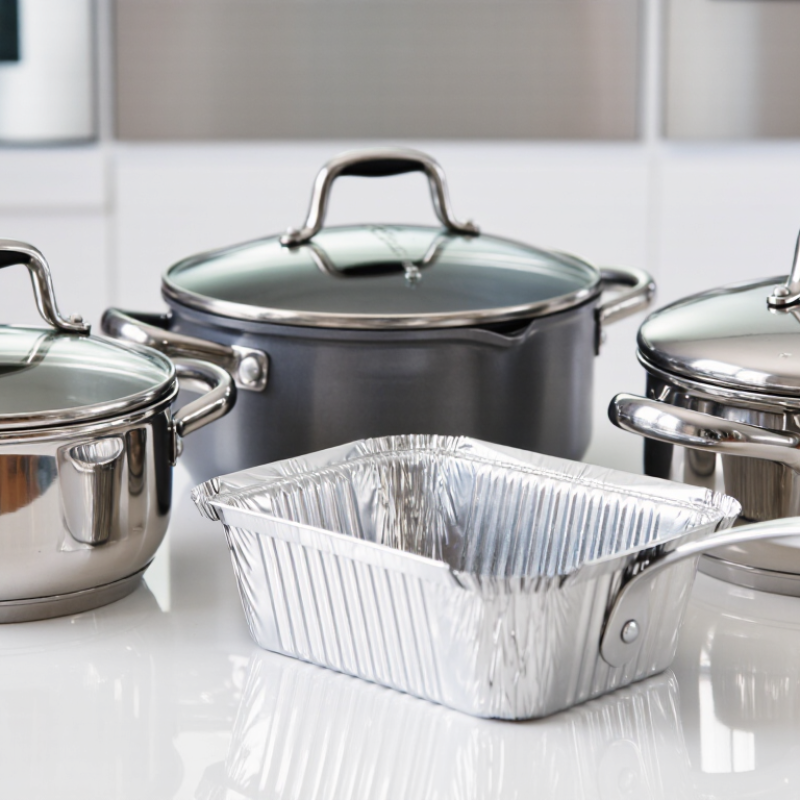
Top Covered Casserole Pan Manufacturers for Global Buyers?

Casserole Pan Types and Features Global Buyers Should Understand

For global buyers, casserole pan selection starts with the cooking method, not appearance. Enameled cast iron holds heat well and suits slow braising, but its weight increases freight costs and handling risks. Stainless steel offers durability and easy inspection, while aluminum heats faster and reduces shipping weight. Hard-anodized surfaces add scratch resistance, although coating quality can vary between production batches.

Covered pan design matters just as much. A tight lid should limit steam loss without trapping excessive pressure. Tempered glass allows visual checks, but it may break after sharp thermal changes. A solid metal lid is more durable, yet cooks cannot monitor the sauce easily. Buyers should verify oven limits, induction compatibility, handle temperature, dishwasher guidance, and food-contact documentation. These details often matter more than decorative finishes.

Mordor Intelligence estimates the global cookware market at about USD 19.9 billion in 2024, with growth continuing through 2029. This broader category includes casserole cookware, so the figure should not be treated as a pan-specific forecast. Still, it reflects strong international demand. Grand View Research also identifies material innovation and multifunctional cookware as important market drivers. Buyers should request test reports, coating specifications, lid-fit samples, and carton drop-test results.

A pan that performs well in a showroom may fail after long-distance transport. That uncomfortable gap deserves attention.

Key Criteria for Evaluating Covered Casserole Pan Manufacturers

Selecting top covered casserole pan manufacturers requires more than comparing catalog photos. In procurement work, I inspect lid alignment, handle strength, wall thickness, and surface consistency. A lid should sit firmly without scraping the rim. Small gaps can release heat and moisture during cooking. Ask for samples before approving large orders. One sample is useful, but several samples reveal production variation.

Material expertise matters. Manufacturers should clearly identify the metal, coating system, temperature range, and intended cooking surfaces. Request test reports for heat resistance, corrosion performance, food-contact safety, and coating adhesion. Reliable suppliers also explain their testing methods. Vague certificates deserve careful review. Manufacturing experience is visible in details, such as smooth rivets, even edges, and stable bases. These details affect both safety and customer complaints.

Production capacity must match your market plan. Check monthly output, mold ownership, quality-control stages, packaging protection, and delivery records. Traceable batch numbers can simplify investigation when defects appear. Communication is another practical test. Does the manufacturer answer technical questions directly? Does it report delays early? No factory is flawless. I would rather work with a supplier that admits a weakness and proposes corrective action. However, I have sometimes overvalued a low quotation. That mistake taught me to calculate returns, replacement costs, and inspection fees. A dependable manufacturer offers consistent quality, documented processes, and realistic promises.

Leading Manufacturer Categories and Regional Supply Strengths

Top Covered Casserole Pan Manufacturers for Global Buyers

Leading Manufacturer Categories and Regional Supply Strengths

The global cookware market is expanding, but casserole pan supply remains highly segmented. Grand View Research valued the cookware market at about USD 19.8 billion in 2022, with growth expected through 2030. Buyers should compare manufacturing categories, not only quoted prices.

Die-cast aluminum manufacturers often serve high-volume orders. Their pans are lighter, heat quickly, and support durable nonstick coatings. East and Southeast Asia offer strong tooling capacity, coating lines, and flexible private-label production. Quality can vary between factories. Request coating thickness, heat-cycle results, and lid-fit samples.

Stainless steel producers are concentrated across Europe and Asia. They are suitable for induction-ready ranges, catering use, and long service life. Enameled cast iron suppliers typically offer heavier products, stronger heat retention, and slower production cycles. Regional workshops in Europe and East Asia often specialize in this category. Ceramic-coated cookware is growing, especially where consumers seek easier cleaning and reduced oil use. Industry reports from Fortune Business Insights identify health-focused materials and online retail as important cookware market drivers. Yet “ceramic” does not guarantee performance. Ask for abrasion testing and food-contact documentation. A practical factory audit should examine wall thickness, handle riveting, coating adhesion, packaging protection, and batch traceability. Photos are useful, but incomplete. Samples sometimes reveal the truth.

Quality, Safety, and Compliance Checks for International Orders

Global buyers should assess covered casserole pan manufacturers through evidence, not polished catalogs. A reliable supplier should provide material specifications, batch traceability, and independent food-contact test reports. Ask whether the pan body, lid, handles, and coating were tested together. Small gaps can trap moisture and food residue.

The World Health Organization estimates that 600 million illnesses and 420,000 deaths annually. That figure makes surface safety more than a marketing claim.

Buyers should request migration testing for metals, coatings, and decorative materials. Reports should match the destination market’s rules, such as applicable FDA food-contact requirements or European food-contact framework standards. Check test dates, laboratory accreditation, sample descriptions, and measured limits. A certificate without traceable samples proves very little.

Thermal performance also deserves practical inspection.

Request tests for heat cycling, lid fit, handle strength, coating adhesion, and corrosion resistance. Packaging should protect edges and glass lids during long-distance transport. The 2022 FDA Food Code emphasizes smooth, durable, nonabsorbent, and easily cleanable food-contact surfaces. Manufacturers should explain how production controls achieve those characteristics.

My checklist still has weaknesses: factory photos cannot reveal every alloy variation or hidden process change. A pre-shipment inspection, random sampling, and retained production samples provide stronger assurance. Cheap paperwork is not cheap risk.

How to Compare Pricing, Customization, and Export Support

Global buyers should compare covered casserole pan manufacturers through landed cost, not unit price alone. Fortune Business Insights valued the global cookware market at about USD 19.55 billion in 2023, showing strong demand but intense supplier competition. A quote of USD 8 may exclude lids, inner packaging, tooling, or inspection fees. Request EXW and FOB prices separately. Then calculate freight, duty, insurance, and warehouse handling.

Customization needs measurable details. Confirm pan diameter, wall thickness, coating system, lid material, handle design, color tolerance, and logo method. Ask for a production sample before approving a large order. Custom tooling can improve fit, but it may increase the first-order cost and extend development time. Sometimes, standard molds are more practical. That is easy to overlook.

Export support is equally important. Manufacturers should provide packing lists, commercial invoices, certificates of origin, test reports, and carton specifications. The International Trade Centre highlights product classification and trade documentation as key factors in cross-border efficiency. Ask whether the supplier understands your destination’s labeling and food-contact requirements. Check monthly capacity, replacement policies, and response times. A supplier that answers quickly may still lack control. I would also compare shipment records, not just polished samples. The World Bank’s Logistics Performance Index shows that customs, tracking, and delivery reliability strongly affect international supply chains. A cheap pan arriving three weeks late is not cheap.

Top Covered Casserole Pan Manufacturers for Global Buyers? - How to Compare Pricing, Customization, and Export Support

Manufacturer Category Typical Product Range Common Materials Indicative FOB Price
per Unit
Typical MOQ Customization Capability Typical Lead Time Export Support Best Fit for Buyers
Large-scale cookware producer Standard covered casserole pans, 2–8 qt capacity Cast aluminum, stainless steel, enamel-coated steel US$8–22 500–2,000 units Logo, color, handle design, packaging, basic mold changes 35–60 days after approval Commercial invoice, packing list, export carton, container loading support Retail chains, distributors, and established importers
Mid-sized OEM cookware factory Private-label casserole pans, 1.5–6 qt capacity Forged aluminum, stainless steel, ceramic-coated aluminum US$10–28 300–1,000 units Good flexibility for branding, colors, lids, inserts, and retail packaging 30–55 days after sample confirmation Product documentation, carton marks, barcode labels, inspection coordination E-commerce sellers, specialty retailers, and regional wholesalers
Premium cookware specialist Heavy-duty covered pans, 3–7 qt capacity Multi-layer stainless steel, hard-anodized aluminum, cast iron US$25–75 100–500 units Advanced surface finishes, ergonomic handles, gift boxes, custom lids 45–75 days after final specifications Material declarations, laboratory testing coordination, detailed QC reports Premium retail, hospitality suppliers, and professional kitchens
Ceramic and stoneware producer Oven-to-table Covered Casserole Dishes, 1–5 qt capacity Stoneware, porcelain, vitrified ceramic US$7–24 500–3,000 units Glaze color, shape, decal printing, embossing, and gift packaging 45–80 days after color and sample approval Fragile-product packing, drop-test coordination, export carton design Homeware retailers, lifestyle brands, and tableware importers
Cast iron cookware producer Pre-seasoned or enameled covered casseroles, 2–7 qt capacity Cast iron, enameled cast iron US$18–55 300–1,000 units Exterior color, knob, logo, lid design, and packaging customization 50–90 days after mold and finish approval Palletization, moisture protection, export documentation, loading plans Gift channels, premium kitchenware, and outdoor cooking markets
Small-batch custom manufacturer Short-run cookware and prototype casserole pans Aluminum, stainless steel, ceramic, and mixed materials US$20–90 50–300 units High flexibility for prototypes, unusual dimensions, and premium packaging 30–70 days depending on tooling Sample development, small-order consolidation, courier and freight coordination Start-ups, chefs, design studios, and test-market programs
High-volume contract manufacturer Large retail programs, 2–10 qt capacity Stamped stainless steel, aluminum, non-stick coated aluminum US$5–16 5,000–20,000 units Limited design changes; strong capability for standardized specifications 45–75 days after purchase order Container planning, automated production reporting, factory inspections, and export compliance files Mass retailers, promotional programs, and national distributors

Pricing is an indicative FOB benchmark in U.S. dollars per unit for standard export orders. Actual quotations vary according to material thickness, capacity, coating, tooling, packaging, testing requirements, order volume, and destination.

Build your system. Protect your boat. Join the movement.

Compare Products
Talk to Sales