What Are the Top Clear Glass Jar Types in 2026?
Clear Glass Jars remain a practical choice in 2026 because they show the product, resist staining, and suit many shelves and workspaces. But “best” depends on what goes inside. A spice jar needs a different opening from a jar holding overnight oats. Small details matter: the rim, lid fit, wall thickness, and whether a spoon can reach the bottom.
This guide compares popular Clear Glass Jar types, including wide-mouth, straight-sided, apothecary, clamp-lid, and hexagonal designs. It looks at capacity, access, storage, and presentation rather than treating appearance as the only deciding factor. Scott DeFife, president of the Glass Packaging Institute, has often advocated for glass recycling. A concise paraphrase of that message is: “Glass can be recycled repeatedly without losing its quality.” That principle is useful, though it does not mean every jar is equally durable or easy to reuse. Check the finish and closure, too.
Some trade-offs are easy to miss. A wide opening makes filling simpler, but can leave contents exposed longer. A decorative shape may look striking and waste shelf space. There is no perfect jar. The comparisons ahead focus on real-use details, from a tight lid on a pantry shelf to a narrow neck that makes cleaning awkward. Product specifications vary by maker, so confirm dimensions and closure compatibility before choosing.
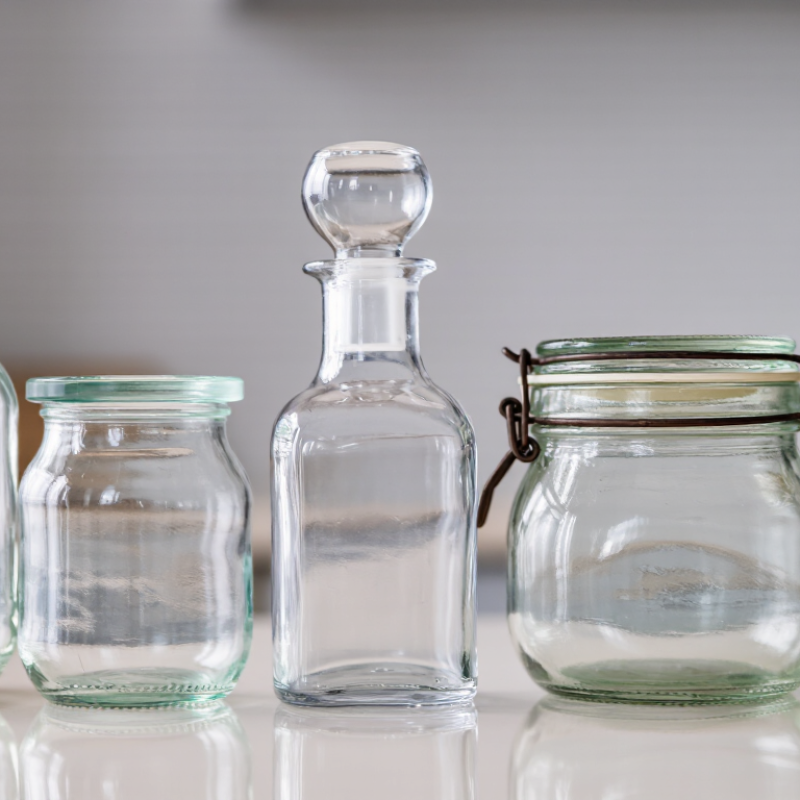
How Clear Glass Jars Are Classified
Clear glass jars are best classified by their opening, shape, capacity, and closure rather than by appearance alone. A wide-mouth jar lets a spoon or hand reach inside easily, making it practical for pantry staples, bath salts, or craft supplies. Narrow-neck jars reduce the opening and suit pouring or controlled dispensing. Check the rim and thread pattern before choosing a lid; jars that look similar may not seal with the same closure.
Shape offers another useful distinction. Straight-sided jars stack neatly and make labels easier to apply, while shoulder-shaped jars have a narrower neck above a wider body. Common capacities range from small sample jars to large storage vessels, but capacity alone does not indicate strength. Glass thickness, base design, and manufacturing quality also matter. Look for a level base, an even rim, and no visible chips or hairline cracks. Handle with care.
Clear glass also varies in finish and intended use. Smooth, transparent glass shows contents clearly, while lightly textured surfaces can soften fingerprints but make labels less secure. Some jars are designed for repeated opening; others prioritize display. These categories overlap, and that can be confusing. A jar’s intended use is not always obvious from its silhouette, so check its dimensions, closure fit, and care guidance before buying.
What Are the Top Clear Glass Jar Types in 2026?
Clear glass jars are commonly classified by shape, mouth opening, and intended use. The chart compares representative nominal capacities—not sales figures or market averages.
How to read the chart: Mason jars are commonly used for canning, straight-sided jars for food storage, apothecary jars for dry goods or display, wide-mouth jars for easy filling, and hexagonal jars for honey and preserves. Capacities shown are examples; actual sizes vary by manufacturer.
Which Clear Glass Jar Types Stand Out in 2026?
Clear glass jars stand out in 2026 because their shapes serve different storage and display needs. Straight-sided jars offer broad labels and easy access, making them practical for pantry staples, bath salts, or craft supplies. Wide-mouth jars make filling and scooping simpler, especially for granola, dried beans, or cotton rounds. Apothecary-style jars add height and a familiar display look, while hexagonal jars create a distinctive shelf pattern. They are not equally useful.
Tips: Match the opening to the contents, not just the shelf. Check that lids fit securely, and inspect rims for chips before regular use. Test one jar first.
For everyday kitchens, straight-sided and wide-mouth designs are often easier to clean by hand. Tall jars can look elegant, but narrow necks may make scooping and thorough drying frustrating. Clear glass reveals crumbs, fading, and uneven fill levels; that honesty can be useful, though not always attractive. It is tempting to favor decorative shapes, but the simplest jar may be easiest to refill. Consider shelf depth, hand size, and how often you reach for the contents.
How Jar Shapes and Closures Differ
Straight-sided jars offer broad label panels and easy access for spoons. Their simple walls also make contents visible from every angle. Round jars suit everyday pantry storage, while square and hexagonal shapes use shelf space neatly. Their corners can be harder to wipe clean. Wide-mouth jars make filling and scooping easier, especially when storing chunky ingredients. The shoulder matters, too: a narrow neck can slow pouring. Small details change daily use.
The closure must match the jar’s neck finish and sealing needs. Continuous-thread caps twist on easily and often include a liner. Lug caps seal with a short turn, but require a compatible finish. Clamp lids pair glass with a gasket and wire mechanism; check the gasket regularly for wear. Fit matters. A cap that feels snug may still leak if its liner or finish is mismatched. For heat-filled products, confirm the jar and closure are rated for the process.
Shape and closure choices also affect reuse and recycling. FEVE’s 2020 European Container Glass Recycling Data reports an 80.1% recycling rate for glass packaging in Europe. Eurostat reported that 65.4% of all EU packaging waste was recycled in 2022. These figures cover broad material streams, not individual jar designs. Clear glass helps users inspect contents, but labels, liners, and mixed-material closures complicate sorting. That part is easy to overlook. Test the jar upright, on its side, and after repeated opening before choosing a format.
Where Different Clear Glass Jar Types Are Used
Straight-sided clear jars suit pantry shelves and retail displays because labels sit flat and contents remain visible. Wide-mouth jars are easier to fill with granola, sauces, or meal-prep portions. Hexagonal jars make honey or preserves stand out, while small round jars work well for creams, spices, and sample portions. Apothecary-style jars can hold cotton pads or bath salts on a vanity. Looks matter, but lids and opening size matter more in daily use.
Glass packaging also has an end-of-life story. FEVE’s 2022 data put Europe’s average glass packaging recycling rate at 80.1%. The U.S. EPA’s 2018 materials report recorded about 25% recycling for glass containers. These figures cover different regions and years, so they are not a direct comparison. They do show why local collection rules belong in packaging decisions.
Tips: Match the mouth to the tool: a spoon needs room, while a shaker needs a controlled opening. Check the lid seal with water before filling. A clear jar can still look cluttered when contents vary in color or size; that trade-off is easy to miss.
How to Choose the Right Clear Glass Jar in 2026
What Are the Top Clear Glass Jar Types in 2026?
How to Choose the Right Clear Glass Jar in 2026
Choose a jar by what it must hold, how people will use it, and where it will be stored. Wide-mouth jars make scooping and cleaning easier; straight-sided jars use shelf space efficiently. Tall, narrow jars suit liquids, while small jars work well for samples or single portions. Check capacity, opening diameter, and closure compatibility together. A lid that nearly fits is still the wrong lid.
Glass weight matters. The U.S. Environmental Protection Agency’s 2018 materials report recorded 12.3 million tons of glass containers and packaging generated, with about 3.06 million tons recycled, a 25 percent rate. That figure is a dated U.S. benchmark, not a 2026 forecast. Still, it makes local recycling access worth checking before choosing a jar style or color. Clear glass also shows contents well, but offers limited protection from light. Think about the product, not just the shelf appeal.
For a real-world check, place a filled sample jar on the intended shelf. Test whether fingers can reach the contents and whether the lid opens without slipping. Confirm dimensions against labels, packing equipment, and shipping cartons. Ask suppliers for food-contact documentation and specifications for glass thickness and closure fit. One detail is easy to miss: a heavier jar can feel premium, yet increase shipping weight. The ideal choice is not always obvious.