Top 10 Water Filters for Home Use Which One Is Right for You
When considering a water filter for home use, the choices can be overwhelming. Many options promise clean and safe drinking water, yet not all meet expectations. Some filters are effective but come with hidden costs. Others may be inadequate for your specific needs.
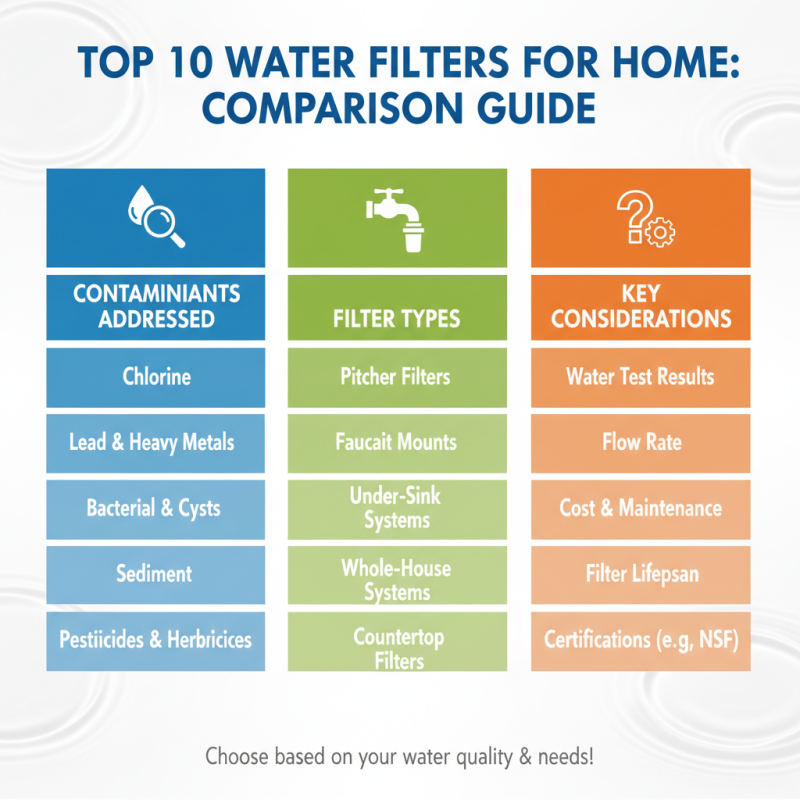
A quality water filter can improve taste and reduce impurities. However, selecting the right one requires research. Identifying your water source is essential. Some filters excel at removing heavy metals, while others target chlorine or sediment. Knowing what your water contains can guide your choice.
Additionally, installation and maintenance play significant roles. A complicated system can deter proper use. Regular upkeep is necessary for optimal performance. An ideal water filter for home should be user-friendly. It should also align with your lifestyle and budget, ensuring that you enjoy clean water without hassle.
Understanding the Importance of Water Filtration for Home Use
Water filtration is essential for maintaining health and wellness at home. According to the Environmental Protection Agency (EPA), over 15 million people in the United States rely on private water supplies that may not meet safety standards. Without proper filtration, harmful contaminants can enter our drinking water, such as lead, chlorine, and arsenic. These toxins can negatively impact the immune system and overall health.
One study found that nearly 70% of Americans are concerned about their water quality. Issues related to heavy metals and bacteria are prevalent. In many areas, aging infrastructure contributes to unsafe tap water. Families face tough choices. They may choose bottled water, which can be expensive and environmentally harmful. Therefore, investing in a reliable water filter can be a smart and cost-effective solution.
Choosing the right filter is not always straightforward. Different filters target different contaminants. Some may remove chlorine but not lead. It’s critical to assess your water quality. Many tests are available to identify specific impurities. This step is often overlooked but is vital to ensuring the filter chosen is appropriate for your needs. Ignoring this can lead to inadequate protection against harmful substances.
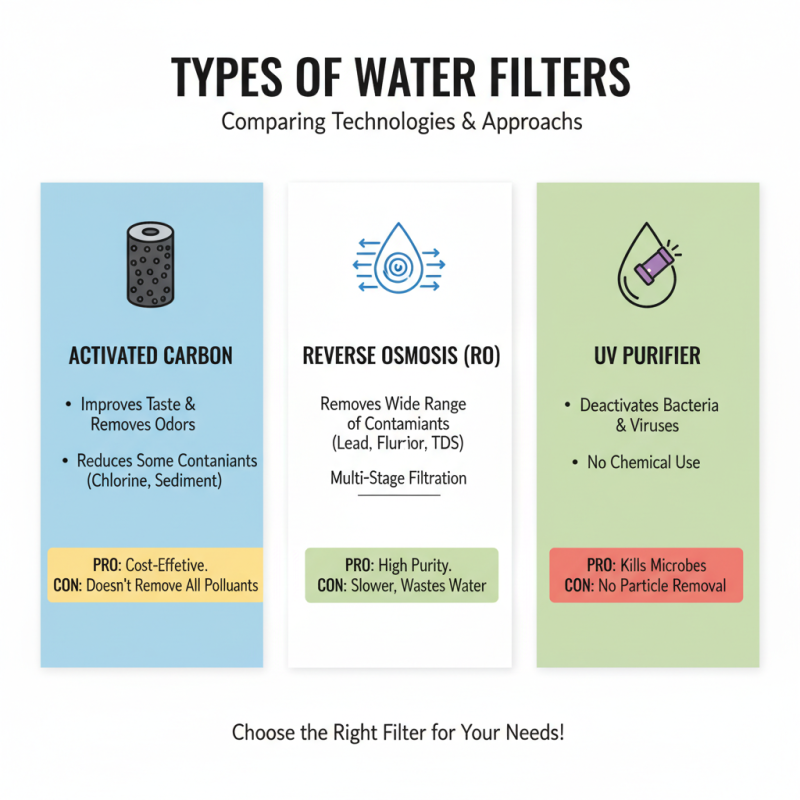
Types of Water Filters: Comparing Different Technologies and Approaches
When considering water filters, it's important to understand the various technologies available. Each type has its strengths and drawbacks. Common options include activated carbon filters, reverse osmosis systems, and UV purifiers. Activated carbon is great for improving taste and removing odors, but it might not eliminate all contaminants.
Reverse osmosis filters provide thorough purification. However, they can waste water and require maintenance. UV purifiers efficiently kill bacteria and viruses, but they won't remove physical impurities. Understanding these differences helps narrow your choices.
**Tips:** Consider your water quality. Test it to identify specific contaminants. This will help you choose a filter that meets your needs.
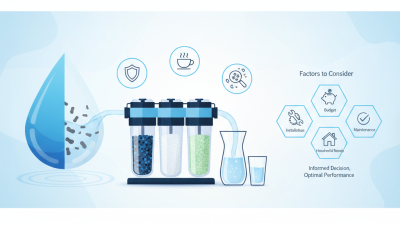
Cost is another factor. Some systems may seem expensive upfront, but they can save money long-term. Maintenance costs can add up, so factor that into your decision too. You might find that the most popular option doesn't fit your needs perfectly. Consider experimenting with different filters to see which improves your water best.
Key Features to Consider When Choosing a Water Filter
When choosing a water filter for your home, consider key features carefully. The filtration method is essential. Common options include activated carbon, reverse osmosis, and ultraviolet light. Each method varies in effectiveness for specific contaminants.
Think about capacity. How much water do you need daily? Filter systems differ in their volume output. A small filter may not suffice for a large family. Also, examine the filter life. Short-life filters require replacements often, leading to higher costs over time.
**Tip:** Look for a filter with a long lifespan. This saves you hassle and money in the long run.
Water taste plays a role, too. Some filters improve taste significantly. Others might not make much difference. If taste is vital to you, choose wisely.
**Tip:** Read customer reviews about taste perception. It helps gauge which products enhance water flavor.
Lastly, installation and maintenance matter. Some systems are straightforward. Others require professional help. Evaluate your comfort level with DIY jobs.
**Tip:** Simple setups often encourage regular use and maintenance.
Making the Right Choice: Which Water Filter Suits Your Needs?
Choosing the right water filter for your home can seem daunting. Different filters target specific contaminants. According to a study from the Water Quality Association, over 60% of households face water quality issues. This highlights the need for an effective filtration system.
When evaluating your options, consider the source of your water. Municipal water may have chlorine and lead. In contrast, well water often contains bacteria and sediment. Research shows that activated carbon filters are excellent for removing chlorine and bad taste. However, they might not effectively filter heavy metals.
Look at your specific needs. A reverse osmosis system could be ideal for comprehensive removal of contaminants. But these systems can waste a lot of water—up to 3 gallons per filtered gallon. If you’re environmentally conscious, this is a significant drawback. You might also ruminate on the maintenance costs for different types. Filter replacements can accumulate over time. If you're not proactive, you may end up drinking untreated water due to a neglected filter.
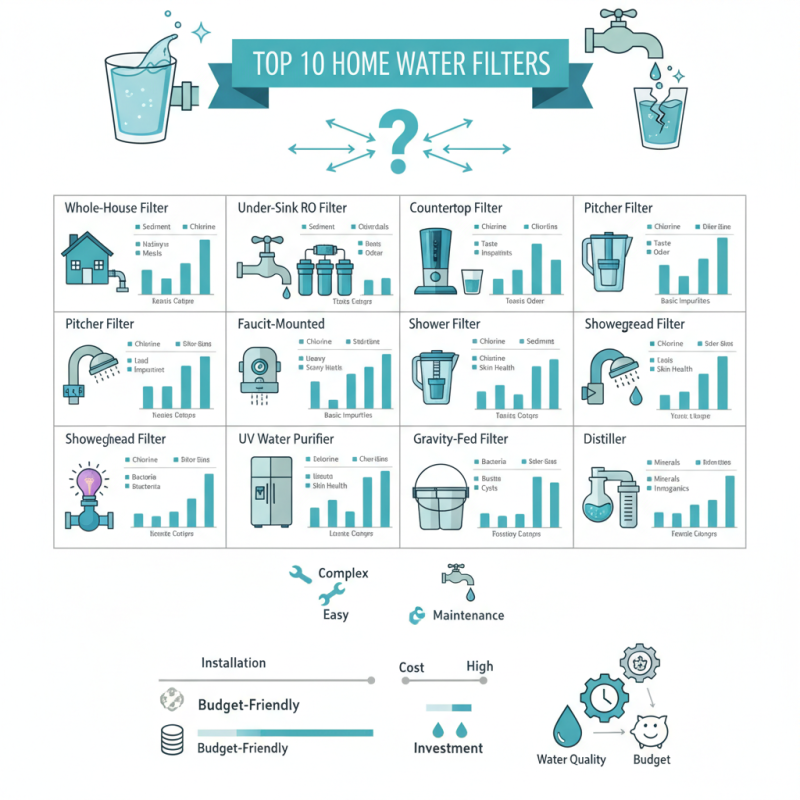
Top 10 Water Filters for Home Use