For global buyers, choosing Bathroom Hardware Sets involves more than matching a faucet and towel bar. Material quality, installation standards, packaging, and after-sales support all affect the final result. A set may appear affordable, yet weak anchors or poor plating can create problems after installation. Small details matter.
This guide examines ten practical options for different markets, project sizes, and bathroom styles. The evaluation considers stainless steel grades, brass construction, corrosion resistance, load capacity, finish durability, and included mounting hardware. It also considers supplier communication, warranty terms, replacement parts, and delivery reliability. A matte black finish can look elegant under showroom lights, but it may reveal water spots quickly in humid homes. Brushed finishes often hide fingerprints better. They are not maintenance-free.
Professional experience shows that regional conditions influence performance. Coastal hotels may need stronger corrosion resistance than inland apartments. Contractors may prefer concealed screws and standardized fittings. Homeowners often value simple cleaning and secure installation. Buyers should verify product dimensions, thread sizes, and local plumbing expectations before ordering.
No ranking can suit every project. This list is a useful starting point, not a permanent answer. Some selections may perform differently across climates, cleaning routines, and installation skills. That limitation deserves attention. Reliable buyers should request samples, inspect coating consistency, and confirm test documentation from established manufacturers. Clear specifications build trust. Careful comparison reduces expensive replacements and helps each Bathroom Hardware Sets purchase deliver practical, lasting value.
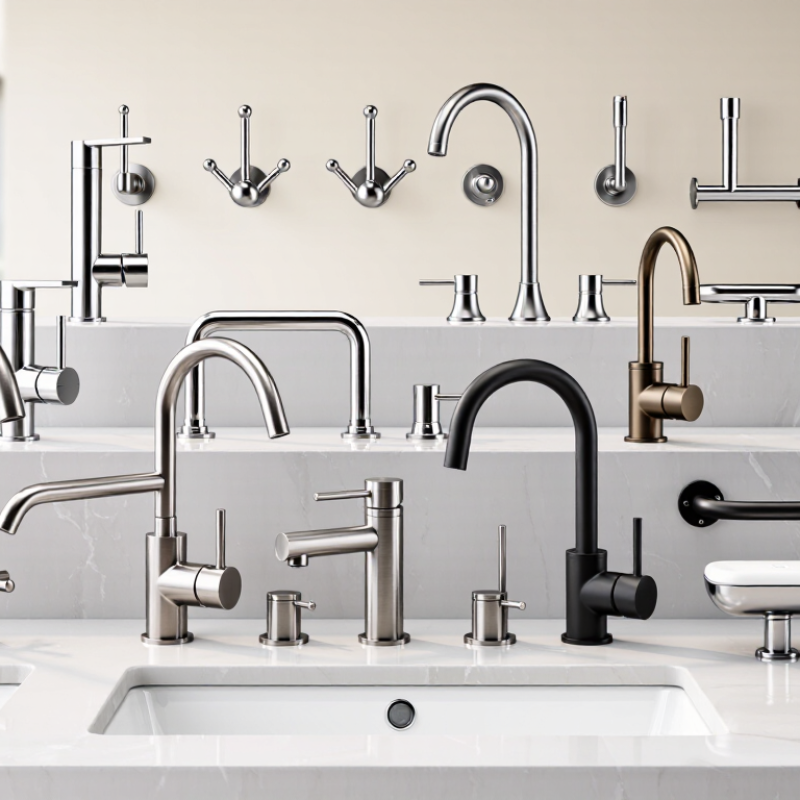
A bathroom hardware set usually includes a towel bar, towel ring, robe hook, toilet paper holder, and mounting accessories. Some sets add a spare toilet roll holder, shelf, or wall-mounted cup. Global buyers should check every component before comparing prices. A low-cost set may exclude screws or suitable wall anchors. That detail can delay installation.
Sets are commonly classified by function, mounting method, material, finish, and installation environment. Functional sets serve guest bathrooms, family bathrooms, or accessible facilities.
Mounting types include wall-mounted, freestanding, adhesive, and concealed-fixed designs. Wall-mounted models save floor space, while adhesive versions suit renters but require smooth, dry surfaces.
Materials often include stainless steel, brass, aluminum, zinc alloy, or engineered plastic. Stainless steel generally offers strong corrosion resistance, but its grade and surface treatment still matter.
Finishes include polished, brushed, matte, and plated surfaces. Classification by environment is equally practical. A coastal project needs better resistance to salt-laden moisture. A hotel may prioritize easy cleaning and replacement parts.
During product inspections, I check welds, edge smoothness, screw alignment, load performance, and finish consistency. Small defects appear under bright bathroom lighting. I once underestimated anchor compatibility on a renovation project. The set looked complete, but the supplied anchors failed on hollow tile backing.
Specifications should state dimensions, load guidance, warranty terms, and care requirements clearly.
Some classifications overlap, which can confuse purchasing teams. A simple comparison sheet helps.
Top 10 Bathroom Hardware Sets for Global Buyers
Key Standards for Evaluating Bathroom Hardware Sets
In global procurement, a bathroom hardware set should be judged beyond appearance. I compare the ten strongest options through material, testing, installation, and after-sales evidence. Stainless steel, brass, and coated alloys can perform differently in humid rooms. Ask for the exact grade, coating process, salt-spray results, and warranty terms. Photos are not proof. Inspect hinges, screws, anchors, and concealed joints, where early corrosion often begins.
Standards must also fit the destination market. Check dimensional compatibility with local plumbing, wall structures, and common drilling patterns. Reliable suppliers provide technical drawings, tolerances, care instructions, and traceable batch information. For high-use projects, test load capacity on towel bars and shelves before approval. A loose bar is a small failure. Yet it can damage trust, schedules, and installation budgets. Independent laboratory reports matter, but their scope deserves careful reading. A test on one finish does not validate every finish.
Usability separates a polished set from a merely attractive one. Edges should feel smooth, mounts should hide neatly, and moving parts should operate without scraping. Evaluate cleaning effort, water resistance, replacement parts, and accessible packaging for international shipping. I have found that clear instructions prevent more site delays than decorative claims. Still, no checklist is perfect. Installer feedback can reveal awkward anchors or confusing templates that laboratory reviews miss. Rankings should record these weaknesses openly, not bury them beneath glossy photographs.
Comparative evaluation based on material durability, corrosion resistance, installation requirements, accessibility, and international testing references.
| Rank | Hardware Set Type | Typical Components | Recommended Base Material | Suitable Surface Finish | Key Evaluation Standard or Test | Moisture Resistance | Installation Difficulty | Indicative Score (100) | Best Application |
|---|---|---|---|---|---|---|---|---|---|
| 1 | Premium Stainless-Steel Accessory Set | Towel bar, towel ring, robe hook, toilet-roll holder, shelf | Grade 304 stainless steel; grade 316 for coastal or high-chloride areas | Brushed, polished, or electrochemical PVD finish | ISO 9227 or ASTM B117 corrosion testing; verify coating adhesion and dimensional tolerances | Excellent | Medium | 92 | Hotels, apartments, coastal residences, and premium home bathrooms |
| 2 | Brass Bathroom Hardware Set | Towel rail, towel ring, hook, toilet-roll holder, spare-roll holder | Solid brass with corrosion-resistant internal fasteners | Chrome, brushed nickel, matte black, or PVD coating | EN 248 or ISO 1456 principles for electroplated nickel/chromium coatings; adhesion and abrasion checks | Very Good | Medium | 90 | Residential and hospitality projects requiring a substantial appearance |
| 3 | Concealed-Fixing Minimalist Set | Single towel bar, ring, hook, toilet-roll holder, glass shelf | Stainless steel or solid brass mounting bodies | PVD, brushed stainless steel, or powder-coated finish | Check concealed-fixing strength, fastener pull-out resistance, and surface-coating adhesion | Very Good | High | 88 | Contemporary bathrooms where clean lines and hidden screws are priorities |
| 4 | Commercial Heavy-Duty Set | Long towel rail, multiple hooks, paper holder, shelf, utility rail | Thick-wall stainless steel or reinforced brass | Brushed stainless steel or durable PVD coating | Cycle testing, load testing, fastener pull-out testing, and ISO 9227 or ASTM B117 corrosion testing | Excellent | High | 87 | Hotels, healthcare facilities, schools, and high-traffic public washrooms |
| 5 | Accessibility Support Set | Grab bars, shower-seat support bar, robe hook, toilet-roll holder | Structural stainless steel with reinforced wall plates | Textured or satin finish for improved grip | Verify local accessibility rules; ADA guidance commonly specifies 1.25–1.5 in grab-bar diameter and 250 lb structural capacity | Excellent | High | 86 | Accessible residential bathrooms, care facilities, and universal-design projects |
| 6 | Wall-Mounted Storage Set | Corner shelf, straight shelf, towel rail, hooks, toilet-roll holder | Aluminium alloy, stainless steel, or tempered glass with metal supports | Anodized aluminium, PVD, or powder coating | Check shelf load capacity, glass safety classification, edge finishing, and corrosion resistance | Very Good | Medium | 84 | Small bathrooms where vertical storage and space efficiency are important |
| 7 | Matte-Black Design Set | Towel bar, ring, hooks, toilet-roll holder, soap dish | Solid brass or stainless steel beneath a protective coating | PVD or multilayer powder coating; avoid unprotected decorative paint | Evaluate abrasion, detergent resistance, coating adhesion, and neutral-salt-spray performance | Good | Medium | 82 | Modern residential interiors and coordinated black bathroom designs |
| 8 | Tool-Free Adhesive Set | Hooks, small towel ring, soap holder, toilet-roll holder | Stainless steel or aluminium with engineered adhesive backing | Brushed, polished, or coated metal | Confirm substrate compatibility, curing time, shear-load capacity, and manufacturer test data | Good | Low | 78 | Rental properties and tiled walls where drilling is undesirable |
| 9 | Budget Zinc-Alloy Set | Towel bar, hook, toilet-roll holder, soap dish | Die-cast zinc alloy with plated steel or brass mounting hardware | Chrome plating or powder coating with sealed edges | Inspect plating thickness, blistering, edge coverage, salt-spray results, and fastener quality | Moderate | Low | 72 | Cost-sensitive residential projects with controlled humidity and regular maintenance |
| 10 | Eco-Focused Recycled-Material Set | Towel rail, hooks, toilet-roll holder, soap tray, shelf | Recycled stainless steel or recycled aluminium with documented content | Low-VOC powder coating or brushed metal finish | Request recycled-content evidence, life-cycle documentation, coating durability, and corrosion-test reports | Good | Medium | 80 | Green-building projects and buyers prioritizing material transparency |
Global Buyer Verification Checklist
Confirm the applicable national building and accessibility requirements before purchase. Ask for material declarations, coating specifications, corrosion-test reports, load ratings, installation drawings, replacement-part availability, packaging dimensions, and care instructions. ISO 9227 and ASTM B117 describe salt-spray test methods; they do not by themselves guarantee a specific service life.
Global buyers need bathroom hardware sets that survive different climates, water systems, and installation habits. The WHO/UNICEF Joint Monitoring Programme reported that 3.5 billion people lacked safely managed sanitation in 2022. This figure makes hygiene, cleanability, and dependable fittings more than design preferences. A strong top-ten shortlist should include towel bars, robe hooks, toilet-roll holders, shelves, and matching mounting parts. Look for corrosion-resistant stainless steel, sealed joints, and concealed screws. These details matter in humid bathrooms.
Water efficiency also deserves careful checking. The U.S. Environmental Protection Agency states that WaterSense-labeled bathroom faucets use no more than 1.5 gallons per minute, compared with the federal standard of 2.2 gallons. Global buyers should compare local flow requirements before ordering. Thread sizes and wall anchors can vary widely. A beautiful set may still fail during installation. Check technical drawings, load ratings, surface finishes, and replacement-part availability. ISO 9227 salt-spray testing can help assess corrosion resistance, although laboratory results do not perfectly predict every coastal environment. That limitation is easy to overlook. Buyers should also inspect packaging quality, because scratched finishes often appear before installation. Practical testing, supplier documentation, and clear warranty terms provide stronger evidence than attractive product photographs.
Comparison of generic bathroom hardware set configurations by the number of included pieces. The data excludes company and brand information.
Larger sets combine more storage and hanging functions, making them suitable for buyers seeking complete bathroom accessory solutions.
Top 10 Bathroom Hardware Sets for Global Buyers
Material selection affects strength, corrosion resistance, maintenance, and long-term appearance. Solid brass offers dependable weight and good resistance in humid bathrooms. Stainless steel suits coastal properties, but its grade still matters. Zinc alloys can reduce costs, although thin sections may weaken around screw points. Check the base material, wall thickness, and corrosion-test information before ordering. Do not judge quality by weight alone.
Finish is more than decoration. Brushed surfaces hide fingerprints, while polished finishes reflect light and show water spots quickly. PVD coatings can improve surface durability when applied correctly. Matte black needs careful cleaning because abrasive products may create visible marks. Compare the finish with faucets, shower fittings, and cabinet hardware under actual bathroom lighting. Small color differences become obvious. They really do.
Installation details often decide whether a set works globally. Confirm thread sizes, screw lengths, mounting plates, and anchor types before purchase. Tile, drywall, concrete, and stone require different fixing methods. Some sets include weak plastic anchors, so installers may replace them. That is practical, not a failure. I once trusted a product photo and missed a narrow mounting plate; the bar later needed repositioning. Measure twice. Check the available clearance around doors and drawers. Compatibility also includes replacement parts, installation instructions, load ratings, and local plumbing or building requirements. A reliable supplier should provide clear drawings, material declarations, and testing records. Even then, site conditions can change the result.
Selecting bathroom hardware for global buyers requires more than comparing photos and unit prices. I assess the complete set: towel bars, robe hooks, toilet paper holders, mounting plates, screws, and installation instructions. Materials matter. Stainless steel resists humid environments, while zinc alloy can reduce cost but may need stronger surface protection. I request samples before approving production. A polished sample can reveal loose threads, uneven plating, sharp edges, or weak wall anchors. These small faults become expensive after installation.
Sourcing also depends on supplier verification. I check factory experience, quality-control records, test reports, carton strength, and replacement procedures. The supplier should provide accurate dimensions and material specifications. Vague answers are warning signs. Import planning must include the correct HS classification, destination-country requirements, labeling rules, duties, freight, insurance, and port charges. I also compare MOQ, lead time, payment terms, and Incoterms. A cheap quotation may hide costly inland delivery or poor packaging. I have learned that landed cost is more useful than the factory price alone. Still, inspections can miss problems, so buyers should keep a realistic risk allowance.
Build your system. Protect your boat. Join the movement.