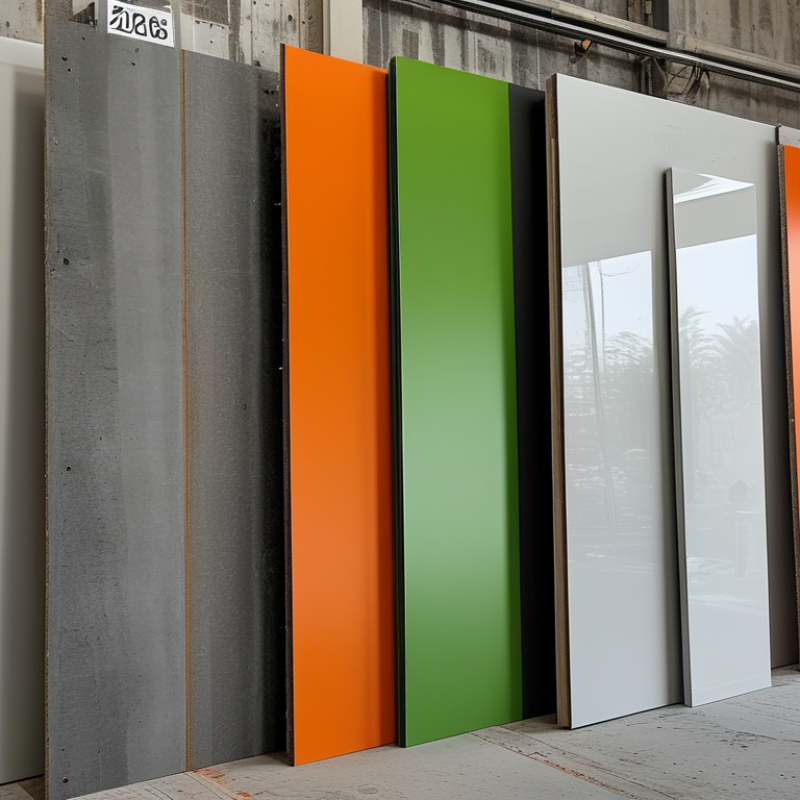
How to Source Wall Panels Globally in 2026?

Global sourcing of Wall Panels in 2026 requires more than comparing online prices. Buyers must evaluate material performance, factory capability, shipping reliability, and documented compliance. A panel that looks refined in a product photo may warp in humid conditions or arrive with inconsistent color. Real sourcing experience begins with asking practical questions. What substrate is used? How are edges protected? Can the supplier provide recent test reports, production photos, and traceable samples? Small details often expose large risks.

Markets are changing quickly. Energy costs, freight disruptions, recycled-content requirements, and regional building standards can affect the final budget. Experienced buyers should compare total landed cost, not only the factory quotation. This includes packaging, inspection, insurance, duties, installation waste, and possible replacement orders. Independent inspections can verify dimensions, surface finish, moisture resistance, and carton strength before shipment. Still, no process is perfect. A trusted supplier may miss a color variation, and a carefully written specification may overlook local installation habits. That is why pilot orders and clear acceptance criteria remain valuable. Start small.

Reliable sourcing also depends on communication. Technical drawings should state thickness, tolerances, fire performance, fixing methods, and maintenance expectations. Suppliers should respond with evidence, not broad promises. Buyers should also check references from comparable projects and confirm production capacity during peak seasons. The strongest global partnerships are built through transparent records, realistic timelines, and continuous review. Mistakes can happen. Ignoring them cannot.

How to Source Wall Panels Globally in 2026?

Define the Global Wall Panel Sourcing Requirements

Before contacting overseas suppliers, define the wall panel requirements in measurable terms. Record the room type, wall area, panel dimensions, thickness, substrate, surface finish, color tolerance, and installation method. A corridor may need impact resistance, while a hotel bedroom may prioritize acoustic performance. Moisture exposure also matters. Bathrooms and coastal projects require different material choices.

Write the performance requirements beside the design requirements. Specify fire behavior, formaldehyde limits, sound absorption, cleanability, and expected service life. Confirm which standards and test documents apply in the destination market. A local architect, engineer, or code consultant should review these points. Product claims alone are not enough.

Build a sourcing brief with drawings, photographs, tolerance ranges, annual volume, target delivery window, packaging needs, and required inspection stages. Request physical samples, technical data sheets, recent test reports, and installation instructions. Check whether the supplier can repeat the same color and profile across several production lots. This is often overlooked. Our first specification may still contain unclear wording, especially around “premium finish” or “custom size.” Replace those phrases with numbers, reference samples, and acceptance criteria. Keep a record of revisions, sample approvals, factory checks, and shipment inspections. That paper trail supports better decisions when a batch arrives with warped edges, damaged corners, or a finish that looks different under warehouse lighting.

How to Source Wall Panels Globally in 2026? — Define the Global Wall Panel Sourcing Requirements

Practical sourcing specifications, compliance checkpoints, and planning benchmarks for international wall-panel procurement

Sourcing Dimension Requirement to Define Recommended 2026 Specification Verification Method Planning Data / Benchmark
Project Application Interior residential, hospitality, office, retail, healthcare, or transport use Define wall location, occupancy level, cleaning frequency, impact exposure, and whether the panel is decorative or part of a tested wall system Approved drawings, room schedule, finish schedule, and project specification Separate requirements by room type; wet areas and public corridors normally require higher moisture and impact resistance
Panel Material Core, surface layer, backing, adhesive, and edge construction Select from MDF, plywood, mineral fiber, gypsum, PVC, aluminum composite, PET acoustic felt, or wood-plastic composite according to the end-use environment Technical data sheet, bill of materials, cross-section sample, and independent material test Request full material disclosure for every layer, including coatings, laminates, inks, and surface treatments
Panel Dimensions Nominal length, width, thickness, squareness, and usable coverage Specify dimensions in millimetres and define allowable tolerance for each dimension Caliper, steel rule, diagonal measurement, and dimensional inspection report Common decorative panel thickness: approximately 5–25 mm; confirm the actual range by material and installation method
Dimensional Stability Resistance to expansion, contraction, bowing, and edge movement Set maximum length, width, thickness, and warpage variation after humidity conditioning Conditioned-panel testing under the applicable wood, composite, or polymer-panel standard For wood-based products, define installation acclimatization and expansion-gap requirements before purchase
Surface Finish Colour, texture, gloss, pattern repeat, scratch resistance, and cleanability Approve a physical master sample and define colour tolerance, gloss range, texture direction, and repeat length Visual comparison under controlled lighting, gloss measurement, and surface-resistance testing Use one retained reference sample for production approval, shipment inspection, and future reorders
Fire Performance Reaction to fire, flame spread, smoke development, and—where required—fire resistance of the complete wall assembly Specify the destination-market classification, such as EN 13501-1 or ASTM E84; do not treat a decorative-panel rating as a wall-assembly fire-resistance rating Review a current laboratory report identifying the exact panel construction, thickness, coating, and mounting method Fire classifications are system- and test-configuration-specific; generic certificates should not be accepted without construction matching
Formaldehyde and VOCs Indoor-air emissions from wood-based cores, adhesives, coatings, and backing materials Define the destination-market emission limit and require testing for the finished panel, not only the raw board Laboratory chamber testing such as EN 717-1 or applicable North American composite-wood requirements For U.S. composite-wood products, verify the applicable TSCA Title VI emission category; limits differ by panel type
Moisture Resistance Suitability for bathrooms, kitchens, humid climates, and occasional splash exposure State whether the product is dry-area, humid-area, or wet-area suitable; define water absorption, swelling, and edge-sealing requirements Water-immersion or humidity-cycle test relevant to the panel material, plus inspection of sealed edges Do not describe a panel as waterproof unless the complete panel, joints, backing, and installation system have been tested
Acoustic Performance Sound absorption or sound insulation objective Define whether the target is absorption, reverberation control, or airborne sound insulation; specify the required mounting cavity and backing Laboratory test using the applicable ISO 354, ASTM C423, or project-standard method Acoustic values change significantly with air gaps, insulation, joints, and mounting; compare reports only when test setups match
Mechanical Performance Impact resistance, screw holding, pull-off strength, abrasion, and edge durability Set performance levels according to traffic, furniture contact, maintenance equipment, and installation hardware Material-specific mechanical tests, installation pull tests, and sample impact testing High-traffic public areas require stricter impact and cleanability criteria than low-traffic residential rooms
Installation System Direct adhesive, mechanical clips, concealed fasteners, battens, or demountable framing Define substrate tolerance, joint width, corner detail, access panels, trims, adhesives, and required tools Full-size installation mock-up and written installation method statement Order 5–10% additional panels for cutting and damage allowance, subject to layout complexity
Sustainability Documentation Recycled content, responsibly sourced fibre, recyclability, life-cycle data, and packaging materials Request percentage-by-weight recycled content, chain-of-custody evidence where applicable, EPD availability, and packaging composition Certificate verification, bill-of-material review, and independent sustainability-document check Environmental claims must identify the product scope, calculation method, validity period, and certification body
Packaging and Protection Protection against moisture, abrasion, corner damage, contamination, and pallet deformation Use protective film where appropriate, rigid corner protection, moisture barriers, pallet identification, and vertical/horizontal stacking instructions Packaging drop or vibration assessment, loading photographs, and pre-shipment inspection Record net weight, gross weight, package dimensions, pallet count, and cubic volume for freight planning
Minimum Order Quantity Minimum order for standard, custom-colour, custom-size, and custom-pattern products Separate sample quantity, pilot quantity, first production order, and repeat-order quantity Written quotation with MOQ by finish, size, colour, packaging format, and tooling requirement Indicative planning range: samples 1–10 panels; pilot orders 50–300 panels; production MOQ varies by material and customization
Lead Time Sample development, approval, production, inspection, and export preparation Create separate milestones for technical approval, colour approval, production release, inspection, and dispatch Supplier production schedule and dated order-confirmation document Indicative planning range: stock items 2–4 weeks; customized production 4–10 weeks; add transit and customs time
Shipping and Trade Data Delivery term, export packing, customs classification, country of origin, and shipment volume Agree the Incoterm, port or delivery point, HS classification, carton marks, documents, and responsibility for customs clearance Commercial invoice, packing list, transport document, origin documentation, and customs broker review Compare landed cost per square metre, not only factory price; include freight, insurance, duty, brokerage, inland delivery, and inspection
Quality Control Plan Inspection level, defect classification, sampling quantity, and acceptance criteria Define checks for dimensions, colour, surface defects, warpage, packaging, labels, quantity, and documentation Pre-production sample, during-production inspection, and pre-shipment inspection against an approved golden sample Use an agreed sampling plan; critical safety or compliance defects should have zero acceptance tolerance
Warranty and After-Sales Support Coverage for delamination, colour variation, cracking, warping, coating failure, and replacement parts Define warranty duration, exclusions, claim evidence, replacement procedure, spare-panel ratio, and response time Signed warranty terms and documented corrective-action process Maintain spare stock for discontinued finishes and record batch or lot numbers for traceability
Total Cost of Ownership Purchase price, accessories, installation, freight, duty, waste, maintenance, and replacement cost Compare suppliers using an identical cost model based on delivered and installed cost per square metre Bid comparison sheet, freight quotation, installation estimate, and maintenance schedule Recommended comparison formula: landed product cost + accessories + installation + expected waste + maintenance allowance

Note: Quantities, lead times, tolerances, and performance targets are planning benchmarks. Final requirements must be confirmed against the destination country’s building code, fire regulations, chemical rules, project drawings, and the exact tested panel construction.

Evaluate International Wall Panel Suppliers and Manufacturers

How to Source Wall Panels Globally in 2026?

Evaluating international wall panel suppliers requires more than comparing catalog prices. Ask for factory addresses, production photos, material declarations, and recent project references. A serious manufacturer should explain core density, surface finish, fire performance, moisture resistance, and dimensional tolerances clearly. Request independent test reports, not only scanned certificates. Check whether laboratory names, dates, and product codes match. Small mismatches deserve questions.

Order samples before discussing a full container. Touch the edges, inspect color consistency, and measure thickness at several points. I have found that attractive samples can hide weak joints or uneven backing. That experience still makes me cautious. Ask for a pilot batch, packaging drawings, and a written inspection plan. Confirm minimum order quantities, lead times, replacement terms, and responsibility for damage claims. Freight, duties, insurance, and destination handling can change the real cost sharply.

Use video calls to observe production, but do not treat a polished tour as proof. Verify business registration and export records through reliable official sources where available. Review payment milestones carefully, and use contracts defining specifications, inspections, intellectual property, and dispute procedures under applicable law. Suppliers should disclose recycled content honestly and provide safe installation guidance. Remote verification has limits. An independent local inspector may be worth the expense, especially for large orders.

Verify Materials, Certifications, Quality, and Production Capacity

Global wall-panel sourcing in 2026 begins with material verification, not a polished catalog.
Ask for full composition, recycled content, adhesive chemistry, fire rating, moisture resistance, and country of origin. Compare the technical sheet with a cut sample. Check the core, edges, backing, and surface under oblique light. A sample can hide variability. Require batch numbers and independent lab reports linked to the quoted specification. UNEP’s 2024 Global Status Report says buildings account for about 32% of global energy use and 34% of global CO2 emissions. Low-carbon claims deserve testing.

Certifications need active verification. Confirm the issuer, scope, facility address, expiry date, and covered product family. ISO’s Survey 2023 recorded more than 1.26 million ISO 9001 certificates worldwide, but certification alone cannot guarantee consistent panels. Request an EPD under EN 15804 when relevant. Check its declared unit and life-cycle boundaries.
For timber content, verify chain-of-custody records. For interiors, review VOC testing and fire performance against destination-market rules. Standards differ. Small print matters.

Production capacity is a separate risk. Ask for twelve-month output, current utilization, press availability, shift patterns, rejection rates, and recent delivery records. Walk the line, if possible. Match raw-material inventory to your forecast. A practical test is a pilot order with mixed colors, corners, and replacement pieces. Measure thickness, gloss, bonding, packaging damage, and actual lead time. I would not trust unlimited-capacity claims. That sounds efficient. It is often poorly verified. Even strong audits can miss subcontracting, so name every approved production site in the purchase contract.

Compare Pricing, Shipping, Customs, and Import Regulations

How to Source Wall Panels Globally in 2026?

Global wall-panel sourcing is not simply a factory-price contest. Compare the delivered cost, including panels, protective packaging, inland transport, ocean freight, insurance, duties, and local taxes. UNCTAD’s Review of Maritime Transport 2024 states that over 80% of global merchandise trade by volume moves by sea. A small packaging change can therefore affect freight efficiency. Ask suppliers for carton dimensions, pallet weight, loading photos, and a three-month price validity period. The first quote is rarely the real cost.

Shipping reliability also deserves a score. The World Bank’s Logistics Performance Index 2023 evaluates customs, infrastructure, international shipments, logistics competence, tracking, and timeliness. Use these categories when comparing production countries. Request two freight options: a standard container and a consolidated shipment. Consolidation may reduce inventory risk, but handling increases. That trade-off is easy to underestimate.

Customs preparation should begin before production. Confirm the correct HS classification with a licensed customs professional, because panels with different cores, surfaces, or fire treatments may receive different codes. Check import duties, value-added tax, country-of-origin rules, labeling, wood-packaging requirements, and building-code documents. Fire-resistance, formaldehyde, moisture, and acoustic test reports may be required by the destination market. The exact evidence varies.

A spreadsheet can still lie. Keep supplier declarations, commercial invoices, packing lists, bills of lading, test reports, and payment records consistent. Budget a contingency of 10–15% for exchange-rate movement, inspection, port storage, or rework. That figure is a planning assumption, not a guarantee. Validate it against current freight quotations and official customs guidance before ordering.

Manage Samples, Contracts, Inspections, and Long-Term Supply

How to Source Wall Panels Globally in 2026?

Global wall-panel sourcing in 2026 starts with controlled samples, not an attractive catalog. Request samples from several factories and label each one with its date, core material, finish, and dimensions. Keep one sealed reference sample. Keep records. Compare color under daylight and warm indoor lighting. Check edge straightness, surface hardness, moisture resistance, and installation tolerances. A sample may look excellent while its packaging hides weak corners or uneven backing.

Contracts should convert expectations into measurable requirements. Specify panel thickness, allowable size variation, surface grade, packing method, replacement duties, inspection timing, and delivery terms. Include approved drawings and a signed sample reference. For fire performance or moisture claims, request current laboratory reports and verify whether they match the supplied construction. I have learned that vague words like “premium” create expensive arguments later. Clear language is slower at the start.

Use an independent inspector before shipment, especially for the first production order. The inspection should check batch consistency, carton labels, pallet stability, quantity, and visible damage. Photograph findings with scale references. Do not release payment against photos alone. A factory can pass one shipment and struggle six months later, so review capacity, raw-material continuity, and corrective-action speed. Build a quarterly review around defect rates and delivery performance. I still underestimate communication delays across time zones. That weakness deserves a written escalation plan, not optimism. Long-term supply depends on repeatable controls, spare tooling arrangements, and honest discussion when specifications need revision.

How to Source Wall Panels Globally in 2026?

2023 Logistics Performance Index scores for selected sourcing markets

Use the logistics score as an initial market-screening tool. Before placing a wall-panel order, approve physical samples, define material and packaging specifications in the contract, schedule pre-shipment and loading inspections, and establish a long-term supply plan with agreed lead times, quality tolerances, documentation, and corrective-action procedures.

Data source: World Bank, Logistics Performance Index 2023. Scores range from 1 (low) to 5 (high).

Build your system. Protect your boat. Join the movement.

Compare Products
Talk to Sales