Choosing Unique Candle Jars is not only a branding decision. It is also a practical test of safety, usability, and customer experience. The right jar should make your fragrance feel memorable while protecting the wax, wick, and surrounding surface. A smoky amber vessel may suggest warmth and mystery. Clear glass can create a cleaner, more modern impression. Shape matters too. A wide opening changes how the flame looks and how customers experience the scent.
Kathy LaVanier, a candle-industry educator and former president of the National Candle Association, has described candle design as “a balance between beauty and performance.” That balance should guide every jar decision. A beautiful container is not enough if it overheats, weakens the flame, or leaves customers struggling with the lid. Check the glass quality, wall thickness, heat resistance, closure, and available testing information. Ask whether the jar fits your filling equipment and shipping cartons. Small details matter.
Your brand may need something imperfect. A handmade ceramic jar can carry slight variations, but those differences should feel intentional rather than careless. I have seen attractive packaging lose its appeal when labels wrinkle around curved surfaces or lids arrive loose. That is a useful warning. Test each sample with your actual wax, fragrance load, wick, label, and burn schedule. Compare the jar under daylight and warm indoor light. Then reconsider your first choice. Unique Candle Jars should not merely look different; they should communicate your brand promise reliably from the first glance to the final burn.
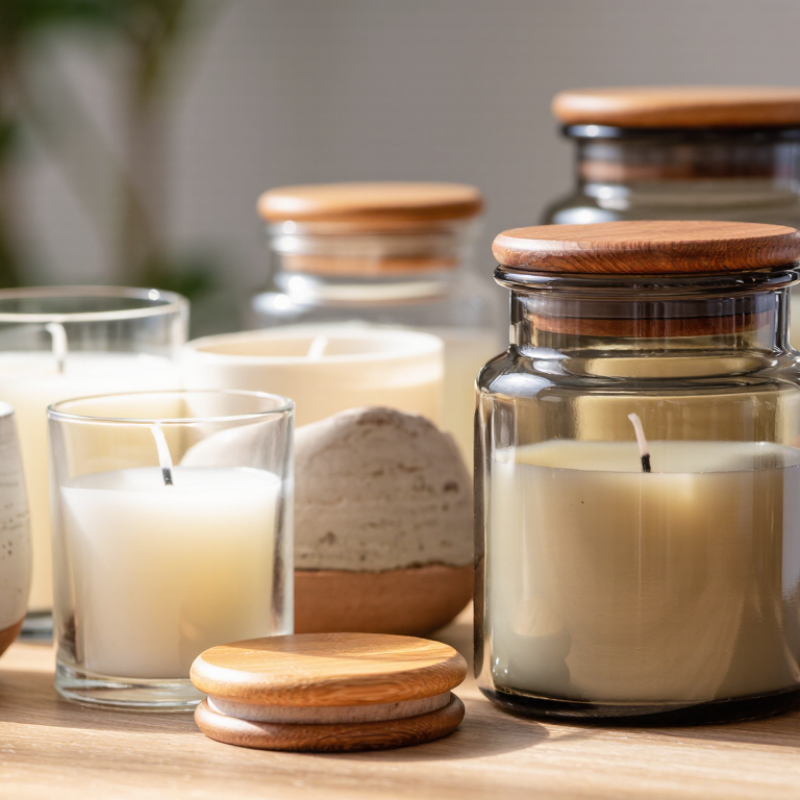
Before choosing a candle jar, define what your brand should make people feel. Calm, craft, luxury, or everyday warmth each suggests different proportions, finishes, and colors. Your packaging goal must be measurable. Do you need shelf impact, gift appeal, refill potential, or lower shipping weight? Write these priorities before sampling. Otherwise, a beautiful jar may solve the wrong problem.
The National Candle Association reports that candles are used in nine out of ten U.S. households.
This broad usage makes clarity and safe handling more important than novelty alone. Trivium Packaging’s 2023 Global Buying Green Report found that 82% of consumers would pay more for sustainable packaging. Yet willingness is not proof of purchase. Customers may admire recycled glass, then reject a lid that feels loose.
Match the jar’s physical language to the identity. Thick, clear glass can communicate permanence and show wax color. Amber or smoked glass can suggest intimacy, while a soft matte finish feels quieter.
Check the details customers touch. Test rim comfort, lid fit, label adhesion, burn visibility, and carton protection.
Measure filled weight and outer dimensions before approving the silhouette. Small changes can reduce breakage and freight costs. Do not overpromise sustainability. Ask suppliers for recycled-content records, closure materials, and end-of-life guidance. Data should support the claim. A jar that looks responsible but cannot be consistently supplied creates an awkward contradiction.
Tips:
Create three physical mock-ups. Place them beside competing shapes and photograph them under warm and cool light. Ask testers what they notice first. Record their words, not your assumptions. Then question whether the jar truly serves the identity and packaging goal.
How to Choose Unique Candle Jars for Your Brand?
Choose the Right Jar Material, Shape, and Size
A candle jar should express your product before the first scent reaches the customer. Glass offers a clean view of the wax and flame. It also supports precise label placement and consistent shelf presentation. Ceramic feels warmer and more handcrafted, but its inner surface needs careful inspection. Tin is lightweight and practical for travel collections. However, it may not suit every premium positioning. I once selected a beautiful ceramic vessel with uneven walls. The appearance was charming, but filling became inconsistent. That mistake changed how I evaluate suppliers.
Shape affects both performance and visual identity. Straight-sided jars usually create a more predictable melt pool. Tapered vessels can look distinctive, yet they may burn unevenly near the rim. Wide jars often provide stronger visual impact, while narrow jars use less shelf space. Measure the inner diameter, not only the external height. Small differences can affect wick selection and burn time. Size should match the intended use. A 100-gram jar suits trial purchases, while larger formats feel better for extended home use. Still, bigger is not always better.
Tips: Request material samples before ordering. Check for cracks, pinholes, sharp rims, and unstable bases. Test each jar with your actual wax, fragrance load, and wick. Record burn behavior at set intervals. Leave room for reconsideration; the most attractive jar may not be the safest or most efficient choice.
Choosing a unique candle jar starts with your brand’s visual language. Color should support the mood customers feel before lighting the candle. Soft cream suggests calm, while deep green can communicate nature and quiet confidence. Warm amber creates a vintage impression. Test each color under daylight, shop lighting, and evening lamps. A shade that looks elegant online may appear dull on a retail shelf. I learned this after approving a sample too quickly.
The finish changes the message, too. Matte glass feels modern and understated, while glossy glass reflects light and looks more decorative. Frosted surfaces create a gentle, airy effect, especially with pale wax. Transparent jars reveal the wax color and make layered textures more noticeable. Metallic details can add luxury, but excessive shine may distract from your label. Keep the lid, label, and jar finish visually balanced. Not every attractive sample belongs in the final collection.
Tips: Create a small color board before ordering samples. Place jars beside your packaging, product photos, and shipping materials. Check whether fingerprints show on glossy finishes. Ask several people to describe the jar in three words, without explaining your intention. Their answers may expose a mismatch. Also, confirm that the chosen coating is suitable for candle heat and regular handling. A beautiful finish must remain practical after repeated use.
How to Choose Unique Candle Jars for Your Brand?
A distinctive jar should protect the flame before it attracts attention. The NFPA reported 7,400 home candle fires in the United States from 2016 to 2020. These fires caused 90 deaths, 670 injuries, and $291 million in direct property damage. Choose heat-resistant glass with a stable base and even wall thickness. Confirm supplier testing, including thermal shock and burn performance. ASTM F2417 offers a useful safety reference for candle products.
Functionality shapes daily use. A wide opening makes trimming and relighting easier. A smooth inner surface helps prevent uneven wax buildup. The lid should close securely, but it should not trap excessive heat immediately after burning. I have found that unusual shapes can create blind spots during testing. That design mistake is easy to miss. Test the jar with the intended wax, wick, fragrance load, and burn time. Record soot, flame height, surface temperature, and cracking risks.
Tips: Place the jar on a stable, heat-resistant surface during testing. Check that warning labels remain readable after handling. PwC’s Future of Customer Experience report found that 32% of customers may leave after one poor experience. A jar that feels safe, opens cleanly, and pours comfortably supports trust. Do not judge appearance alone. That would be careless. Ask testers to handle the jar with one hand, remove the lid, and inspect the final wax pool.
Comparative evaluation of common candle jar materials across safety, functionality, and customer experience.
The chart uses a 1–5 evaluation scale. Safety considers heat tolerance and thermal-shock resistance; functionality covers stability, lid sealing, and production practicality; customer experience reflects appearance, handling, and perceived premium value. Glass, ceramic, and metal containers should always be tested with the selected wax, wick, fragrance load, and burn duration before sale.
Choosing unique candle jars for a brand requires more than attractive photos. Supplier quality, cost control, customization, and sustainability must be evaluated together. In supplier trials, I request physical samples before discussing large orders. Samples reveal flaws. I check rim thickness, base stability, wax compatibility, and surface consistency. A reliable supplier should provide material details, production tolerances, testing records, and clear lead times. Factory visits or video inspections can also reveal handling practices that catalogs hide.
Cost comparisons should include more than the unit price. Calculate tooling, sample fees, packaging, freight, customs, breakage, and minimum order quantities. A low-priced jar may become expensive after protective inserts and damaged shipments. Custom colors, embossed logos, unusual shapes, and special finishes often require separate molds or longer production schedules. Small details matter. Ask whether the supplier can repeat the same color across batches, because slight variations may affect a premium collection. I once focused too heavily on appearance and underestimated packaging costs. That changed my view.
Sustainability needs evidence, not attractive wording. Ask about recycled glass content, energy practices, coatings, transport efficiency, and end-of-life options. Heavier jars can feel luxurious but may increase shipping emissions and material use. Refillable designs, removable labels, and standard shapes may support longer use. However, a sustainable claim is incomplete without documentation or measurable data. Compare suppliers using the same criteria, then record trade-offs in a simple cost and performance sheet. The most distinctive jar is not always the most responsible choice.
| Jar Option | Typical Supplier Type | Typical Capacity | Estimated Unit Cost (USD, 5,000 units) | Typical MOQ | Customization Potential | Typical Lead Time | Sustainability Considerations | Best Use Case |
|---|---|---|---|---|---|---|---|---|
| Clear Soda-Lime Glass | Standard glass container wholesaler | 180–250 g of wax | $0.55–$1.10 | 500–2,000 units | Labels, screen printing, frosting, colored coating, custom lids | 2–6 weeks for stock items | Widely recyclable where glass collection exists; relatively heavy and energy-intensive to transport | Accessible everyday collections and transparent product designs |
| Amber Glass | Specialty glass packaging distributor | 180–250 g of wax | $0.70–$1.35 | 500–2,000 units | Screen printing, paper labels, debossed lids, limited color options | 2–8 weeks for stock items | Recyclable glass; darker color can reduce light exposure but may require additional coloring during production | Apothecary, wellness, botanical, and vintage-inspired collections |
| Recycled-Content Glass | Glass manufacturer or sustainability-focused packaging supplier | 180–300 g of wax | $0.80–$1.60 | 1,000–5,000 units | Speckled or naturally varied finish, labels, printing, custom color at higher volumes | 4–10 weeks for stock items | Uses post-consumer or post-industrial cullet; recycled content and recyclability should be verified with documentation | Eco-positioned collections and brands seeking visible material variation |
| Ceramic Vessel | Ceramic packaging factory or pottery manufacturer | 200–350 g of wax | $1.40–$3.50 | 1,000–3,000 units | High: custom shapes, glaze colors, textures, embossing, and printed artwork | 8–16 weeks, including sampling and kiln production | Durable and reusable; heavier than glass and requires high-temperature firing | Premium, artistic, giftable, and refillable candle concepts |
| Aluminum Tin | Metal packaging manufacturer or tin wholesaler | 120–250 g of wax | $0.35–$0.95 | 500–2,000 units | Printed lids, full-body printing, embossing, pull tabs, and multiple finishes | 3–8 weeks for stock items | Lightweight and highly recyclable; coatings, mixed materials, and local recycling access affect recovery | Travel candles, discovery sets, outdoor use, and lower-shipping-weight formats |
| Frosted or Coated Glass | Decorative glass supplier or finishing partner | 180–250 g of wax | $0.85–$1.80 | 1,000–5,000 units | Frosting, spray color, gradient effects, screen printing, and metallic details | 5–12 weeks, depending on finishing work | Glass remains recyclable, but coatings and decoration may affect sorting or reuse | Modern, minimalist, seasonal, and visually distinctive shelf designs |
Build your system. Protect your boat. Join the movement.