How to Choose the Best Anti-Collision Cylinder Cap in 2026? begins with a simple question: what must the cap protect, and under which conditions? A cylinder may face warehouse impacts, transport vibration, rain, dust, or sudden temperature changes. The right Anti-Collision Cylinder Cap should match the cylinder’s neck design, thread pattern, dimensions, and intended service. A loose fit is dangerous. An overly tight fit can create handling problems.
Cylinder-protection engineer Elena Marquez offers a practical reminder: “A small cap can prevent a large handling failure.” Her view reflects years of reviewing damaged cylinders, worn threads, and poorly fitted protective components. Look closely at material strength, impact resistance, internal clearance, ventilation, and visible identification marks. Check whether the supplier provides dimensional data, inspection guidance, and traceable quality records. Test evidence matters more than polished product photography.
Small details matter.
A cap with thick walls may add weight. A lightweight design may crack under repeated impact. Some polymer blends perform well outdoors but become brittle in cold storage. Metal options can resist crushing, yet they may scratch nearby equipment. No product is perfect. Selection involves trade-offs, and those trade-offs deserve honest review.
This 2026 guide compares practical features, supplier reliability, maintenance needs, and application-specific risks. It also questions common assumptions, because “universal” does not always mean suitable. Before purchasing, measure the cylinder, define the operating environment, and confirm compatibility with the manufacturer. Safe choices begin with accurate information, not guesswork.
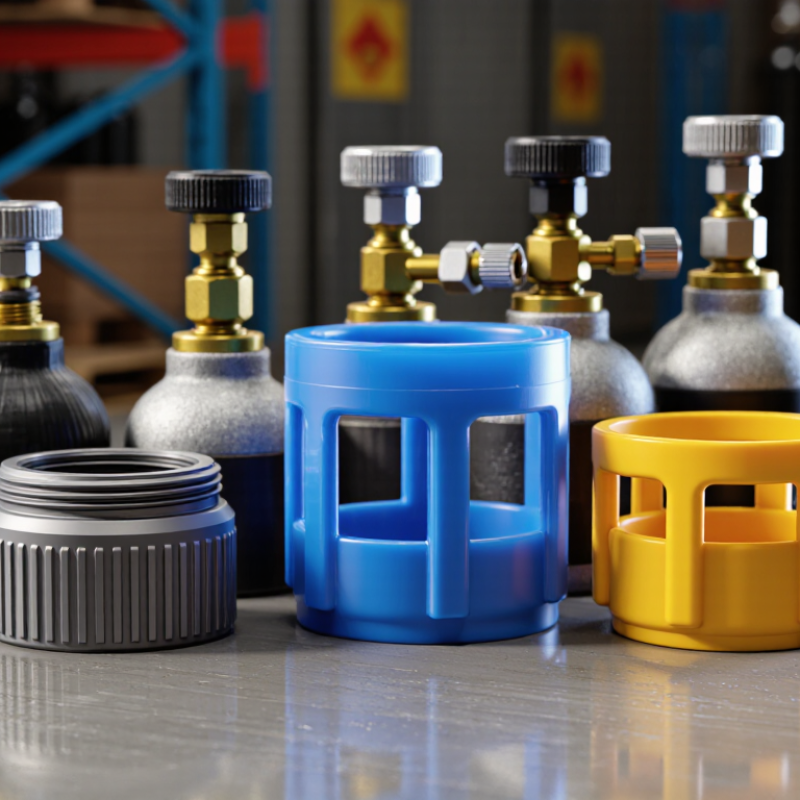
An anti-collision cylinder cap is a protective cover fitted over a compressed-gas cylinder valve. It shields the valve from impact, falling tools, and contact during storage or transport. The cap does not stop gas leakage by itself. It reduces the chance of valve damage, which can cause a sudden release of stored pressure.
Its working principle is simple. The cap creates a physical barrier around the valve and transfers impact toward the stronger cylinder body. A correctly fitted cap should remain secure, allow practical handling, and avoid pressing the valve or outlet. OSHA 29 CFR 1910.101 requires compressed-gas equipment to follow recognized safety practices, including protection against physical damage. The U.S. Bureau of Labor Statistics recorded about 2.6 million nonfatal workplace injuries in private industry during 2023. That figure covers many hazards, but it shows why small protective components deserve serious attention.
Material choice matters. Steel caps resist heavy impacts, while reinforced polymers can reduce weight and corrosion. Check thread quality, clearance, ventilation, and compatibility with the cylinder design. A loose cap is worse than expected. In field checks, damaged threads and poor fitting are easy to overlook. The design may look strong, yet fail during a short drop or crowded handling task. Selection should consider impact energy, temperature, storage position, inspection frequency, and the operator’s actual working conditions.
In 2026, the best anti-collision cylinder cap must protect the valve during handling, storage, and transport. It should meet the applicable requirements of ISO 11117 for transportable gas-cylinder valve protection. Fit matters. The cap needs controlled threads, secure retention, and enough clearance for the valve assembly. Materials should resist impact, corrosion, ultraviolet exposure, and temperature changes. A cap that cracks after one warehouse drop is not reliable protection.
Real workplace data shows why selection deserves care. The U.S. Bureau of Labor Statistics recorded 5,283 fatal occupational injuries in 2023, although its report covers all industries, not cylinders alone. The UK Health and Safety Executive recorded 138 worker fatalities during 2023–24. These figures do not prove that caps caused incidents. They do show why basic handling controls must be treated seriously. A practical cap should also allow visual inspection, avoid sharp edges, and remain attached during lifting or vehicle movement.
Buyers should request impact-test evidence, material specifications, dimensional drawings, and batch traceability. The design should not trap water against the valve or hide corrosion. It should also remain compatible with the cylinder’s connection and local transport rules. Ask for third-party test records where available. Do not trust appearance alone. One weakness is often overlooked: operators may remove the cap and leave it on the floor, where it becomes damaged or misplaced. Training and inspection still matter, even with a well-designed cap. Safety performance depends on the whole handling system.
How to Choose the Best Anti Collision Cylinder Cap in 2026?
How to Compare Materials, Designs, and Protective Performance
Choosing an anti-collision cylinder cap starts with its working environment. A cap used on a warehouse cart faces different risks from one transported outdoors. Inspect the material, wall thickness, fit, and resistance to repeated impacts.
Polyurethane offers flexibility and absorbs sharp contact well. Rubber can provide strong grip, especially on damp floors. Reinforced plastic is lighter and resists many chemicals, but it may crack in severe cold. Metal can deliver high structural strength, although it adds weight and may transfer impact energy to the valve. I once assumed heavier meant safer. Field checks proved that poor fit can make a heavy cap useless.
Design details often decide protective performance. Look for full valve coverage, rounded edges, secure locking points, and drainage openings. Ventilation matters when moisture may collect inside. The cap should stay attached during handling, yet remain removable without excessive force. Measure the cylinder neck carefully. A loose cap can shift after a short trip across a rough floor.
Reliable evaluation needs more than a visual inspection. Check impact resistance, abrasion wear, ultraviolet exposure, temperature changes, and repeated installation cycles. Record cracks, distortion, and loosened fasteners after testing. Review independent test reports and confirm alignment with applicable local safety requirements. Performance claims deserve evidence. Even experienced buyers can overlook small clearance issues around valves.
A comparison of common cap materials based on typical impact absorption, weather resistance, low-temperature flexibility, and abrasion resistance.
Scores are normalized from 0 to 100 using typical material-property ranges reported for thermoplastic polyurethane, EPDM rubber, silicone rubber, and PVC. They are comparative engineering indicators rather than certified laboratory ratings. Before purchasing, verify impact, compression-set, abrasion, and UV performance against the intended operating temperature and installation conditions.
Choosing the best anti-collision cylinder cap in 2026 starts with compatibility, not appearance. A cap must match the cylinder’s neck design, diameter, thread pattern, and shoulder shape. Measure these points with clean calipers. Do not rely on a product photo alone.
Check the cap against the cylinder while both are empty and stable. The opening should sit evenly around the neck. It should not scrape the valve, wobble, or press against fittings. Leave enough clearance for protective components and handling equipment. A tight fit is not always a safe fit. Sometimes, a cap that feels secure is simply misaligned.
Installation requirements deserve equal attention. Confirm whether the cap uses hand tightening, clips, bolts, or a dedicated mounting ring. Review the supplied instructions and use the stated torque when fasteners are included. Over-tightening can deform plastic or damage threads. Under-tightening may allow movement during transport. Keep hands clear of pinch points. Wear suitable eye and hand protection during fitting and inspection.
Before regular use, lift the cylinder carefully and check for movement. Recheck the cap after the first handling cycle. This step is easy to skip. It should not be. Inspect cracks, distorted edges, loose hardware, and worn contact surfaces at scheduled intervals. If measurements seem uncertain, pause installation and ask a qualified technician to verify the fit.
| Cylinder Type or Use | Common Valve Outlet Reference | Compatibility Checks | Recommended Fit Criteria | Preferred Cap Construction | Installation Requirements | Reject the Cap When |
|---|---|---|---|---|---|---|
| High-pressure oxygen cylinders Used for medical, laboratory, or industrial oxygen service. | CGA 540 is a common reference in North America. The valve outlet standard identifies the valve; it does not determine the protective-cap thread. | Confirm cylinder neck-ring thread, outside diameter, valve height, and whether the valve protection cap is intended for oxygen service. | Cap internal diameter should normally provide approximately 2–4 mm of total clearance over the neck-ring diameter. Internal height should extend at least 10–20 mm above the highest valve component. | Steel or impact-resistant engineered polymer with a vented design and no material that can contaminate oxygen equipment. | Install by hand after confirming the valve is closed and the cylinder is upright. Keep threads clean, dry, and free from oil or grease. | The cap contacts the valve handwheel, outlet, pressure-relief device, or cylinder shoulder; or it requires force to start threading. |
| Inert and shielding gas cylinders Typical gases include nitrogen, argon, helium, and mixed shielding gases. | CGA 580 is commonly used for several inert-gas applications in North America, but local valve standards may differ. | Match the protective-cap interface to the cylinder neck ring rather than relying only on the gas name or outlet connection. | Use a cap that fully covers the valve and allows free movement without side loading. A practical target is at least 1 mm radial clearance from fixed valve components. | Impact-resistant steel or polymer with reinforced ribs, rounded edges, and corrosion-resistant hardware. | Align the thread vertically and tighten only until securely seated. Do not use a pipe wrench or extension bar unless specifically required by the cap design. | The cap rocks excessively, bottoms out before engaging the thread, or leaves any part of the valve exposed to a likely impact. |
| Carbon dioxide cylinders Used for beverage dispensing, laboratories, and industrial processes. | CGA 320 is a common North American reference for carbon dioxide service. | Check the cylinder neck-ring dimensions and the valve’s relief-device location. Carbon dioxide cylinders may have different shoulder and valve arrangements from other gas cylinders. | The cap must not obstruct the pressure-relief device. Maintain the cap manufacturer’s specified clearance around the valve and relief components. | Vented, corrosion-resistant construction with drainage openings to reduce moisture accumulation. | Keep the cylinder secured against tipping before fitting the cap. Check that the cap remains stable during normal handling and transport. | Vent openings are blocked, the cap presses against the relief device, or condensation and debris cannot drain from the cap. |
| Flammable gas cylinders Includes many fuel-gas and combustible-gas applications. | Valve outlet connections vary by gas, country, and cylinder design; the outlet type must be verified from the cylinder marking or documentation. | Confirm the cap is approved for the specific cylinder, gas service, temperature range, and hazardous-area handling requirements. | The cap must prevent impact without trapping gas around the valve. Fit should be secure but removable without striking, twisting, or damaging the valve. | Non-sparking or suitably rated materials where required, with rounded impact surfaces and adequate ventilation. | Remove ignition sources, verify the valve is closed, and follow the applicable cylinder-handling and hazardous-material procedures. | The cap is unapproved for the gas service, creates a sealed pocket around the valve, or can generate damaging impact or friction during installation. |
| Medical or portable cylinders Small cylinders where low weight and frequent handling are important. | Valve outlet and neck-ring configurations vary widely by cylinder size and regional standard. | Measure the actual cylinder; do not select a cap from the cylinder volume alone. Check compatibility with handles, carts, regulators, and carrying cases. | Allow enough clearance for easy fitting while preventing noticeable wobble. The cap should not add an obstruction to the cylinder’s normal carrying points. | Lightweight impact-resistant polymer or thin-gauge corrosion-resistant metal with smooth, cleanable surfaces. | Fit the cap before moving the cylinder. Verify that the cap remains attached during lifting, cart movement, and storage. | The cap interferes with the regulator, carrying handle, cart strap, or required visual inspection of the cylinder label. |
| Large industrial cylinders or bundles Used in storage racks, production areas, and transport frames. | Outlet standards depend on gas and jurisdiction; large cylinders may also use different neck-ring sizes than smaller cylinders containing the same gas. | Check cap load rating, lifting restrictions, cylinder height, rack clearance, and compatibility with the bundle frame. | The cap should remain fully seated under normal vibration and handling, while leaving sufficient clearance for rack members and restraints. | Heavy-duty steel or reinforced polymer with impact ribs, drainage, replaceable fasteners, and a corrosion-resistant finish. | Secure the cylinder or bundle before installation. Use designated lifting points only; the protective cap should not be used as a lifting handle unless rated for that purpose. | The cap is used to lift the cylinder without a rated lifting feature, collides with the frame, or cannot be removed for inspection without moving the cylinder unsafely. |
Choosing an anti-collision cylinder cap requires more than checking its price. Liberty Mutual’s 2024 Workplace Safety Index estimated that serious workplace injuries cost U.S. employers $58.5 billion in 2022. Impact prevention deserves practical attention.
Start with material and test evidence. A cap should resist cracking, UV exposure, oils, and repeated contact with metal racks. Look for documented impact testing, not vague claims. ISO 11116 covers closures for gas cylinders, while ISO 11114 addresses material compatibility. These standards help, but they do not replace site trials.
Inspect the cap after loading. It should fit tightly without forcing the valve, and workers should remove it using gloves, even in cold weather. Check threads, locking points, and internal clearance every month. A damaged thread can become expensive quickly. Keep spare caps nearby. Downtime is often overlooked.
Maintenance records should show inspection dates, failed units, and replacement costs. A cheaper cap may need frequent replacement. That is not real value. Compare total cost across three years, including labor and damaged cylinders. In practice, dust can hide hairline cracks, so cleaning must be part of inspection. I would also test several units from different production batches. One sample is not enough. Sometimes the specification looks strong, but the cap feels awkward during actual handling. That weakness matters.
Build your system. Protect your boat. Join the movement.