How to Choose Preschool Classroom Seating in 2026?

Choosing Preschool Classroom Seating in 2026 involves more than selecting colorful chairs and small tables. The right arrangement can support movement, conversation, concentration, and emotional comfort throughout the school day. A classroom should feel welcoming when children enter, with clear walking paths, soft reading corners, and tables that match their changing physical needs.

In practice, experienced preschool teachers assess how children use each area. Some children focus better at a quiet table near natural light. Others need space to stand, stretch, or work with a partner. Preschool Classroom Seating should therefore respond to real classroom behavior, not only product descriptions or attractive photographs. Observe where children gather, where conflicts begin, and which seats are left empty. Small clues matter.

Safety and accessibility remain essential. Furniture should be stable, easy to clean, and suitable for children’s height and abilities. Rounded edges help, but they do not solve every risk. Adults must still supervise movement and review the room regularly. Local safety guidance and manufacturer instructions should be checked before purchase.

There is no perfect layout.

This guide compares fixed tables, flexible seating, floor-level options, and adaptable group arrangements. It also considers comfort, durability, inclusion, storage, and teacher visibility. Some popular trends may look innovative but work poorly in crowded rooms. A thoughtful choice may be less fashionable, yet more useful every day. Reassess the arrangement after observing children over time. Their behavior may challenge your original plan, and that is valuable evidence.
How to Choose Preschool Classroom Seating in 2026?

Understanding Preschool Classroom Seating Needs in 2026

How to Choose Preschool Classroom Seating in 2026?

Understanding Preschool Classroom Seating Needs in 2026

Preschool seating in 2026 should support movement, comfort, and quick changes in activity. Children may sit on low chairs, floor cushions, or stable stools. Their feet should touch the floor whenever possible. This improves balance and helps children focus during stories, puzzles, and drawing.

A fixed seating plan can look tidy. It may not serve every child well.

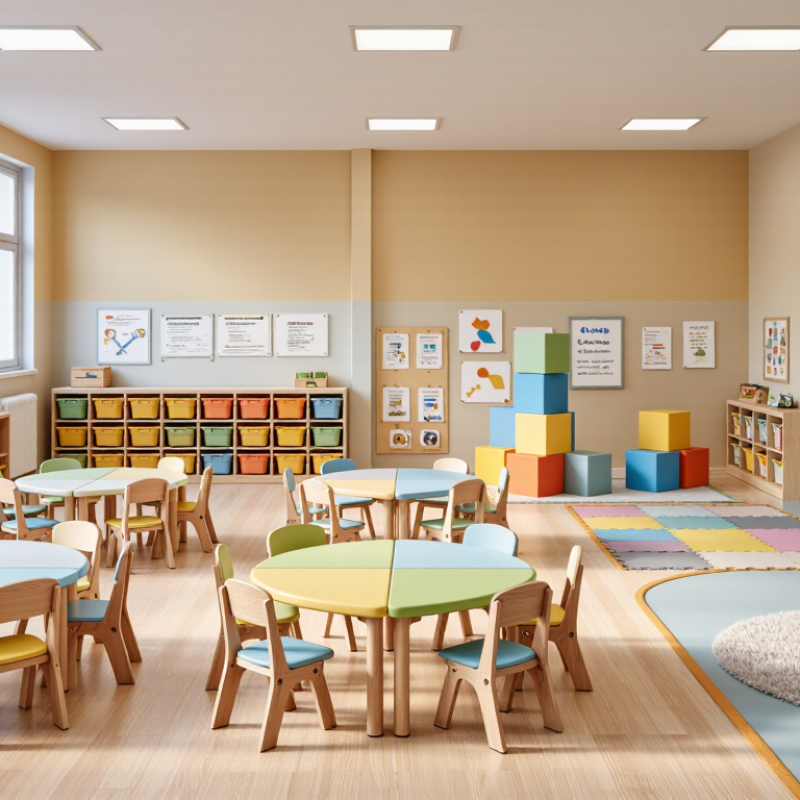
Classroom observations show that preschoolers need several seating choices throughout the day. A round table can support four children during collaborative play. A quiet corner with a soft mat can help a child manage noise. Tables should leave clear paths for children using mobility aids or needing extra space. Rounded edges and strong, washable materials also matter. Check for loose screws, slippery feet, and uncomfortable surfaces regularly.

Teachers should match seating with real routines, not only room measurements. Watch how children enter, sit, reach, and leave. Some children lean forward when concentrating, while others need gentle movement. Adjustable furniture can help, but it is not automatically the best answer. It may be expensive, difficult to clean, or too complex for young users. I have sometimes chosen attractive seating that later blocked supervision. That mistake changed my planning. The most reliable arrangement keeps children visible, supported, and able to participate without constant correction.

Comparing Seating Types for Different Preschool Activities

How to Choose Preschool Classroom Seating in 2026?

Comparing Seating Types for Different Preschool Activities

Preschool seating should match the activity, not simply fill the room. Low tables with small chairs support drawing, puzzles, and supervised writing practice. Round tables encourage conversation because children can see every face. However, crowded tables may create noise and accidental conflicts. Leave enough space for children to move safely.

Floor cushions and washable mats work well for storytelling, music, and group discussions. They create a relaxed setting, but some children may lose focus without clear personal boundaries. Lightweight stools support quick transitions between stations. They are useful during art or building activities, although younger children may tip them when moving too quickly. In my classroom observations, mixed seating often worked better than one uniform arrangement. Still, I once placed soft seating too close to a busy block area. The constant movement distracted several children.

Tips: Watch how children use each seat for one week. Choose stable furniture with rounded edges and easy-clean surfaces. Keep walkways visible. Mark personal spaces with small floor shapes when needed. Ask teachers whether the arrangement supports quiet children, active children, and children needing extra physical support. A seating plan can look efficient on paper, yet fail during real play.

Planning Safe, Flexible, and Inclusive Classroom Layouts

How to Choose Preschool Classroom Seating in 2026?

A safe preschool layout begins with clear sightlines. Teachers should see every child from the main activity area. Keep walkways open, with no loose cords or sharp furniture corners. Choose lightweight tables and chairs that children can move safely. Rounded edges help, but stable bases matter more. A small reading nook needs soft lighting, firm cushions, and an unobstructed exit.

Flexibility supports movement and inclusion.

The World Health Organization recommends at least 180 minutes of daily physical activity for children aged three to four, including 60 minutes of moderate-to-vigorous movement (WHO, Guidelines on Physical Activity, 2019). Fixed rows work against that need.

Use movable tables, floor spaces, and varied seating heights. Include a quiet chair near the group area for children who become overwhelmed. Leave enough turning space for mobility devices and adult support. Measure the room, not just the furniture.

OECD’s Starting Strong reports emphasize responsive, child-centered learning environments (OECD, 2017).

Seating should support small groups, independent play, and quick teacher access. A horseshoe arrangement may improve visibility, but it can still limit movement. Test it during real routines. Watch where children crowd, hide, or trip.

I would revise the plan after one busy morning.

No layout is perfect. Children’s needs change faster than floor plans.

Matching Seating Choices to Children’s Ages and Learning Styles

How to Choose Preschool Classroom Seating in 2026?

Preschool seating should follow children’s ages, bodies, and learning preferences. A three-year-old may need a low, stable chair with firm foot support. Older preschoolers may manage lightweight chairs and flexible table groups. The World Health Organization’s child growth standards show that body size changes quickly during early childhood. Therefore, one seat size cannot serve every learner well. Measure children, rather than trusting age labels alone.

Learning styles need careful interpretation. The Education Endowment Foundation reports that collaborative learning can add about five months of progress, on average. Seating should support conversation, shared materials, and short periods of independent work. However, research does not strongly support assigning fixed “visual” or “auditory” learner types. Children benefit more from varied experiences. A quiet corner, movable chairs, and floor cushions can support choice without labeling a child. I would not assume a child who avoids circle time dislikes group learning. The seat may feel unstable, crowded, or simply wrong.

Tips: Keep pathways clear. Test chairs with real children before buying many. Check whether feet touch the floor, backs stay supported, and tables allow relaxed shoulders. Use small groups for storytelling, pairs for building tasks, and open floor space for movement. NAEYC’s Developmentally Appropriate Practice guidance also emphasizes responsive environments and active learning. Recheck the setup each term. Growth can make yesterday’s “perfect” chair uncomfortable surprisingly fast.

How to Choose Preschool Classroom Seating in 2026?

Matching Seating Choices to Children’s Ages and Learning Preferences

The chart uses typical preschool furniture seat-height ranges aligned with widely used European classroom furniture size guidance, while the seating recommendations reflect common early-childhood activity needs. Seat height should ultimately be checked against each child’s stature: feet should rest comfortably on the floor, knees should be near a right angle, and the table should allow relaxed shoulders. “Learning preferences” describe activity needs rather than fixed learning styles.

Evaluating Comfort, Durability, Accessibility, and Sustainability

How to Choose Preschool Classroom Seating in 2026?

Evaluating Comfort, Durability, Accessibility, and Sustainability

Comfort should support movement, not force children to sit rigidly. In classroom trials, seats worked better when children could place both feet firmly on the floor. Rounded edges, breathable surfaces, and gentle back support reduce daily discomfort. Avoid overly soft cushions. They can make posture unstable and hold spills.

Durability matters because preschool furniture faces climbing, dragging, washing, and accidental impacts. Check joint strength, surface resistance, and replaceable parts before purchasing. I once favored a lightweight chair because staff could move it easily. It later tipped during active play. That mistake changed our evaluation process. Stability must come before convenience. Furniture should also tolerate frequent cleaning without cracking or discoloring.

Accessibility requires more than leaving wider aisles. Provide different seat heights, stable options with arm support, and clear visual contrast for children with limited vision. Keep pathways open for mobility devices and allow children to approach tables from several directions. Sustainability deserves practical scrutiny. Choose responsibly sourced materials, low-emission finishes, and designs that can be repaired instead of discarded. Ask for material documentation, not vague environmental claims. Some recycled surfaces looked impressive but failed after repeated cleaning. The greener choice was not always the obvious one. Inspect real samples, involve teachers, and observe how children actually use each seat.

Build your system. Protect your boat. Join the movement.

Compare Products
Talk to Sales