How to Choose the Right CCS Charge Port for Your EV?
As electric vehicle (EV) adoption accelerates worldwide, the choice of a suitable Ccs Charge Port becomes critical. According to a recent study by the International Energy Agency, global EV sales surged by 109% in 2021, driving demand for compatible charging solutions. CCS, or Combined Charging System, emerged as a leading standard, known for its versatility in providing both AC and DC charging options. This standard significantly influences charging speed and accessibility for EV drivers, making the selection of the right CCS charge port an essential consideration.
The proliferation of charging infrastructure is equally compelling. A report from the U.S. Department of Energy states that there were over 100,000 public charging ports in the country by the end of 2022, and the number is steadily rising. However, not all CCS charge ports are created equal. Different manufacturers may support various features that affect charging efficiency and user experience. This variability can lead to confusion and misalignment with consumer needs, raising questions about the optimal choice for both new and existing EV owners.
Investing time to understand specific requirements is vital. Drivers must consider vehicle compatibility, charging speed, installation options, and location. While the CCS standard is robust, the decision-making process can be overwhelming. Reflecting on these factors ensures a more informed decision when selecting the right CCS charge port, aligning with one's driving habits and lifestyle.
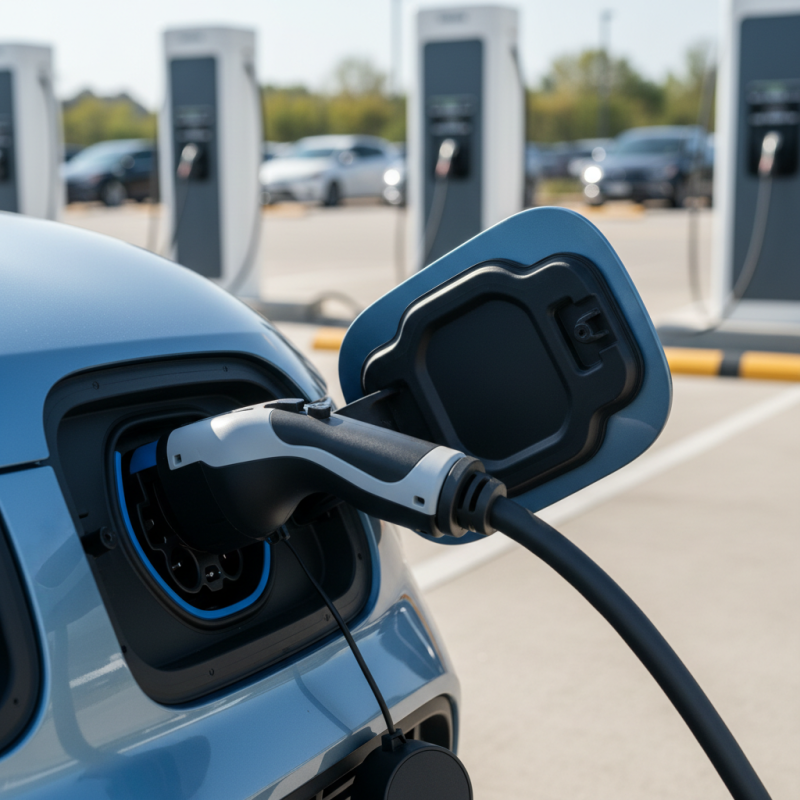
Understanding the Basics of CCS Charge Ports for Electric Vehicles
When selecting a CCS charge port for your electric vehicle (EV), understanding the basics is essential. CCS, or Combined Charging System, offers one of the most versatile charging solutions available today. It allows for both AC and DC charging, which is a significant advantage. Many EV owners appreciate the convenience it provides, enabling faster charging options during long trips.
However, not all EVs support CCS compatibility. Research your vehicle’s specifications and charging capabilities. There can be differences between models, and knowing your car's requirements ensures you choose the correct charge port. Charging infrastructure is also evolving. While more stations are adopting CCS, you still might encounter limited options in certain areas.
It is crucial to evaluate the charging speed. Some CCS ports can provide up to 350 kW, while others offer lower capacities. This difference can significantly affect your charging time. Always check the power output of various stations. As you weigh these factors, remember that the landscape of EV charging is changing rapidly. Staying informed about advancements and updates will help in making a better decision. Reflecting on these details builds a more informed choice for your EV charging needs.
Types of CCS Charge Ports: Connector Variants and Compatibility
When selecting a CCS charge port for your electric vehicle, understanding connector variants is essential. The Combined Charging System (CCS) is widely adopted and features multiple connector types. Notably, CCS1 is prevalent in North America, while CCS2 predominates in Europe and other regions. The differentiation between these connectors can impact charging speed and infrastructure accessibility.
Industry reports indicate that as of 2022, over 60% of public charging stations supported CCS connections. However, not all EVs are compatible with both types. Many vehicles are designed for a specific standard, which can lead to missed charging opportunities. It's essential for consumers to investigate their EV model's specifications and the local charging network.
Furthermore, charging speeds vary significantly based on the connector type. CCS2 can handle higher power levels, achieving up to 350 kW, compared to CCS1's maximum of 150 kW. Yet, the infrastructure may not always reflect these capabilities. While CCS technology is advancing, gaps in availability persist, and consumers may encounter frustration when seeking fast charging solutions. Understanding these intricacies is crucial for making informed decisions about EV charging.
Evaluating Charging Speed: Power Ratings of CCS Charge Ports
When evaluating CCS charge ports, charging speed is a crucial factor. Power ratings for CCS ports can vary significantly. Most common CCS chargers operate at power levels of 50 kW to 350 kW. A higher power rating means faster charging, which many users desire. For example, a 150 kW charger can fully charge an EV in about 30 minutes, while a 50 kW charger may take over an hour.
Choosing the right one isn't simple. Not all EVs can handle high power levels. Some models are limited to 100 kW or even less. It's essential to match your vehicle's capabilities with the charger. Mismatched power ratings can lead to prolonged charging times. Users often report frustration when a charger’s power exceeds their vehicle's acceptance rate.
Tips: Check your EV’s specifications and calculate your travel needs. If you often drive long distances, consider a higher-rated charger. For local trips, a lower power option may suffice. Always assess the availability of charging stations along your routes. You want reliable access to the fastest charger within your area. Remember, versatility in charging options can enhance your EV experience, but understanding your specific needs is just as vital.
Charging Speed of Different CCS Charge Ports
Key Considerations for Home vs. Public Charging Infrastructure
When considering charging infrastructure for your electric vehicle (EV), it's essential to distinguish between home and public solutions. Home charging offers convenience and cost-effectiveness. You can install a CCS port in your garage or driveway. This setup allows you to charge overnight, leveraging lower electricity rates while you sleep.
Public charging, however, presents unique challenges. Stations may vary in power output and availability, which can lead to frustrating wait times. Not every public charger is equipped with a CCS port. You may arrive to find a long line or discover it’s out of service. Planning ahead is critical for long trips or when you lack sufficient charge at home.
The choice between home and public charging isn't just about convenience. You need to reflect on your driving habits and lifestyle. Will you frequently visit areas with sparse charging options? An investment in home charging could save you headaches later. But don't overlook the unpredictable nature of public charging networks. It requires you to stay informed and flexible.
How to Choose the Right CCS Charge Port for Your EV? - Key Considerations for Home vs. Public Charging Infrastructure
| Charging Location | Charge Port Type | Power Output (kW) | Charging Time (hours) | Cost Estimate ($) |
| Home | Level 2 | 7.2 | 8-10 | 500 |
| Home | DC Fast Charger | 24 | 1-2 | 1500 |
| Public | DC Fast Charger | 50 | 30 | 0.10 per kWh |
| Public | Level 2 | 7.2 | 4-6 | 0.05 per kWh |
Future Trends in CCS Charging Technology and Standards
The CCS charging standard has evolved rapidly. As electric vehicles gain popularity, the need for efficient charging solutions grows. Future trends indicate a shift towards more integrated charging networks. This could enhance user convenience significantly.
Emerging technologies aim to increase charging speeds. Ultra-fast chargers are being developed to reduce wait times for users. This isn’t without challenges. Infrastructure upgrades are necessary to support these advancements. The balance between speed and usability must be carefully managed.
Standardization of charging ports is also vital. Variations may confuse consumers and hinder adoption. Stakeholders must collaborate to create uniform guidelines. Future advancements may include wireless charging solutions. As exciting as this sounds, reliability and cost remain concerns. Continuous reflection on user experiences and technological advancements is essential.