Industrial automation is moving toward connected, traceable, and remotely manageable equipment. This shift increases demand for reliable Rs422 To Ethernet converters in factories, substations, laboratories, and transport systems. HMS Networks’ 2024 Industrial Network Market Shares report found Industrial Ethernet accounted for 71% of new factory automation connections. That figure signals a practical change, not merely a technology trend.
MarketsandMarkets also projects continued growth in the Industrial Ethernet market, driven by smart manufacturing, distributed control, and real-time monitoring. Yet many machines still use RS422 because it offers balanced signaling, strong noise resistance, and dependable long-distance communication. A converter creates the bridge. It connects legacy instruments to modern Ethernet networks without forcing immediate equipment replacement.
This guide reviews China’s top 10 Rs422 To Ethernet Converter suppliers through engineering and purchasing criteria. We consider protocol support, isolation design, serial protection, operating temperature, configuration tools, documentation, certifications, and after-sales responsiveness. Actual field experience matters here. A converter may perform well on a test bench but fail near variable-frequency drives or long cable routes. Datasheets can look complete. They are not always complete enough.
No ranking is permanently objective. Product availability and firmware quality can change. Therefore, readers should verify current specifications, test samples, and confirm compatibility with their own baud rates, connectors, network topology, and industrial environment. The selected companies represent useful starting points for comparison, rather than automatic purchasing recommendations. Reliability begins with evidence.
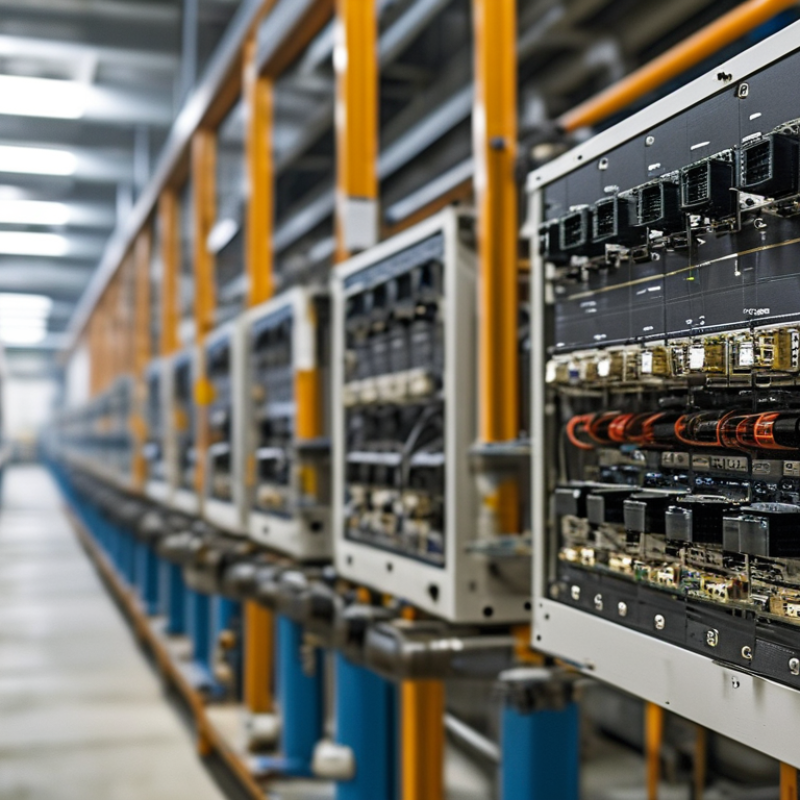
RS422-to-Ethernet converters connect legacy serial equipment with modern IP networks. RS422 uses differential signaling, which improves noise resistance over long industrial cables. The converter receives serial data, packages it into TCP or UDP packets, and sends it through Ethernet. It also reverses this process for incoming network commands.
Typical functions include baud-rate selection, data-bit configuration, buffering, and remote parameter management. Industrial models may add electrical isolation, surge protection, and dual power inputs. These details matter in a control cabinet with 24-volt power, motors, and frequent electrical interference. A reliable unit should support the exact serial mode, connector type, and network protocol required by the equipment. Check these specifications carefully.
Applications include factory controllers, energy meters, laboratory instruments, building automation, and remote monitoring terminals. For example, a technician can read a meter in a control room without extending a serial cable across the plant. Ethernet also supports centralized logging and controlled access for maintenance teams. However, performance depends on cable quality, grounding, network traffic, and software settings. No converter solves every communication fault. I have seen stable hardware fail because of mismatched parity or an overlooked termination resistor. Supplier evaluations should include isolation tests, temperature ratings, configuration tools, documentation, and practical after-sales support. A short bench test is wiser than trusting a specification sheet alone.
An RS-422-to-Ethernet converter bridges differential serial equipment with an Ethernet network, allowing legacy instruments, controllers, meters, and industrial devices to communicate through standard IP-based infrastructure.
The chart compares commonly specified maximum cable-segment lengths. RS-422 can reach up to approximately 1,200 m at 100 kbps under TIA/EIA-422-B reference conditions, while common twisted-pair Ethernet segments are typically limited to 100 m. Actual performance depends on cable quality, transmission speed, electromagnetic interference, connectors, and network design.
China Top 10 RS422 to Ethernet Converter Suppliers
Key Criteria for Evaluating Chinese Converter Suppliers
Demand for industrial Ethernet continues to rise. MarketsandMarkets projects the market will grow from USD 33.9 billion in 2023 to USD 56.6 billion by 2028, at a 10.8% CAGR. This growth increases supplier choices, but not every converter deserves the same confidence. A reliable evaluation should begin with RS-422 electrical compliance, isolation ratings, baud-rate stability, and documented EMC testing.
Request test reports, firmware revision records, and production traceability. Check whether the supplier validates converters under heat, vibration, voltage fluctuation, and continuous data transmission. Practical testing matters. Connect a 20-meter shielded cable, introduce realistic packet traffic, and monitor errors for several hours. Ask for measured latency, not only a “high-speed” claim. The interface should also support clear diagnostics, including link status, serial activity, and fault logs.
The IEC 61000 series provides useful guidance for electromagnetic compatibility testing. However, certification paperwork alone cannot prove field reliability. Inspect terminal quality, DIN-rail strength, enclosure protection, and surge performance. Review the supplier’s replacement policy and response time with technical staff. A serious supplier should explain configuration limits without hiding inconvenient results.
Cost remains important, but the lowest quotation may exclude testing and support. That is where evaluation becomes less comfortable. Some specifications look complete, yet omit temperature derating or isolation details. Buyers should compare three samples from different production batches. Numbers matter. Independent verification is still necessary.
| No. | Evaluation Dimension | Key Technical or Commercial Data | Recommended Benchmark | Verification Evidence | Suggested Weight | Scoring Guidance |
|---|---|---|---|---|---|---|
| 1 | RS-422 Electrical Compliance | Differential, balanced serial interface with separate transmit and receive pairs; supports point-to-point or approved multidrop configurations depending on the product design. | Published electrical specifications should identify signal levels, termination requirements, connector pinout, and compliance with the TIA/EIA-422 interface principles. | Datasheet, circuit description, wiring diagram, and sample inspection. | 12% | 0–5 |
| 2 | Serial Performance | Baud rate, data format, parity, stop bits, frame handling, and buffer capacity directly affect communication reliability. | Adjustable baud rates should cover the application requirement, with support for common settings such as 8 data bits, no parity, and 1 stop bit. | Configuration manual, interoperability test, and continuous data-transfer test. | 10% | 0–5 |
| 3 | Transmission Distance | RS-422 can support long cable runs; the achievable distance depends on baud rate, cable characteristics, grounding, termination, and electromagnetic conditions. | A credible supplier should provide distance-versus-baud-rate information rather than one unsupported maximum-distance figure. Around 1,200 m at lower data rates is a commonly referenced RS-422 planning value. | Distance test report using specified cable, baud rate, packet size, and error-rate criteria. | 10% | 0–5 |
| 4 | Ethernet Interface | Ethernet speed, connector type, auto-negotiation behavior, duplex mode, and link indicators influence network compatibility. | At least 10/100 Mbps Ethernet should be clearly specified for standard industrial and building-network applications; Gigabit capability may be required for higher-throughput systems. | Network datasheet, switch compatibility test, and link-speed verification. | 8% | 0–5 |
| 5 | Network Protocols and Operating Modes | Common operating modes include transparent serial tunneling, TCP client, TCP server, UDP, virtual COM, and configurable destination ports. | The converter should support the required mode and allow configuration of IP address, subnet mask, gateway, port number, and connection behavior. | User manual, configuration interface demonstration, and TCP/UDP interoperability test. | 12% | 0–5 |
| 6 | Reliability and Protection | Important features may include surge protection, ESD protection, isolation, watchdog recovery, reverse-polarity protection, and short-circuit protection. | For industrial installations, galvanic isolation and documented protection ratings should be preferred where ground potential differences or electrical noise are expected. | Protection-circuit description, test report, isolation specification, and failure-recovery test. | 14% | 0–5 |
| 7 | Environmental Suitability | Operating temperature, storage temperature, humidity, vibration resistance, enclosure material, and ingress protection determine installation suitability. | Industrial applications commonly require an operating range near -40°C to +75°C, but the exact requirement should match the installation environment and be supported by test documentation. | Environmental specification, qualification report, enclosure rating, and sample inspection. | 10% | 0–5 |
| 8 | Power Supply and Installation | Input voltage range, power consumption, connector design, DIN-rail or wall-mount options, and grounding arrangement affect deployment effort. | Wide-range DC input, clearly marked terminals, accessible grounding, and secure mounting options are preferred for control cabinets and field installations. | Mechanical drawing, power test, installation sample, and wiring instructions. | 8% | 0–5 |
| 9 | Quality Management and Traceability | Supplier controls should cover incoming inspection, production testing, firmware identification, serial-number traceability, and final functional inspection. | Documented quality procedures and batch-level traceability should be available. Quality certificates should be current and verifiable. | Quality certificates, inspection records, production test procedure, and traceability example. | 10% | 0–5 |
| 10 | Compliance Documentation | Depending on the destination market, relevant documentation may include electromagnetic compatibility, electrical safety, environmental substance restrictions, and radio approvals if wireless functions are included. | Compliance claims should identify the applicable standard, product variant, test laboratory, report number, and validity scope. | Declaration of conformity, accredited laboratory report, product label, and technical file. | 6% | 0–5 |
| 11 | Customization and Firmware Support | Potential requirements include custom pinouts, firmware changes, protocol adaptation, private labeling, configuration templates, and remote troubleshooting. | Customization scope, engineering charges, firmware version control, and support response times should be defined in writing before order placement. | Engineering proposal, firmware release procedure, support policy, and sample customization agreement. | 4% | 0–5 |
| 12 | Capacity, Lead Time, and Commercial Terms | Production capacity, minimum order quantity, sample availability, standard lead time, warranty period, spare-part policy, and export documentation affect total procurement risk. | Prefer suppliers that provide written lead-time commitments, clear warranty terms, stable revision control, and transparent shipping documentation. | Quotation, production schedule, warranty terms, sample order, and customer-service records. | 6% | 0–5 |
China’s leading ten RS422-to-Ethernet converter suppliers serve factory automation, energy monitoring, and remote equipment networks. Their profiles differ more than catalog pages suggest. One supplier focuses on compact DIN-rail units. Another builds rugged aluminum enclosures for substations and outdoor cabinets. A third emphasizes low-latency data forwarding for laboratory instruments. Several suppliers provide isolated RS422 ports, dual Ethernet interfaces, and surge protection. These features matter when a 30-meter cable crosses noisy machinery. In field trials, stable grounding often matters as much as converter specifications. That detail is easy to overlook.
Among the ten, some suppliers maintain in-house firmware teams and publish protocol documentation. Others rely heavily on standard modules, which can shorten development time but limit customization. One profile stands out for temperature testing from -40°C to 85°C. Another offers redundant power inputs for transport control cabinets. A smaller manufacturer supports private-label production, custom connectors, and sample evaluation. Useful, but lead times can change. Ask for production records, test reports, and firmware revision policies before placing volume orders. A credible supplier should explain isolation voltage, baud-rate limits, driver compatibility, and recovery behavior after network interruption. Vague answers deserve caution.
The strongest profiles combine audited quality systems, traceable component sourcing, and responsive engineering support. Certifications help, but certificates alone cannot prove field reliability. Request a sample and test it beside the intended cable, switch, and control device. Check packet loss, restart time, EMC behavior, and enclosure heating. Keep written results. I would also question impressive claims that lack measurement conditions. That is where supplier comparisons become useful. Not flawless. A careful review can expose small gaps before they become costly downtime.
China Top 10 RS422 to Ethernet Converter Suppliers
When comparing China’s leading RS422 to Ethernet converter suppliers, technical compatibility deserves close attention. RS422 devices should support the required baud rate, data bits, parity, stop bits, and transmission distance. Ethernet options may include TCP, UDP, virtual serial ports, or industrial communication protocols. A converter can look suitable yet fail during integration.
Field experience shows that electrical isolation is essential near motors, inverters, and long cable runs. Surge protection, terminal quality, and reliable grounding also affect service life. Check whether the unit supports full-duplex RS422 communication and automatic connection recovery. DIN-rail mounting helps inside crowded control cabinets. Clear configuration software saves time during commissioning.
Industrial performance depends on more than speed. Compare operating temperature, enclosure strength, electromagnetic compatibility, and expected network latency. Some suppliers provide test reports, wiring diagrams, and sample configuration files. These details improve technical confidence. However, documents may not reflect every installation. Ask for performance data under temperature changes and continuous traffic. One weakness remains: supplier specifications often use different test conditions. Direct comparison can become misleading. A short pilot test is wiser than trusting a polished datasheet alone.
Selecting among the China top 10 RS422 to Ethernet converter suppliers requires more than comparing prices. Check protocol handling, isolation, surge protection, operating temperature, and management software. In field deployments, a converter may sit beside a motor drive, where electrical noise is persistent. RS422 also requires careful attention to differential wiring and termination.
HMS Networks’ 2024 Industrial Network Market Shares report states that Industrial Ethernet represented 71% of newly installed factory automation nodes. This shift increases demand for reliable serial-to-Ethernet integration, but conversion is not automatically seamless. Confirm baud-rate ranges, data framing, connector quality, and TCP or UDP behavior before purchasing. NIST SP 800-82 Rev. 3 also recommends separating industrial control networks and limiting unnecessary remote access. Security belongs in the selection process.
Tips: Ask suppliers for a sample unit and a complete test report. Test the cable. Test failover. Record latency under normal and peak traffic. IEC and TIA guidance can support wiring decisions, but practical site conditions still matter. A converter that works on a bench may fail near variable-frequency drives. We have seen documentation remain vague. That is a warning, not a minor inconvenience. Keep spare units, label every port, and confirm firmware support periods before deployment. Document everything.
Build your system. Protect your boat. Join the movement.