China Top 10 Ion Exchange Membrane Equipment Suppliers
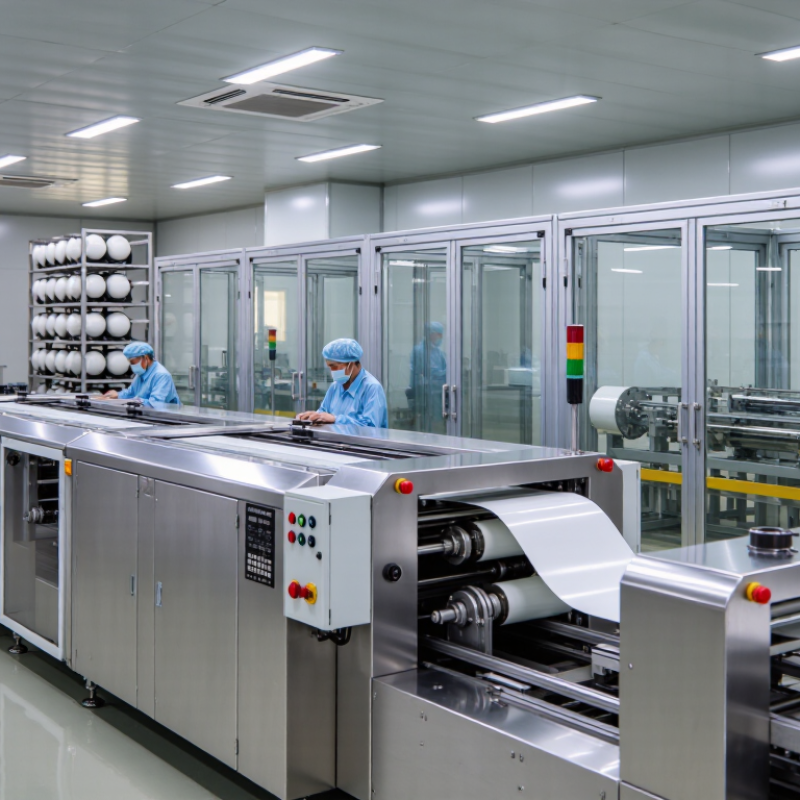
China’s Ion Exchange Membrane Equipment sector has moved from basic fabrication toward precision manufacturing. Modern production lines may include membrane coating, electrode assembly, hot pressing, leak testing, and automated inspection. Each stage affects current density, chemical resistance, and operating life.
Professor Yushan Yan, a respected membrane and electrochemical technology researcher, has emphasized, “The ultimate goal is to make fuel cells affordable and durable.” This principle also applies to Ion Exchange Membrane Equipment. A reliable machine must deliver stable pressure, accurate temperature control, and repeatable membrane handling. Small errors can create wrinkles, pinholes, or uneven catalyst layers. These defects may remain hidden until long-term operation.
This overview examines China’s top 10 Ion Exchange Membrane Equipment suppliers through practical criteria. These include engineering experience, equipment customization, quality control, after-sales support, and application knowledge. The suppliers serve sectors such as hydrogen production, chlor-alkali processing, fuel cells, energy storage, and industrial water treatment. Factory capability matters. So does field performance.
A ranking is never perfect.
Some companies publish detailed specifications, while others disclose very little. That difference can affect comparison accuracy. Therefore, buyers should verify production records, test reports, spare-parts availability, and membrane compatibility before signing contracts. Site visits can reveal details that brochures cannot. For example, cleanroom discipline and roller alignment often indicate real manufacturing maturity.
The following guide offers a practical starting point for identifying dependable Chinese suppliers. It does not replace technical audits. Careful evaluation remains necessary.
Ion Exchange Membrane Equipment: Definition and Industrial Applications
Ion Exchange Membrane Equipment: Definition and Industrial Applications
Ion exchange membrane equipment uses selective polymer membranes to control ion movement. It combines membrane stacks, electrodes, frames, pumps, rectifiers, sensors, and control systems. During operation, charged particles pass through the membrane, while unwanted ions remain separated. The process resembles a guarded doorway. Small details matter.
Industrial applications include chlor-alkali production, water purification, wastewater reuse, fuel cells, and hydrogen electrolysis. In chlor-alkali systems, membranes separate sodium hydroxide, chlorine, and hydrogen streams. In proton exchange membrane electrolysers, electricity splits treated water into hydrogen and oxygen. The International Energy Agency reported about 1.4 GW of installed global water electrolysis capacity by the end of 2023. This figure shows growing demand for reliable membrane equipment, not merely larger stacks.
Supplier comparisons should examine current density, membrane life, energy use, automation, and maintenance access. Pretreatment quality is critical. A few particles can damage a membrane surface or increase pressure loss. The United Nations World Water Development Report 2024 also identifies industrial water efficiency and reuse as continuing priorities. That supports broader demand for electrodialysis and membrane-based treatment systems. However, published efficiency figures are not always directly comparable. Different water quality, temperature, testing periods, and electricity sources can change results. A careful buyer should request operating records, test methods, replacement intervals, and safety documentation. Factory scale helps, but field experience matters more. Sometimes, the quietest pump wins.
China Top 10 Ion Exchange Membrane Equipment Suppliers - Ion Exchange Membrane Equipment: Definition and Industrial Applications
| Rank | Supplier ID | Primary Equipment Category | Membrane Process | Typical Equipment Configuration | Representative Capacity Range | Common Industrial Applications | Key Engineering Features | Typical Feed Conditions |
|---|---|---|---|---|---|---|---|---|
| 1 | Supplier Profile A | Electrodialysis and electrodialysis reversal systems | EDEDR | Membrane stack, electrode compartments, DC power supply, pretreatment unit and automatic control cabinet | 1–500 m³/h per skid | Brackish-water desalination, industrial wastewater reuse, salt separation and process-water recovery | Polarity reversal, automatic flushing, conductivity monitoring and modular skid installation | Low to moderate suspended solids; effective pretreatment is required to control scaling and fouling |
| 2 | Supplier Profile B | Electrodialysis metathesis equipment | EDMED | Paired cation- and anion-exchange membrane stacks with circulation tanks and dosing controls | 5–150 m³/h per system | Selective salt conversion, chemical production, resource recovery and high-salinity wastewater treatment | Selective ion transport, segmented flow channels and automated current-density control | Stable feed chemistry with controlled hardness, suspended solids and organic loading |
| 3 | Supplier Profile C | Membrane electrolysis systems | ElectrolysisBipolar membrane | Electrolyzer stack, rectifier, gas-liquid separator, circulation loop and safety instrumentation | 10–1,000 kg/day product output | Acid and alkali generation, chemical regeneration, pH adjustment and industrial wastewater neutralization | Gas separation, corrosion-resistant wetted parts, programmable current control and interlocked safety systems | Clarified and filtered electrolyte; feed concentration depends on the target acid or alkali |
| 4 | Supplier Profile D | Chlor-alkali ion-exchange membrane electrolyzers | Cation-exchange membrane | Electrolyzer cells, anolyte and catholyte circulation, brine purification, rectifier and chlorine handling | 1–500 t/day chlorine-equivalent capacity | Chlorine, caustic soda and hydrogen production for chemical, water-treatment and pulp industries | High-current-density operation, controlled brine circulation, low gas crossover and membrane protection systems | Highly purified sodium chloride brine with strict control of calcium, magnesium and suspended solids |
| 5 | Supplier Profile E | Continuous electrodeionization modules | CEDIEDI | Ion-exchange resin compartments, ion-exchange membranes, electrode assemblies and DC power module | 0.5–100 m³/h per module train | Boiler feedwater, pharmaceutical water, electronics manufacturing and laboratory-grade process water | Continuous regeneration without chemical regeneration chemicals; stable resistivity and low operating labor | Reverse-osmosis permeate with low hardness, low silica, low carbon dioxide and low organic content |
| 6 | Supplier Profile F | Membrane stack pilot and laboratory equipment | EDEDRMBE | Compact stack, variable-speed pumps, adjustable DC supply, sampling ports and data acquisition system | 1–1,000 L/h | Membrane evaluation, process development, salt recovery studies and university or research laboratory testing | Small working volume, adjustable flow and current density, interchangeable spacers and online monitoring | Pre-filtered laboratory or pilot feed with controlled temperature and conductivity |
| 7 | Supplier Profile G | Industrial salt-recovery and concentration systems | EDEDR | Multi-stage membrane stacks, concentrate recirculation, crystallizer interface and brine-management controls | 10–300 m³/h feed flow | Zero-liquid-discharge pretreatment, mining wastewater, chemical brine concentration and resource recovery | High-recovery operation, staged concentration, automated scaling control and concentrate management | Moderate to high salinity; hardness and silica control are important for long membrane service life |
| 8 | Supplier Profile H | Industrial wastewater reuse systems with ion-exchange membrane polishing | EDREDI | Multimedia filtration, cartridge filtration, membrane stack, disinfection and process-water storage | 20–1,000 m³/h overall plant capacity | Power generation, steel production, textile processing, food manufacturing and chemical wastewater reuse | Integrated pretreatment, automatic cleaning cycles, remote monitoring and expandable treatment trains | Secondary or tertiary-treated wastewater with controlled turbidity, oil, organic matter and biological activity |
| 9 | Supplier Profile I | Specialty ion-exchange membrane separation equipment | CEMAEMBipolar membrane | Custom membrane stack, feed distribution system, temperature control and application-specific sensors | 0.1–50 m³/h per unit | Organic-acid recovery, metal-ion separation, battery-material processing and specialty chemical production | Customized membrane selection, selective ion transport, low chemical consumption and closed-loop operation | Application-specific feed; pretreatment requirements depend on metals, organics and oxidants present |
| 10 | Supplier Profile J | Containerized and packaged ion-exchange membrane plants | EDEDREDI | Factory-assembled container or skid, pumps, piping, power supply, instruments and programmable logic controller | 5–200 m³/h per packaged unit | Remote industrial sites, emergency water treatment, temporary production facilities and decentralized reuse | Rapid deployment, plug-and-play connections, weatherproof enclosure and remote operating diagnostics | Pretreated surface water, brackish water or industrial process water matched to the selected membrane process |