China Best Metal Brackets with Mesh Base M1 for Global Buyers?
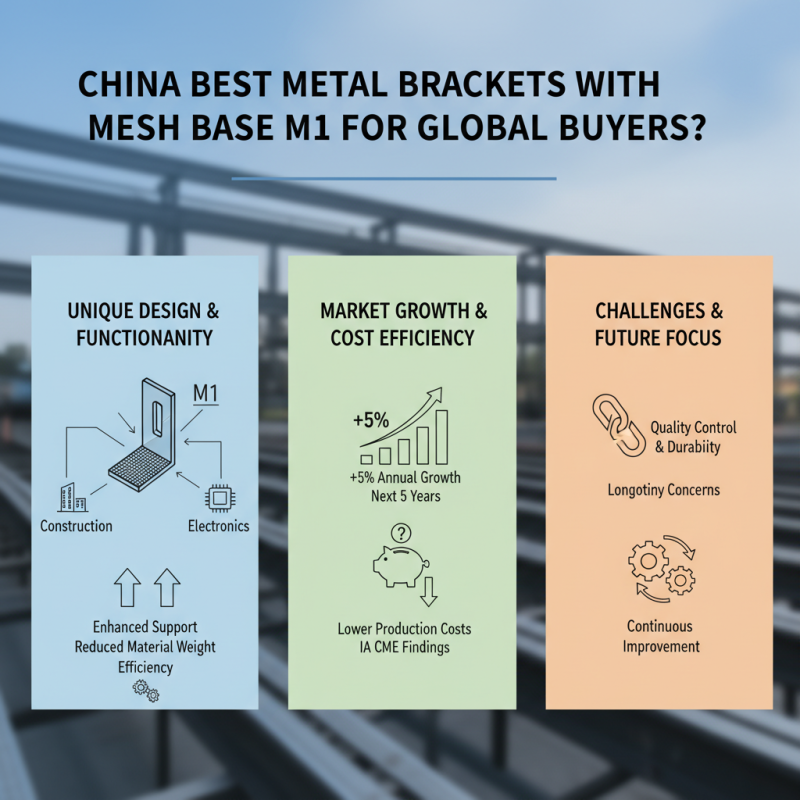
In the competitive landscape of manufacturing, "Metal Brackets – Mesh Base – M1" products stand out for their unique design and functionality. Recent industry reports indicate that the global market for metal brackets is experiencing robust growth, with an annual increase projected at 5% over the next five years. This growth is driven by rising demands in various sectors, including construction and electronics.
The M1 mesh base design offers significant advantages. It provides enhanced support while reducing material weight, which is crucial in applications where strength and efficiency are paramount. Furthermore, companies adopting this design benefit from lower production costs, as indicated by findings from the International Association of Chartered Metal Engineers.
However, as the market evolves, manufacturers must reflect on quality control and durability issues. Some products have faced criticism regarding their longevity under heavy usage. Addressing these challenges is essential for sustaining growth and maintaining customer trust. Thus, focusing on continuous improvement and customer feedback is vital for the future of "Metal Brackets – Mesh Base – M1" in the global marketplace.
China's Leading Metal Brackets: Overview and Benefits
Metal brackets with a mesh base are gaining popularity in various sectors worldwide. These brackets offer enhanced stability and support compared to traditional designs. The mesh base provides additional grip, ensuring the brackets securely hold items in place. This feature can be especially useful in high-stress environments.
Manufacturers in China are focusing on quality and innovation in their metal brackets. They use high-grade materials that ensure durability and dependability. Improved production techniques contribute to consistent quality across batches. However, it’s vital to scrutinize the manufacturing process. Not all factories maintain the same high standards. Each buyer must assess the reliability of their sources.
Feedback from industry users often highlights the importance of adaptability in design. Some brackets may not fit specific needs perfectly, requiring modifications. Buyers should communicate their requirements clearly. Regular evaluations of performance can lead to better product choices. Overall, China’s advancements in metal bracket production show promise but require careful consideration from global buyers.
Key Features of M1 Mesh Base for Metal Brackets
The M1 mesh base for metal brackets stands out in today's competitive market. Its design combines strength with flexibility, making it suitable for a variety of applications. According to a report by Grand View Research, the global metal bracket market is projected to grow by over 5% annually. This growth reflects a rising demand for durable and efficient supporting structures across industries.
One key feature of the M1 mesh base is its enhanced load distribution. This design effectively disperses stress, reducing the risk of deformation under heavy loads. Additionally, the mesh pattern promotes ventilation, which is crucial in environments sensitive to moisture and heat. A study from Technavio highlights that products with improved thermal management significantly extend the lifespan of structural components.
Despite its advantages, the M1 mesh base is not without challenges. Manufacturers must ensure consistent quality control during production. Variability in materials can affect the strength and performance of the brackets. Continuous feedback from users is essential to identify these issues and refine the design for better reliability. It’s important to strike a balance between innovation and practicality to meet the evolving needs of global buyers.
Applications of Metal Brackets in Various Industries
Metal brackets with a mesh base, like the M1 model, have diverse applications across various industries. They serve crucial functions in construction, electronics, and automotive manufacturing. In construction, metal brackets provide structural support. They help secure frameworks and fixtures. This ensures longevity and stability.
In the electronics industry, these brackets are essential for mounting components. They enable efficient airflow and heat dissipation. Proper installation can prevent overheating issues. In automotive manufacturing, brackets help stabilize engines and other parts. This contributes to overall vehicle safety.
Tips: Ensure brackets are made from high-quality materials. This keeps them durable and reliable. Regular inspections can identify any wear or damage before serious issues arise. Remember, location is key. Place brackets where they can bear maximum load without strain.
China Best Metal Brackets with Mesh Base M1 for Global Buyers? - Applications of Metal Brackets in Various Industries
| Industry | Application | Material Used | Mounting Type | Load Capacity |
| Construction | Wall Support | Steel | Bolted | 1000 kg |
| Automotive | Chassis Support | Aluminum | Welded | 800 kg |
| Electronics | Component Mounting | Plastic-Coated Steel | Screwed | 200 kg |
| Aerospace | Wing Support | Titanium | Bonded | 1500 kg |
| Telecommunications | Antenna Mounting | Galvanized Steel | Clamped | 500 kg |
Quality Standards and Certifications for Chinese Metal Brackets
When sourcing metal brackets, especially those with a mesh base, quality standards are paramount. Chinese manufacturers often adhere to strict quality regulations, ensuring their products meet international benchmarks. This is essential for global buyers who prioritize durability and reliability. Various certifications, such as ISO and CE, signal adherence to these high standards. They provide a layer of confidence in product quality.
However, not all manufacturers possess these certifications. Potential buyers must conduct thorough research. Verifying a manufacturer’s credentials can be challenging. Some companies may claim compliance without proper verification. Engaging with suppliers who are transparent about their quality assurance processes can mitigate these risks. Frequent audits and third-party inspections further enhance trustworthiness.
In addition to certifications, buyers should also consider real-world performance. Testing metal brackets under actual conditions sheds light on their reliability. Some products may look robust but might underperform under stress. Gathering feedback from other users can reveal potential shortcomings. This insight helps buyers make informed decisions while sourcing metal brackets from China.
Tips for Global Buyers: Selecting the Right Supplier for M1 Brackets
When selecting the right supplier for M1 brackets, thorough research is crucial. According to a recent industry report from Metal Fabrication Insights, nearly 70% of global buyers prioritize reliability when choosing a supplier. Reliable suppliers help ensure product consistency and timely delivery, which are vital for maintaining production schedules.
Buyers should also consider the production methods used by suppliers. The same report indicates that suppliers using advanced manufacturing techniques, such as automated welding and precision machining, often produce higher-quality products. However, not all suppliers disclose their production processes. Engaging with suppliers directly can provide valuable insights into their operations. Asking for certifications and quality control measures is essential for verifying their expertise.
Additionally, understanding the logistics involved in purchasing M1 brackets is critical. Are suppliers equipped to handle international shipping? Delays can lead to cost overruns. According to Statista, delays in shipping can increase project costs by up to 15%. Engaging suppliers with a clear logistics strategy can mitigate such risks. Overall, a comprehensive evaluation of potential suppliers is necessary to avoid pitfalls and ensure a successful partnership.
Top Considerations for Global Buyers When Selecting Metal Brackets with Mesh Base M1