Choosing the best welding machine supplier in China takes more than comparing prices. A workshop needs equipment that suits its materials, duty cycle, and daily workload. A Machine Welding Machine may look suitable on a product page, yet its controls, output stability, and maintenance needs matter more on the shop floor. Small details count. Ask how the supplier verifies performance and what documents accompany each model. Clear answers are useful; vague promises are not.
A dependable supplier should explain specifications in practical terms, provide responsive technical support, and make spare parts reasonably accessible. Look for product information that identifies welding processes, rated output, duty cycle, and operating requirements. If possible, review a sample unit or arrange a demonstration with your actual material. Check warranty terms and service arrangements before placing an order. These steps do not guarantee a perfect purchase. They do reduce guesswork.
There is no single supplier that fits every buyer. A small fabrication shop may value simple setup and quick support, while a production line may need consistent performance across longer shifts. Compare several manufacturers against the same checklist, and ask for references or documented quality procedures where available. I would not treat polished marketing as proof. Some specifications still need clarification, and supplier claims deserve careful review. The best choice is the one whose equipment and support match your real operating conditions—not just the lowest quotation.
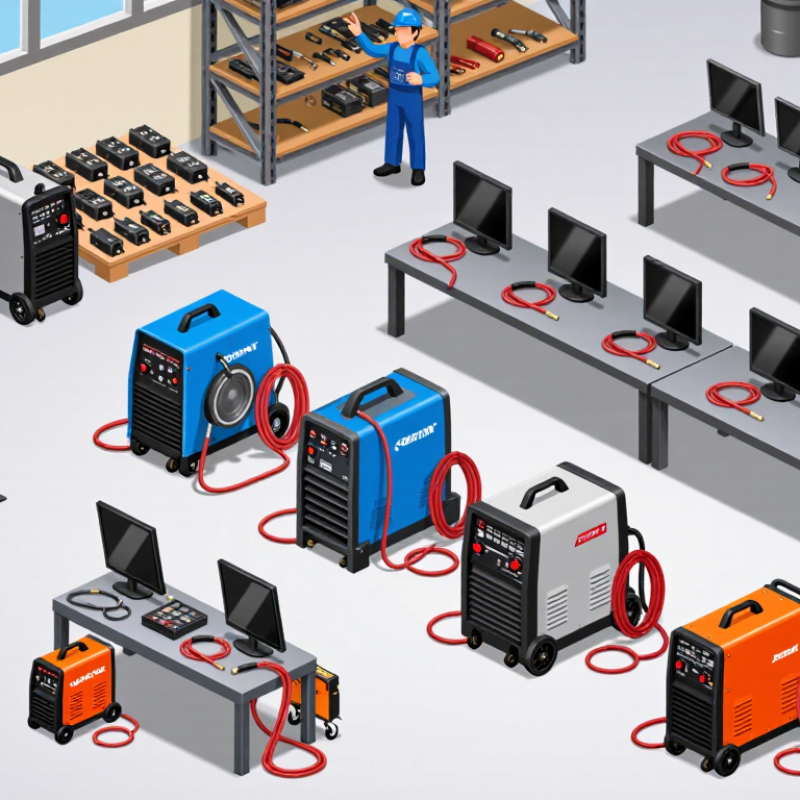
A welding machine supplier in China can provide more than the machine itself. A dependable supplier helps match power output, duty cycle, and process type to the work. For example, a repair shop welding thin steel may need different settings from a factory joining thicker plate. Clear recommendations should include the limits, not just the advantages.
Expect product specifications, user manuals, packing details, and guidance on setup and routine maintenance. Ask what consumables and replacement parts are available, and how technical questions are handled after delivery. It helps. Before ordering, request a sample test report or a live demonstration using material similar to yours. Check that the stated input voltage, torch connections, and included accessories fit your workshop. Details matter.
Some catalogs make every model sound suitable for every job. That deserves a closer look. A useful supplier will explain trade-offs, such as portability versus output, and identify which specifications need confirmation. No supplier can remove every installation or shipping uncertainty, so keep written records of agreed configurations, spare parts, and support terms. A little extra checking can prevent a machine arriving with the wrong cable or an unsuitable connector.
Compare representative output-current ranges for common welding machine types. A supplier can help match equipment to the process, material, and job; available ratings vary by model and manufacturer.
Ranges are representative equipment ratings, not universal process limits. Suppliers may also provide configuration guidance, compatible accessories, operating documentation, training, and after-sales support.
China’s welding-equipment industry is organized as a supply chain, not a single group of interchangeable factories. It includes power-source makers, component suppliers, automation integrators, distributors, and service teams. Some firms focus on manual arc equipment; others build robotic cells or process-specific systems. The International Federation of Robotics’ World Robotics 2024 report recorded 276,288 industrial robot installations in China in 2023, about 51% of global installations. This points to strong demand for automation, though it does not measure welding equipment alone.
Suppliers often serve manufacturing clusters and specialize by process, price, or customer scale. An integrator may combine a welding power source, torch, wire feeder, and robot, while a distributor may handle training and spare parts. The boundaries are not always neat. A factory can design equipment but rely on outside partners for key components, so a product catalogue alone reveals little about its real capabilities.
Tips: Ask who provides commissioning, consumables, and repairs. Request a sample weld, not just a specification sheet. Check response times and spare-part availability before comparing prices.
When comparing Chinese welding machine suppliers, start with the job, not the brochure.
Specify the process, material thickness, input voltage, and expected daily operating hours. Then request duty-cycle data at the stated current, not just the maximum output. A machine rated for 300 amps may behave differently during a long production shift. Ask for a live demonstration using your wire, material, and settings. Small details matter.
Check compliance documentation, traceability, spare-parts availability, and response times in writing. IEC 60974-1 provides safety and performance requirements for arc-welding power sources; ask which test records support the supplier’s claims. The American Welding Society’s 2023 workforce data projected a need for 330,000 new welding professionals in the United States by 2028. That forecast is not a supplier score, but it highlights why clear manuals and practical operator training matter. Request a sample manual and confirm training language before ordering.
A factory demo can still hide problems: test a unit under your actual conditions, and inspect weld consistency after repeated runs. Not always convenient. Worth doing.
Chinese welding machine suppliers generally fall into four groups: manufacturers, OEM/ODM producers, trading companies, and automation integrators. Direct manufacturers often control core assembly and testing. They may tailor input voltage, duty cycle, wire-feed settings, or enclosure design. Ask what is made in-house. A factory address alone does not prove production capability.
OEM/ODM suppliers can adapt equipment to a buyer’s specifications, such as panel layout, cable length, or control software. Their flexibility may come with minimum order quantities and longer sampling cycles. Trading companies often offer several machine types and consolidated shipments, but technical support depends on their service network. Not always. Request a named contact for troubleshooting, not just a sales representative.
Automation integrators typically combine welding machines with fixtures, positioners, or robotic cells. They can help with layout and system commissioning, though their expertise may focus more on integration than machine repair.
For any supplier, check sample units, test records, spare-parts availability, and response times. A brief live test can reveal unstable arc starts or inconsistent wire feeding. I would also ask for a clear warranty process; it is easy to overlook until a part fails. Claims about capacity deserve practical evidence, such as a recent production schedule or inspection report.
Who Is the Best Welding Machine Supplier in China?
How to Choose the Best Supplier for Your Requirements
Choosing a supplier starts with matching machine capability to your actual work, not catalog claims. List the materials, thickness range, duty cycle, input power, and welding processes you need. A shop joining 3 mm stainless steel has different requirements from a team repairing heavy structural parts. Small details matter. Ask for written specifications covering rated output, cooling method, and voltage tolerance. Request test data or a demonstration using material similar to yours. Test it yourself. A clean sample weld is useful, but it cannot show performance across a full shift.
Check how the supplier manages quality and support. Ask which components are inspected, how each machine is tested before dispatch, and what records are provided. Confirm warranty terms, spare-part availability, response times, and troubleshooting support in your language and time zone. Do not rely on a quick reply alone. A clear answer to a technical question tells you more than a polished brochure.
Compare operating costs, not just the quoted price. Include consumables, maintenance, training, shipping, and commissioning. If possible, speak with customers using similar machines and ask about downtime after six or twelve months. It is tempting to choose the lowest quote, but routine parts may take weeks to arrive. I would weigh that risk carefully. No supplier can promise zero failures, so record unanswered questions and compare the evidence before ordering.
There is no single best supplier for every buyer. Use the criteria below to compare shortlisted suppliers against your application, destination-market requirements, and service expectations. Suggested weights are a practical starting point; adjust them to suit your project.
| Evaluation dimension | What to assess | Evidence to request or verify | Suggested weight |
|---|---|---|---|
| Application and process fit | Whether the proposed machine suits the welding process, materials, thickness range, duty cycle, and operating environment you specify. | A written technical proposal identifying process (such as MIG/MAG, TIG, or MMA), output range, duty-cycle conditions, and any required accessories. | 20% |
| Electrical and technical specifications | Input voltage and frequency, rated output, duty cycle, protection rating, cooling method, and compatibility with local power conditions. | Model-specific datasheets, nameplate details, user manual, and clarification of the conditions used for rated duty-cycle figures. | 15% |
| Compliance for the destination market | Whether the exact machine configuration meets applicable electrical safety, electromagnetic compatibility, and import requirements in your market. | Applicable test reports and conformity documents for the exact model. IEC 60974 is a relevant series of standards for arc-welding equipment; confirm the applicable parts and local rules. A certificate alone does not establish overall product quality. | 15% |
| Quality control and traceability | How incoming components, assembly, testing, and product changes are controlled and documented. | A sample inspection or test record, serial-number traceability process, quality procedures, and any current quality-management certification with its scope and validity verified. | 15% |
| After-sales service and spare parts | Availability of troubleshooting support, warranty handling, replacement parts, and repair documentation in your region. | Written warranty terms, response channels and hours, spare-parts list, parts lead times, and clear procedures for diagnosing and resolving faults. | 15% |
| Sample testing and acceptance | Whether the machine performs consistently in a representative trial using your intended process, material, and operating conditions. | A pre-shipment inspection plan and agreed acceptance criteria. Where practical, test a sample unit or review recorded tests under defined conditions. | 10% |
| Commercial terms and total cost | Not just the unit price, but also included accessories, packaging, shipping terms, payment schedule, warranty costs, and expected maintenance needs. | A detailed quotation with model and configuration, inclusions and exclusions, delivery terms, lead time, payment terms, and warranty coverage in writing. | 5% |
| Communication and documentation | Accuracy and consistency of answers, technical documentation, order confirmation, and change notifications. | Compare written answers with datasheets, manuals, quotation details, and sample or inspection results; require agreed specifications to be included in the purchase contract. | 5% |
Comparison method: Score each supplier from 1 (weak or unverified) to 5 (strong and supported by evidence), then multiply each score by its suggested weight. Verify documents independently where possible, and base the final decision on the exact model and written terms being offered.
Build your system. Protect your boat. Join the movement.