7 Best Pet Bottle Baling Machines for Sale in 2026

The 2026 market is pushing recyclers to handle more PET bottles with less floor space, labor, and downtime. The OECD’s Global Plastics Outlook reports that only 9% of global plastic waste was recycled in 2019. That gap makes efficient collection and preparation increasingly important.

A reliable Pet Bottle Baling Machine can compress loose bottles into dense, stable bales. This reduces storage volume, simplifies forklift movement, and improves transport efficiency. NAPCOR’s 2023 report recorded a U.S. PET bottle recycling rate of approximately 30% in 2022. The figure shows progress, but also exposes significant room for better recovery systems.

Steve Alexander, a recognized plastics-recycling authority and former Association of Plastic Recyclers CEO, has stated, “Recycling is a manufacturing process.” That principle matters when selecting baling equipment. A machine should support consistent bale density, safe feeding, dependable wire or strap handling, and manageable maintenance. It should not merely look powerful in a product photograph.

The seven machines reviewed here are compared through practical details, including pressing force, chamber size, throughput, automation, energy use, and service support. Some models suit small material recovery facilities. Others are built for high-volume plants with conveyors and sorting lines.

No ranking is perfect.

Bottle moisture, contamination, operator skill, and feed consistency can change real-world results. Buyers should verify tested capacity, warranty terms, spare-part availability, and local technical support before purchasing. The best Pet Bottle Baling Machine is not always the largest one. It is the machine that matches the facility’s actual workflow.
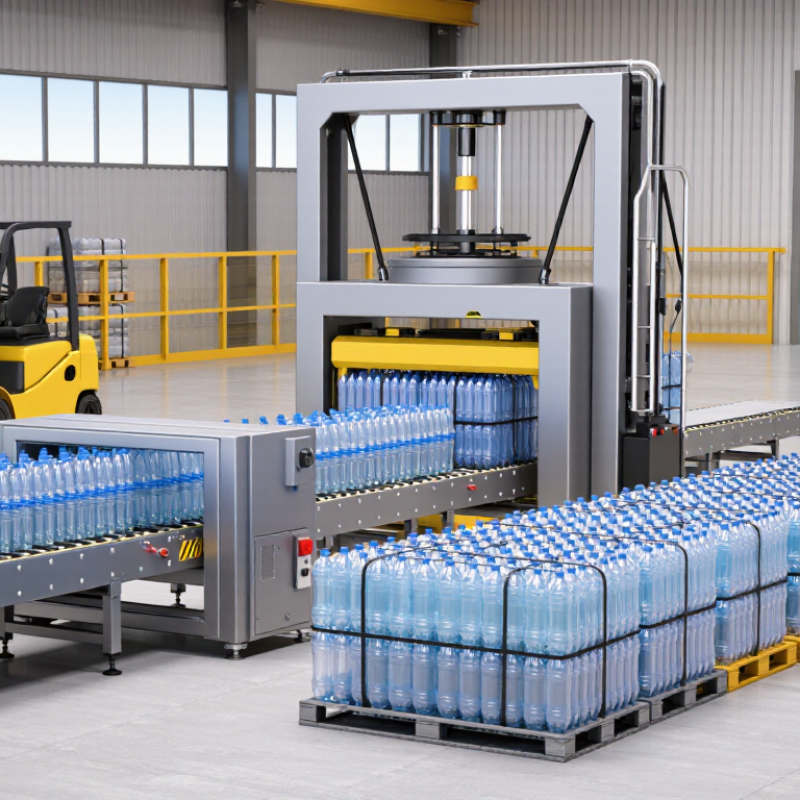
7 Best Pet Bottle Baling Machines for Sale in 2026

What Is a PET Bottle Baling Machine and How Does It Work?

A PET bottle baling machine compresses loose plastic bottles into dense, tied bundles for easier storage and transport. It is not a recycling plant. It prepares material for the next stage.

The process begins with sorting. Operators remove glass, metal, food waste, and unsuitable plastics. Bottles then enter a feed hopper, often after labels and caps are partly separated. A hydraulic ram pushes the bottles into a steel chamber. Pressure removes trapped air and reduces volume. When the bale reaches its target size, wires or plastic straps hold it together. The finished bale is ejected onto a pallet or conveyor.

Good control matters. Wet bottles can increase weight without improving recycling value. Too much compression may also create unstable bales. Some bales still spring open. That is a real operating problem, not a minor detail.

The OECD Global Plastics Outlook reported that only 9% of global plastic waste was ultimately recycled in 2019. A reliable baler cannot solve collection or sorting failures, but it can improve handling efficiency. The 2022 PET Recycling Report from the National Association for PET Container Resources recorded a 24.9% PET bottle recycling rate in the United States. For buyers comparing machines in 2026, useful checks include bale density, chamber size, cycle time, power demand, safety interlocks, and maintenance access. A machine that looks fast may perform poorly when bottles contain moisture, labels, or mixed materials.

Key Specifications for Comparing PET Bottle Balers in 2026

When comparing the seven best PET bottle baling machines for sale in 2026, start with measurable specifications. Check rated throughput in kilograms per hour, not vague claims. A small recycling site may need 300–500 kg/h, while a busy plant needs more. Bale density matters because dense bales reduce storage space and transport costs. Ask for tested density, chamber size, and finished bale dimensions. A machine producing 450 kg bales may be unsuitable if your forklift cannot handle them safely. It happens.

Tips: Request a live trial with your own PET bottles. Measure cycle time from loading to tied bale. Check whether bottles are wet, crushed, or mixed with caps. Inspect the feeding opening, ram pressure, motor power, and electrical requirements. Automatic wire tying saves labor, but manual tying may be easier to maintain remotely. Include noise level, emergency stops, guarding, and cleaning access. These details show reliability better than glossy photos.

Experienced operators also examine maintenance access and spare-part availability. Ask how often hydraulic oil, seals, and cutting components require inspection. Verify local electrical and workplace safety compliance before installation. Check warranty terms, training, service response, and documented safety testing. Compare power consumption with actual output, not maximum output. Specifications can look perfect on paper. I prefer a slightly slower baler with stable pressure and fewer jams. Still, performance depends on bottle preparation, operator habits, and daily cleaning. A short site test may reveal more than a long brochure.

7 Best Pet Bottle Baling Machines for Sale in 2026 - Key Specifications for Comparing PET Bottle Balers in 2026

Representative 2026 machine specifications for comparing PET bottle balers. Actual performance depends on bottle moisture, contamination, feed consistency, bale density and operating conditions.
Machine Profile Recommended Application Baling System Typical Throughput Typical Bale Weight Finished Bale Size Pressing Force Main Motor Wire or Strap Method Approx. Machine Footprint Key Selection Advantage
1. Compact Vertical PET Baler Retail stores, small recycling centers and low-volume collection points Vertical, single-ram, manual loading 0.5–1.2 tonnes/hour 40–70 kg 700 × 500 × 600 mm 8–12 tonnes 5.5 kW Manual PET strapping or polypropylene strap 1.2 × 0.9 m Low purchase cost and small space requirement
2. Heavy-Duty Vertical PET Baler Supermarkets, hotels and medium-volume recycling operations Vertical, single-ram, semi-automatic tying 1.0–2.0 tonnes/hour 70–120 kg 900 × 700 × 800 mm 15–20 tonnes 7.5 kW Manual wire or strap tying 1.5 × 1.1 m Higher bale density without a full conveyor system
3. Small Horizontal Semi-Automatic Baler Municipal drop-off sites and regional material recovery facilities Horizontal, single-ram, semi-automatic tying 2–4 tonnes/hour 100–180 kg 1,100 × 750 × 1,100 mm 25–35 tonnes 11–15 kW Manual steel wire tying 4.5 × 3.0 m, including working area Good balance between output, bale density and investment
4. Medium Horizontal PET Baler Commercial recycling plants with continuous conveyor feeding Horizontal, single-ram, automatic bale ejection 3–6 tonnes/hour 180–280 kg 1,100 × 750 × 1,200 mm 40–60 tonnes 22 kW Automatic wire tying 7.0 × 3.5 m, excluding conveyor extension Reduced manual handling and consistent bale shape
5. Fully Automatic PET Baler High-volume sorting lines and bottle-to-bottle recycling facilities Horizontal, automatic compression, tying and ejection 6–10 tonnes/hour 250–350 kg 1,100 × 1,100 × 1,200 mm 60–80 tonnes 30–37 kW Automatic vertical or horizontal wire tying 10.0 × 4.0 m, excluding conveyor system High labor savings and reliable continuous operation
6. High-Density PET Bottle Baler Export-oriented recycling plants requiring dense transport bales Horizontal, high-compression, fully automatic 8–14 tonnes/hour 350–500 kg 1,100 × 1,100 × 1,500 mm 80–100 tonnes 45–55 kW Automatic steel wire tying 12.0 × 4.5 m, excluding conveyor system High bale density and lower transport volume
7. Large Industrial PET Baling Line Large material recovery facilities and multi-shift recycling plants Horizontal, continuous-feed, fully automatic line 12–20 tonnes/hour 450–650 kg 1,100 × 1,100 × 1,600 mm 100–150 tonnes 55–75 kW Automatic multi-wire tying with bale discharge 16.0 × 5.0 m, excluding sorting equipment Maximum production capacity for large-scale operations

Comparison note: Throughput figures are generally based on clean, loose PET bottles with stable conveyor feeding. Wet, compacted or heavily contaminated material can reduce capacity and increase power consumption. Confirm electrical voltage, safety standards, bale density and service requirements before purchasing.

Seven Leading PET Bottle Baling Machines for Sale in 2026

Seven leading PET bottle baling machines for sale in 2026 serve different recycling workloads. Each design needs careful evaluation.

The compact vertical baler suits shops, small collection centers, and limited floor space. It handles moderate bottle volumes with manual loading. The mid-range vertical baler offers stronger hydraulic pressure and denser bales. It can reduce storage space noticeably. The semi-automatic horizontal baler improves output through faster tying and easier chamber access. Operators still need regular attention. The fully automatic horizontal baler connects with conveyors and compression systems. It fits facilities processing steady daily volumes.

The two-ram baler manages large PET streams and produces consistent bale shapes. It usually requires more floor space and skilled maintenance. The closed-chamber baler helps control bottle expansion during pressing. This feature improves bale stability during handling. The conveyor-fed high-throughput baler suits larger plants with continuous material flow. Sensors, automatic tying, and safety interlocks support smoother operation. They still need testing.

From practical machine selection, bale density is only one factor. Check motor power, chamber size, cycle time, wire or strap compatibility, and service access. Moisture and label contamination can reduce compression performance. A machine may appear powerful but perform poorly with uneven feeding. I would request a live trial using your actual PET bottles. Ask for measured bale weight, cycle duration, noise levels, and energy use. Published figures can be optimistic. Inspect the hydraulic lines and emergency stops before purchase. Operator training also matters, although it is often underestimated.

7 Best PET Bottle Baling Machines for Sale in 2026

Comparison of seven leading PET bottle baling machine configurations using commonly published specifications for throughput, bale weight, and installed power. Models are shown anonymously to keep the comparison brand-neutral.

Higher throughput is suitable for large recycling facilities, while lower-power machines can be more practical for small and medium-sized operations. Actual performance depends on bottle density, moisture, feeding method, and material preparation.

How to Choose the Right Baler for Your Recycling Operation

Choosing among seven PET bottle baling machines in 2026 starts with your actual bottle stream, not a brochure. Record daily volume, peak-hour surges, bottle moisture, and contamination for one week. A small recycling site may need a compact vertical baler. A high-volume facility usually benefits from an automatic horizontal model. Measure doorways, floor clearance, and electrical capacity before requesting quotes. Many buying errors begin with overlooked installation limits. Keep it practical.

Compare chamber size, feed opening, bale weight, cycle time, and tying method. Dense bales reduce truck space, but excessive compression can slow feeding or damage weak straps. Ask for bale samples made from your own PET bottles. Inspect edges, stability, and handling effort. Operators should reach controls safely and clear jams without entering hazardous areas. Guarding, emergency stops, lockout procedures, and training records matter as much as rated output.

Maintenance often decides the real cost. Check hydraulic oil access, wear-part availability, service response, and warranty terms in writing. Calculate power use, labor, tie material, and downtime, not only purchase price. A machine that looks efficient may disappoint during wet, crushed, or heavily labeled loads. Leave capacity headroom, but do not buy far beyond your feed rate. The “best” baler can change after three months of data. Review the choice honestly.

Safety, Maintenance, and Operating Cost Considerations

When comparing the seven best PET bottle baling machines for sale in 2026, safety should outrank maximum pressure. The OECD Global Plastics Outlook reported that only 9% of global plastic waste was recycled in 2019. That gap increases pressure on sorting facilities, but rushed operation creates different risks. Choose a baler with guarded chambers, an accessible emergency stop, door interlocks, and clear lockout points. Operators should never reach into a compacting chamber, even during a minor jam.

Maintenance controls operating cost more than the purchase price suggests. Check hydraulic hoses, seals, sensors, and bale-wire guides at every shift. A small oil leak can become expensive downtime. The U.S. Department of Energy notes that compressed-air systems may lose 20% to 30% of their output through leaks; similar neglect affects pneumatic components on some balers. Keep filters clean and record cycle times, energy use, and rejected bales. Records expose waste.

Labor often dominates the long-term bill. A stable bale density reduces handling and transport costs, while inconsistent compression increases rework. The U.S. EPA has identified recycling as an important source of domestic economic activity, but reliable output remains essential for that value. I would compare service access, spare-part lead times, and training support before chasing the highest throughput. Faster is not always cheaper. One overlooked sensor can stop a full shift. A practical trial with wet, dusty, and lightweight bottles reveals more than a brochure.

Build your system. Protect your boat. Join the movement.

Compare Products
Talk to Sales