Power lines face rain, dust, salt, temperature swings, and electrical stress. A Disc Glass Insulator is valued for its nonporous glass surface, visible condition, and modular design. From the ground, crews can often spot a cracked or damaged disc by its changed appearance. That visibility can support inspection, though it does not replace proper testing or maintenance.
A clear design principle helps frame the choice. The expert name and quotation below are fictional, not a verified industry source: “Choose insulation for the line’s real environment, then make its condition practical to inspect.” The point is simple. A glass unit may suit some transmission and distribution applications, but selection depends on voltage, pollution, mechanical loading, and local operating conditions. No single material fits every route.
On a windy ridge, a string of glass discs must withstand movement and weather while maintaining electrical clearance. Its separate units can make damaged sections easier to identify. There are trade-offs. Glass can break, and contamination may still affect performance. Engineers should compare glass with porcelain and polymer options, review manufacturer data, and plan inspections around actual site conditions. Small details matter. A sound choice begins with evidence, not habit.
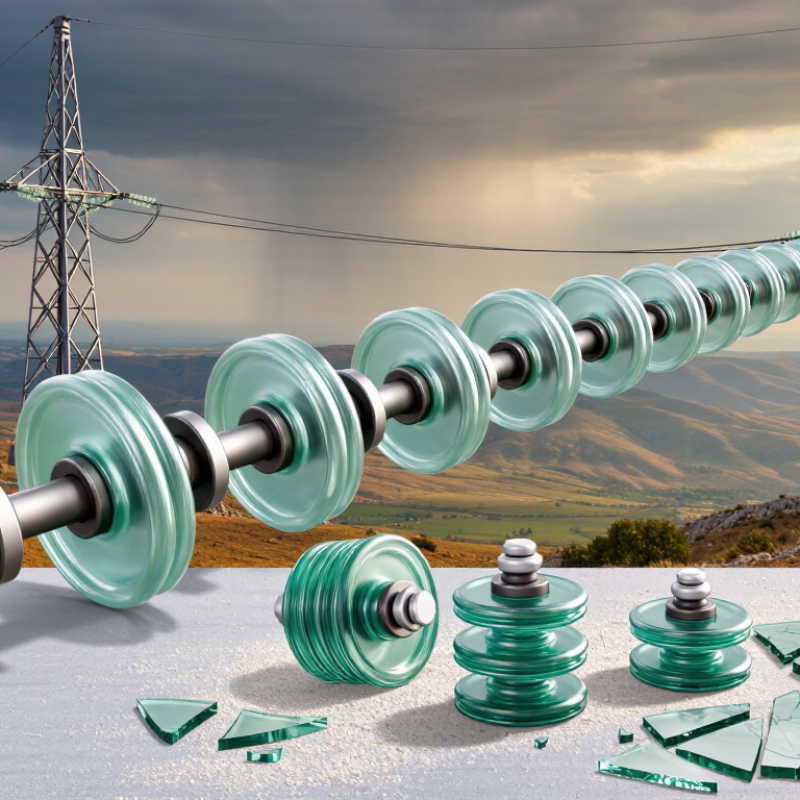
A disc glass insulator is a toughened-glass unit used to support an overhead conductor while limiting current flow to the tower. Its broad, ribbed profile lengthens the surface path that leakage current must travel. Several discs can be linked into a suspension string, with metal fittings connecting each unit. The glass body is easy to inspect: cracks and internal flaws are often visible. Not every mark signals failure, though.
Manufacturing starts with a carefully measured glass batch, which is melted and shaped in a mold. The formed disc is heated and then cooled in a controlled way. This toughening process leaves the outer glass in compression, helping the unit withstand mechanical and thermal stress. Small details matter. Variations in thickness or cooling can affect strength, so production checks include visual inspection and electrical or mechanical testing. Metal caps and pins are attached with suitable bonding material to complete the assembly.
The finished insulator must handle conductor loads, weather, and electrical stress over years of service. Its smooth glass surface can shed rain and contaminants, but pollution and salt deposits may still reduce insulation performance. A clean-looking disc is not proof of perfect condition. That is why routine line inspections remain useful, even when the glass seems remarkably durable.
Disc glass insulators carry the conductor’s weight while keeping live parts electrically separated from grounded towers. Each unit joins through a cap-and-pin connection, forming a flexible string that can accommodate wind movement and uneven mechanical loading. If one disc cracks, glass can make the damage easier to spot during inspection. Still, visual checks do not replace electrical testing.
The sheds lengthen the surface path that leakage current must cross. That detail matters when salt, dust, or industrial deposits collect on a line. IEC TS 60815-1:2008 gives reference unified specific creepage distances of 22, 27.8, 34.7, and 43.3 millimetres per kilovolt for light, medium, heavy, and very heavy pollution conditions. These are design guidance, not a one-size-fits-all prescription; local contamination and wetting patterns affect the choice. A string also does not share voltage perfectly evenly, so high-voltage designs may use grading hardware. In practice, the clean drawing is not the whole story. Inspectors should watch for chipped sheds, corrosion at fittings, and contamination bands that can encourage flashover.
Disc glass insulators provide both electrical insulation and mechanical support between a conductor and its structure. Their glass bodies resist current flow, while the gaps between discs extend the insulation path along a power line. In a suspension string, crews can add or remove units to meet voltage and site requirements. That is useful. Toughened glass often breaks visibly when damaged, giving inspectors a clear sign to investigate. It is not a substitute for careful checks.
The cap-and-pin fittings transfer mechanical tension through the string, with each disc carrying part of the load. Glass also stands up well to sunlight and many outdoor temperature cycles. Still, it can be vulnerable to sharp impacts, rough handling, and sudden temperature changes. That trade-off deserves attention. Long strings add weight to supporting structures, and salt or dust on the surface can increase leakage current when wet. Routine inspection and cleaning may therefore matter as much as the material itself. The right choice depends on line loads, local pollution, maintenance access, and weather—not on a single advantage.
Glass disc insulators are available in standardized mechanical failing-load classes, making it possible to select units to suit a line’s mechanical design. Their transparency also helps inspectors spot visible damage. The chart shows standardized load classes, not the load capacity of every glass insulator.
Disc glass insulators are commonly used in suspension strings, where several units hang between a tower and a conductor. Their modular design allows utilities to adjust string length and replace individual units after inspection. That flexibility is useful on long transmission routes.
Compared with porcelain, toughened glass can make certain forms of damage easier to spot: a broken unit often looks visibly different from an intact one. Porcelain may conceal some internal damage, though proper inspection methods matter for both materials. Glass units are also relatively heavy, and impact damage remains a concern during handling. Not always an advantage.
Composite insulators, made with a polymer housing over a core, are often lighter and can simplify installation in locations with weight or access constraints. Their performance depends on housing condition, exposure, and design; aging or surface damage deserves attention. Glass and porcelain have long service histories, but neither is maintenance-free. Selection should consider voltage, mechanical loading, pollution, moisture, and the utility’s inspection practices. A coastal line with salt deposits may need a different creepage-distance design than a dry inland route. Material alone does not determine reliability. The awkward part is that site conditions can change, so a specification that looks sound on paper still needs field review.
Disc glass insulators are used on overhead transmission and distribution lines, where they support conductors and separate them from grounded structures. Their linked units form strings suited to suspension or tension duties. At substations, they may also support equipment exposed to electrical and weather stresses. The setting matters. Salt, dust, fog, and frequent rain can change insulation needs, even between nearby sites.
Selection begins with system voltage and the required insulation level. Then check the mechanical load, conductor arrangement, and specified safety margins. Creepage distance—the surface path electricity must travel—deserves attention in polluted or coastal areas. A string that works in a clean inland climate may perform poorly near salt spray. Local utility specifications and qualified engineering review should guide final sizing.
Inspect the glass, metal fittings, and cement joints for chips, corrosion, or looseness. Glass often makes visible damage easier to spot, but not every internal defect is obvious from the ground. Inspection access matters. Disc strings can also be heavier than some alternatives, and their hardware needs careful handling. That trade-off is easy to underestimate during planning. Tie the choice to actual site conditions, not voltage alone.
| Application or Selection Factor | Typical Use or Conditions | How to Select Disc Glass Insulators |
|---|---|---|
| Overhead distribution lines | Common on medium-voltage overhead networks, often in the approximate 11–33 kV range. Units may be arranged as suspension or strain strings where the line design calls for them. | Choose the string configuration and mechanical rating for conductor loads, span conditions, wind, and the structure. Confirm the required electrical insulation level for the system voltage. |
| High-voltage transmission lines | Used as suspension strings on supporting structures and as tension strings at dead ends, angle towers, and other locations with significant longitudinal loads. Applications can extend from tens of kilovolts to several hundred kilovolts. | Determine the number of units from the system voltage, required insulation level, overvoltage performance, and applicable design standards. Check the complete string’s mechanical load capacity and hardware compatibility. |
| Extra-high-voltage lines | Longer strings may be used on very high-voltage AC systems, including systems around 500 kV and above, subject to the line design. | Use a project-specific electrical and mechanical design. Consider switching and lightning overvoltages, corona and radio-interference requirements, clearances, conductor arrangement, and the effects of altitude. |
| Substations and line terminals | Disc strings can insulate overhead conductors where lines enter or leave substations and at terminal structures. The arrangement depends on the equipment and support design. | Check terminal loads, conductor movement, clearances, pollution exposure, and the connection details of caps, pins, yokes, and fittings. Coordinate the string insulation with the substation insulation design. |
| Mechanical load rating | Disc units are available with different specified electromechanical or mechanical failing-load ratings; standardized rating series include values such as 70, 100, 120, 160, and 210 kN. | Select a rating based on calculated service loads and the required safety factors—not voltage alone. Account for wind, ice, conductor tension, broken-wire conditions, and the load distribution across the string. |
| Pollution and creepage distance | Salt, industrial deposits, dust, and other contamination can increase leakage current and flashover risk, particularly when the surface is wet. | Assess site pollution severity and specify suitable creepage distance and shed profile in accordance with the applicable standard and project requirements. Consider local rainfall, fog, and cleaning practices. |
| Lightning and switching performance | Insulator strings must withstand the expected power-frequency and transient stresses on the line. Line shielding, grounding, and surge protection also affect performance. | Coordinate the string design with the required withstand levels and lightning-performance objectives. Do not determine unit count from nominal voltage alone. |
| Climate and operating environment | Temperature changes, ice, wind, ultraviolet exposure, and wetting can affect operating loads and surface conditions. | Use the site’s environmental and loading data when specifying the unit type and string arrangement. Check that metal fittings and connections suit the expected corrosion conditions. |
| Inspection and maintenance | Toughened-glass units can make some damaged or failed units visually apparent because the glass shell may shatter, while the metal fittings can remain in the string. | Include visual inspection of units, fittings, and string hardware in the maintenance plan. Follow utility procedures and applicable standards; visible condition alone does not replace electrical or mechanical assessment. |
Note: Voltage ranges and examples are indicative, not universal design limits. Final selection should follow the applicable IEC or national standards, utility specifications, site conditions, and a qualified line-design assessment.
Build your system. Protect your boat. Join the movement.