Choosing the right Steel Square Pipe in 2026 requires more than comparing wall thickness and purchase price. Global buyers must examine manufacturing standards, steel grade, surface condition, dimensional tolerance, coating, and delivery reliability. A pipe that looks precise under warehouse lighting may show uneven corners, internal scale, or inconsistent welding after cutting. Small details matter.
John E. Bringas, author of Handbook of Comparative World Steel Standards, once expressed a practical principle: “Standards are the language of steel.” That idea remains valuable for international procurement. Buyers should compare ASTM, EN, JIS, GB, and equivalent requirements carefully. A nominally similar grade may behave differently during welding, galvanizing, bending, or structural loading.
This guide reviews the best Steel Square Pipe types for global buyers in 2026. It considers carbon steel, galvanized steel, stainless steel, high-strength grades, and precision-finished options. Each type serves a different environment. Carbon steel suits many frames and supports. Galvanized pipe performs better where moisture attacks bare surfaces. Stainless steel fits hygienic or corrosive applications, although its higher price needs justification.
There is no universal “best” pipe.
A reliable choice depends on service conditions, fabrication methods, inspection records, and total landed cost. Buyers should request mill certificates, test reports, sample measurements, and clear packing photographs. They should also confirm whether certificates match the actual heat number. That step is easy to overlook.
Even experienced purchasers can overvalue low prices. I have seen apparently minor tolerance differences create installation delays and expensive rework. Therefore, this discussion keeps one uncomfortable question visible: are we selecting the cheapest pipe, or the pipe that remains dependable after years of use?
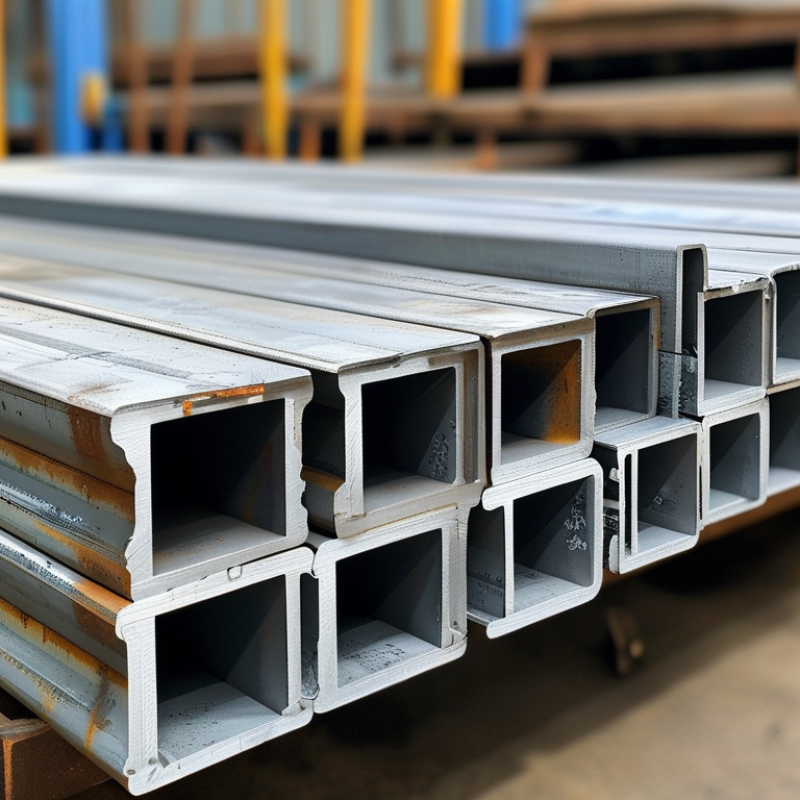
A steel square pipe is a hollow steel section with four equal sides and a closed internal cavity.
Its shape provides balanced strength for frames, supports, racks, and machinery structures. The World Steel Association reported 1,888.2 million tonnes of crude steel production in 2023. This scale supports broad global availability, but quality still varies between mills and markets.
Buyers usually classify square pipes by production method, steel grade, surface, and dimensions.
Electric resistance welded pipes are common and cost-efficient for structural applications. Seamless pipes offer better uniformity, but they usually cost more. Carbon steel suits general construction, while high-strength low-alloy steel can reduce weight.
Black surfaces are untreated, whereas galvanized surfaces resist atmospheric corrosion. Standards also matter. ASTM A500 covers many structural hollow sections, while EN 10219 addresses cold-formed welded sections.
Check yield strength, tensile strength, wall thickness, outside dimensions, and test certificates. A familiar size is not always an equivalent grade.
Tips:
Match the pipe to its real load, exposure, and joining method. Ask for mill test certificates and verify chemical composition. For outdoor use, confirm coating thickness rather than trusting “galvanized” alone. Worldsteel data describes steel volumes, not individual pipe quality. This distinction is easy to miss. Also, classification tables can oversimplify performance; welding quality, corner radius, and local tolerances may change field results. A careful buyer compares the standard, inspection level, and actual application before ordering.
In 2026, global buyers can choose from several steel square pipe types. Electric resistance welded (ERW) pipes suit frames, supports, gates, and general fabrication. Their straight seams and consistent dimensions support efficient cutting and welding. Seamless square pipes offer stronger pressure resistance, but they usually cost more and have limited size availability. Structural hollow sections, made under standards such as ASTM A500 or EN 10219, are common in buildings and industrial equipment.
Surface and material choices also affect performance. Black steel square pipe works well for protected indoor structures and can be painted after preparation. Galvanized square pipe provides zinc protection for outdoor railings, agricultural frames, and damp environments. Stainless steel square pipe resists corrosion in food, marine, and architectural applications. Buyers should confirm grade, wall thickness, outside dimensions, corner radius, and tolerance requirements before ordering. Small differences matter.
Tips: Match the pipe type to its real exposure and load. Ask for mill test certificates, dimensional inspection records, and coating thickness data. Confirm the destination standard before production. A cheaper pipe may become expensive after extra coating or rework. This is often overlooked. Also, welding conditions deserve attention; coated surfaces require proper preparation and ventilation. In practice, no single square pipe type fits every project, and initial specifications are sometimes incomplete. Revising them early is wiser than correcting a shipment later.
Common square pipe options include carbon structural hollow sections, galvanized carbon steel, weathering steel, and stainless steel. The chart compares representative minimum yield-strength values used for widely specified grades; actual values depend on the applicable standard, product condition, and mill certificate.
Material choice changes performance, cost, and service life. Carbon steel square pipe suits structural frames, machinery bases, and general fabrication. It offers good weldability when the carbon level remains controlled. Galvanized steel adds a zinc coating for outdoor exposure, but damaged edges still need attention. Stainless steel resists moisture and many chemicals, though its higher price requires a clear service reason. Weather-resistant and high-strength low-alloy grades can reduce maintenance or wall thickness. They are not interchangeable.
Grade names can mislead international buyers. One market may specify a strength class, while another emphasizes chemical limits or impact testing. Check yield strength, tensile strength, elongation, carbon equivalent, and test temperature. Request a material certificate with heat number traceability. For critical structures, independent inspection and dimensional checks are sensible. I have seen projects focus on grade labels while overlooking corner radius and actual wall thickness. That mistake can affect fit-up.
Manufacturing method also matters. Electric resistance welded pipe is efficient for common sizes and controlled production. Seamless pipe avoids a longitudinal weld, but square seamless sections are less common and often cost more. Cold forming can improve surface appearance and dimensional consistency, yet residual stress may require attention. Hot finished sections tolerate demanding forming conditions better. Verify straightness, squareness, weld quality, coating weight, and end preparation. Ask for sample measurements. Paperwork is helpful, but physical evidence is stronger. Recheck the specification.
2026 Best Steel Square Pipe Types for Global Buyers
When selecting square steel pipe, global buyers should match the standard to the application, not only the price. Structural hollow sections may follow ASTM A500, EN 10219, EN 10210, or JIS G3466. These standards are not interchangeable. Each defines different requirements for grade, manufacturing process, dimensions, and testing.
Check the outside size, wall thickness, corner radius, length tolerance, and straightness tolerance. A pipe marked 100 × 100 mm may still vary by standard. Confirm whether the section is cold-formed or hot-finished. For load-bearing frames, review yield strength, tensile strength, elongation, and impact requirements. Request a material test certificate showing heat number, chemical composition, and mechanical results. Traceability matters.
Do not overlook surface protection. Galvanized square pipe needs coating thickness, adhesion, and repair requirements. Painted or black steel requires clear information about corrosion protection and storage conditions. For welded structures, ask about weldability and carbon equivalent. This detail is often missed. I have seen buyers approve a suitable size but reject the material later because the certificate used an outdated edition. Check the current standard, destination-country requirements, and inspection method before production. Even small tolerance differences can affect assembly, so confirm drawings and sample measurements in writing.
| Steel Square Pipe Type | Main International Standards | Typical Material Grades | Common Ordering Range | Best-Fit Applications | Key Specifications Global Buyers Should Check |
|---|---|---|---|---|---|
| Cold-Formed Welded Structural Square Hollow Section | ASTM A500/A500M | Grade B, Grade C, Grade D | Commonly ordered from approximately 20 × 20 mm to 500 × 500 mm; wall thickness is often about 1.5–25 mm, depending on the mill and section size. | Steel frames, columns, trusses, platforms, agricultural structures and general fabrication. | Specified outside dimensions, wall thickness, corner radius, yield strength, tensile strength, elongation, chemical composition, weld quality, straightness and length tolerance. |
| Cold-Formed Welded Structural Hollow Section | EN 10219-1 and EN 10219-2 | S235JRH, S275J0H, S275J2H, S355J0H, S355J2H | Commonly supplied in square sizes from roughly 20 × 20 mm upward, with larger sizes and wall thicknesses available subject to production capability. | European structural steelwork, building frames, machinery supports and welded assemblies. | Nominal dimensions, thickness tolerances, impact-test temperature indicated by the grade, delivery condition, weld inspection, marking and inspection documents such as EN 10204 3.1. |
| Hot-Finished Structural Square Hollow Section | EN 10210-1 and EN 10210-2 | S235JRH, S275J0H, S275J2H, S355J0H, S355J2H | Often selected for medium and large sections or heavier wall requirements; exact limits depend on the production route and product specification. | High-load columns, long-span structures, bridges, heavy industrial frames and applications requiring improved forming or residual-stress control. | Hot-finished condition, section dimensions, wall thickness, impact properties, yield and tensile strength, corner geometry, weld requirements and certification. |
| Japanese Carbon Steel Square and Rectangular Tube | JIS G 3466 | STKR400, STKR490 | Available in a broad range of square and rectangular dimensions; the exact size and thickness must be confirmed against the applicable purchase specification. | General construction, equipment frames, supports and fabrication projects using Japanese specifications. | JIS grade, specified yield or tensile performance, dimensional tolerances, chemical limits, surface condition, length, testing and certificate format. |
| Australian and New Zealand Structural Hollow Section | AS/NZS 1163 | C250L0, C350L0, C450L0 | Square sections are commonly ordered across light, medium and heavy wall series, subject to the manufacturer’s certified size range. | Structural buildings, mining infrastructure, transport projects and outdoor steelwork in Australia and New Zealand. | Grade designation, L0 impact requirement, section size, wall thickness, weld quality, mechanical properties, batch traceability and compliance documentation. |
| Cold-Formed Structural Square Section for Chinese Specifications | GB/T 6728 | Commonly specified grades include Q235 and Q355 variants, subject to the applicable edition and purchase order. | Small to very large square and rectangular sections are available; size, thickness and tolerance tables should be confirmed before ordering. | Construction, industrial structures, machinery frames, towers and general structural fabrication. | Chinese standard edition, steel grade, yield strength, impact requirements where applicable, dimensions, corner radius, straightness, surface quality and test certificate. |
| Galvanized Steel Square Pipe | Base tube standard plus ISO 1461 or ASTM A123/A123M, as applicable to the coating and product scope | The structural grade is determined by the base tube standard; the zinc coating is specified separately. | Available in many structural sizes; coating thickness and dimensional availability must be confirmed for each section. | Outdoor structures, fencing, agricultural facilities, utility supports and moderately corrosive environments. | Base steel standard, galvanizing method, coating thickness or mass, uniformity, drainage and vent holes, adhesion, repair of uncoated areas and post-galvanizing dimensions. |
| Precision Cold-Drawn or Cold-Sized Square Tube | EN 10305-5 and other application-specific precision tube specifications | Grades such as E155, E195, E235 and E275 may be specified under the relevant EN product standard. | Generally used for smaller sections and tighter dimensional requirements than ordinary structural hollow sections. | Automotive components, hydraulic or pneumatic equipment, furniture, machine parts and precision fabrication. | Dimensional class, surface condition, roughness, delivery condition, hardness, weld seam condition, concentricity, straightness and non-destructive testing requirements. |
Selecting the right steel square pipe starts with service conditions, not catalog photos. Define load, span, corrosion exposure, temperature, and connection method. ASTM A500 and EN 10219 use different grades, tolerances, and testing practices. Do not treat them as interchangeable.
Market scale adds risk. The World Steel Association reported approximately 1.89 billion tonnes of crude steel production in 2023. The OECD’s 2024 steel market report also identified substantial global excess capacity. Cheap offers may reflect weaker traceability, not better efficiency. Specify grade, outside dimensions, wall thickness, corner radius, length, finish, tolerance, and required certificates in one purchase document.
Inspect before shipment. Match every bundle tag with the heat number and mill test certificate. Measure wall thickness at several points. Check straightness, diagonal dimensions, weld appearance, surface pitting, and coating coverage. A clean certificate is not proof of a straight pipe. Request tensile and yield tests when structural performance matters. Add independent sampling for large orders. It costs less than discovering mixed grades at the jobsite.
Source from suppliers that explain their production route and corrective-action process. Review recent inspection records, not only brochures. Confirm packing, moisture protection, marking, and destination documentation. I have learned that one overlooked tolerance can delay fabrication for weeks. The specification may still be imperfect; revise it after the first trial batch.
Build your system. Protect your boat. Join the movement.