2026 Best Onion Rings Cheese Suppliers for Global Buyers
Global buyers are entering 2026 with higher expectations for Onion Rings Cheese. They want dependable melting, clean flavor, stable supply, and practical pricing. A cheese that stretches beautifully in testing may separate after frying. That difference matters.
Juliet Harbutt, an internationally recognized cheese writer and judge, has offered a useful reminder: “Cheese is a living food.” Her observation applies strongly to coated onion rings. Milk origin, cultures, moisture, aging, shredding, and storage can change the final bite. Buyers should examine more than product photographs or attractive brochures. They need technical sheets, sample batches, allergen information, traceability records, and clear production details. Reliable suppliers should also explain minimum order quantities, lead times, packaging formats, and cold-chain requirements.
Performance comes first.
This guide reviews leading Onion Rings Cheese suppliers for international purchasing teams. It considers melt behavior, stretch, adhesion, flavor balance, frying resistance, and consistency between batches. It also looks at communication quality, export experience, and response speed when specifications change. These details can prevent costly surprises at a busy processing line.
Still, no supplier is perfect. Some offer excellent flavor but limited capacity. Others provide competitive prices but weaker customization. A practical shortlist should reflect the buyer’s equipment, target market, shipment distance, and menu positioning. Taste panels remain essential. Laboratory data helps, but it cannot fully replace a hot fryer and a real onion ring. That small test may reveal the truth.
Types of Onion Ring Cheese Products for Global Foodservice Buyers
2026 Best Onion Rings Cheese Suppliers for Global Buyers
Global foodservice buyers need more than a flavorful filling. They need stable performance from freezer to fryer. USDA Foreign Agricultural Service reported global cheese production near 23 million metric tons in 2024. This scale supports wider cheese-format choices for commercial kitchens.
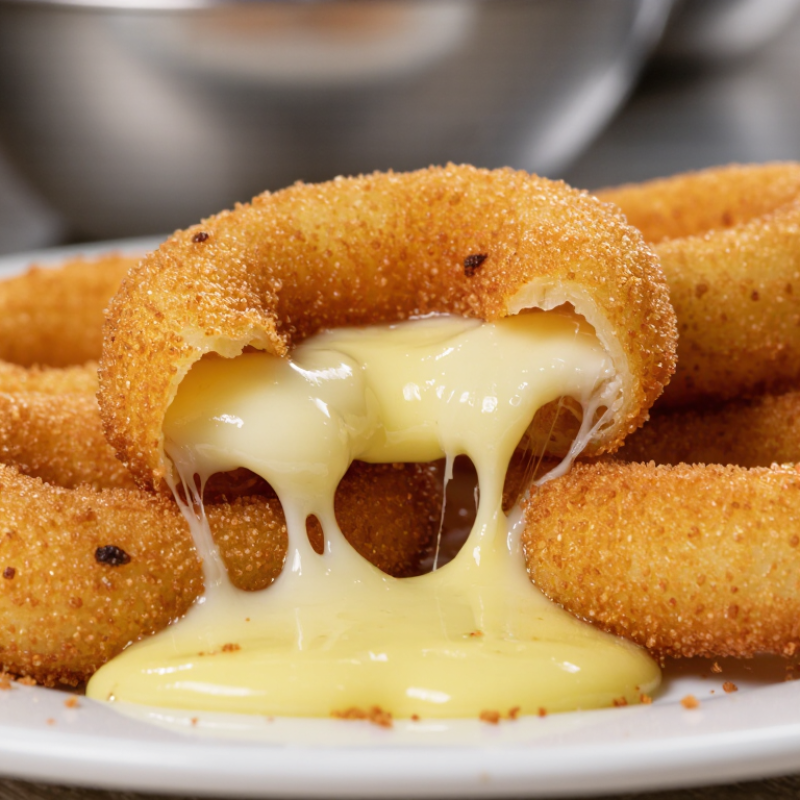
The main product type is the frozen cheese-stuffed onion ring. It usually combines sliced onion, processed cheese, and a seasoned breading. Natural cheese shreds offer a stronger dairy profile, but they can leak during frying. Processed cheese sauces provide smoother melting and better portion control. They work well inside rings or as dipping sides. Cheese-seasoned onion rings are another option. They add savory flavor without a liquid filling.
Some suppliers also offer mozzarella, cheddar-style, or blended fillings. Each behaves differently under heat. Mozzarella gives stretch. Cheddar-style fillings deliver sharper flavor. A blend may improve cost control, though the texture can feel less distinctive. Plant-based cheese fillings are growing, but their browning and melt can vary considerably. This area still needs careful testing.
Tips: Ask for cooking data, not only product photos. Test a 180–190°C fryer cycle, then hold samples for ten minutes. Check filling loss, crust color, salt level, and bite consistency. Review allergen statements and cold-chain records before approval. A common mistake is selecting the cheapest case. The better measure is usable yield per serving. Even experienced buyers can overlook that detail.
| Product Type | Cheese Component | Typical Product Form | Typical Cheese Content | Recommended Cooking Method | Typical Cooking Condition | Foodservice Application | Storage Requirement | Common Export Pack Format | Key Buyer Evaluation Points |
|---|---|---|---|---|---|---|---|---|---|
| Cheddar Cheese-Covered Onion Rings | Natural cheddar cheese or cheddar cheese preparation | Frozen breaded onion ring with a cheese layer or cheese-filled center | Approximately 5–15% cheese by product weight | Deep-frying, convection oven, or commercial air-frying | Usually cooked from frozen; final core temperature should meet local food-safety requirements | Casual dining, pubs, burger restaurants, and bar menus | Keep frozen at or below -18°C; avoid repeated thawing and refreezing | Corrugated master carton containing sealed inner bags | Cheddar flavor intensity, coating adhesion, onion ring integrity, oil pickup, and post-cook crispness |
| Mozzarella Cheese Onion Rings | Low-moisture mozzarella or mozzarella-style processed cheese | Frozen onion ring with a stretchable cheese filling | Approximately 8–20% cheese by product weight | Deep-frying or high-temperature oven cooking | Cook from frozen and monitor for cheese leakage during heating | Appetizer platters, quick-service restaurants, and sharing menus | Frozen storage at or below -18°C | Food-grade inner bag packed inside a moisture-resistant carton | Cheese stretch, controlled melt, filling distribution, breading seal, and leakage resistance |
| Blue Cheese-Flavored Onion Rings | Blue cheese, blue cheese powder, or approved cheese flavoring system | Seasoned or filled frozen onion ring with a pronounced savory profile | Often lower than 10% when cheese powder or flavoring is used | Deep-frying, oven baking, or air-frying | Cook according to the validated supplier process to protect flavor and color | Premium appetizers, gastropubs, specialty restaurants, and tasting menus | Frozen storage; protect from moisture and odor transfer | Sealed laminated bag inside an export carton | Flavor balance, aroma control, allergen declaration, color stability, and customer-market acceptance |
| Parmesan-Seasoned Onion Rings | Parmesan cheese, hard-grating cheese, or dehydrated cheese seasoning | Breaded onion ring with cheese seasoning incorporated into the crumb | Typically 1–8% cheese or cheese seasoning by product weight | Oven baking, deep-frying, or air-frying | Suitable for cooking from frozen when validated by the manufacturer | Italian-style menus, chicken restaurants, cafés, and premium side dishes | Frozen storage at or below -18°C; keep packaging tightly sealed | Retail-style inner bags or foodservice bags in master cartons | Seasoning distribution, salt level, crumb color, aroma retention, and compatibility with dipping sauces |
| Processed Cheese-Filled Onion Rings | Processed cheese made from cheese, milk ingredients, emulsifying salts, and permitted stabilizing ingredients | Uniform frozen ring with an engineered melt-resistant cheese filling | Approximately 8–25% cheese filling by product weight | Deep-frying, oven cooking, or conveyor cooking | Validated time and temperature are essential to prevent filling blowout | High-volume quick-service and contract catering operations | Frozen storage at or below -18°C | Bulk foodservice bags, commonly packed in export cartons | Portion consistency, freeze-thaw stability, melt control, cooking tolerance, and total landed cost |
| Vegan Cheese-Style Onion Rings | Plant-based cheese-style preparation, commonly based on starches, vegetable oils, protein, or nutritional yeast | Frozen onion ring with a non-dairy cheese-style center or coating | Commonly 5–20% cheese-style filling or seasoning | Deep-frying, convection oven, or air-frying | Follow the validated cooking method to maintain filling stability | Plant-based, flexitarian, institutional, and modern casual dining menus | Frozen storage at or below -18°C | Sealed inner bags with clear plant-based allergen and ingredient labeling | Dairy-free status, allergen controls, melt profile, flavor neutrality, and certification requirements |
| Gluten-Free Cheese Onion Rings | Cheese or cheese-style filling with a gluten-free coating system | Frozen onion ring coated with gluten-free crumbs or batter | Approximately 5–20% cheese or cheese-style component | Deep-frying in a dedicated fryer, oven baking, or air-frying | Use separate equipment or validated controls to reduce cross-contact risk | Healthcare catering, schools, hotels, and allergen-aware restaurants | Frozen storage at or below -18°C | Sealed foodservice bag packed in a labeled master carton | Gluten-free verification, cross-contact controls, coating durability, and regulatory labeling |
| Spicy Pepper-Jack Style Onion Rings | Pepper Jack, Monterey Jack-style cheese, chili seasoning, or jalapeño preparation | Frozen breaded ring with a spicy cheese filling or seasoned crumb | Approximately 5–18% cheese component | Deep-frying, oven baking, or air-frying | Cook from frozen according to the validated product specification | Tex-Mex menus, burger outlets, sports bars, and snack programs | Frozen storage at or below -18°C | Bulk inner bags in moisture-resistant export cartons | Heat-level consistency, pepper distribution, cheese melt, coating adhesion, and menu versatility |
| Cheese-Dusted Onion Rings | Cheese powder, whey powder, milk solids, or savory cheese seasoning | Pre-fried or frozen onion ring with dry cheese seasoning on the coating | Typically 1–6% cheese seasoning by product weight | Deep-frying, oven baking, or air-frying | Seasoning should remain attached after cooking and handling | Snack bars, cinemas, food courts, and high-throughput side-dish programs | Frozen storage; protect from humidity and condensation | Heat-sealed foodservice bags inside corrugated cartons | Seasoning adhesion, dust control, salt level, flavor consistency, and packaging moisture barrier |
| Stuffed Onion Ring Bites with Cheese | Cheddar, mozzarella, processed cheese, or blended cheese filling | Small portion-controlled onion ring bites or snackable pieces | Approximately 10–25% cheese filling by product weight | Deep-frying, oven cooking, or air-frying | Cook from frozen; allow a short standing time before serving when specified | Buffets, catering, children’s menus, appetizers, and grab-and-go service | Frozen storage at or below -18°C | Bulk foodservice bags with count or weight declaration | Piece count accuracy, bite-size consistency, filling retention, holding time, and serving yield |
| Pre-Fried Cheese Onion Rings | Natural cheese or processed cheese preparation with a pre-fried breading system | Partially cooked, frozen, breaded onion ring | Approximately 5–20% cheese component | Final frying, oven finishing, or air-frying | Designed to shorten kitchen preparation time; exact settings require product validation | High-volume restaurants, hotels, catering kitchens, and central kitchens | Frozen storage at or below -18°C | Bulk inner bags in export-ready cartons | Preparation speed, crispness after holding, oil absorption, carton yield, and labor savings |
| Halal-Certified Cheese Onion Rings | Cheese or cheese-style preparation manufactured under applicable halal controls | Frozen breaded, filled, or seasoned onion ring | Varies by recipe; commonly 5–20% cheese component | Deep-frying, oven baking, or air-frying | Use the validated cooking process and prevent cross-contact in shared kitchens | Middle Eastern, Southeast Asian, hotel, airline, and international foodservice | Frozen storage at or below -18°C | Sealed bags with certification and ingredient documentation | Current certification, ingredient traceability, flavor suitability, export documentation, and shelf life |