2026 Best Birch Plywood Types for Global Buyers
Choosing the right Birch Plywood in 2026 requires more than comparing price lists. Global buyers must examine veneer quality, core construction, bonding performance, surface grades, and moisture resistance. A clean-looking panel can still hide gaps, uneven plies, or weak glue lines. Those details matter during cutting, machining, transport, and installation.
Dr. Volodymyr Bekhta, a recognized wood-composites researcher, offers a useful principle: “Plywood performance depends on veneer quality, bonding, and moisture exposure.” This view helps buyers assess more than appearance. Birch Plywood made from carefully peeled veneers usually provides a dense, stable structure. However, performance changes with adhesive type, pressing conditions, thickness tolerance, and storage practices. A label alone proves little.
This guide compares the main Birch Plywood types for international purchasing. It considers BB/BB, S/BB, CP/CP, film-faced, flexible, and structural grades. It also explains where interior, furniture, transport, construction, and demanding industrial panels fit best. Buyers should request technical datasheets, test reports, FSC or PEFC documentation when needed, and clear information about EN 636 or equivalent classifications. Check the edges closely. Small voids often reveal larger production problems.
There is no universal “best” panel. That claim sounds convenient, but it is incomplete. A furniture maker may value a smooth face, while a construction buyer needs verified durability. Even experienced purchasers can overlook humidity during ocean shipping. Careful sampling remains essential. This overview provides a practical starting point, while reminding buyers to confirm specifications with the manufacturer before placing large orders.
Birch Plywood Basics: Structure, Grades, and Core Characteristics
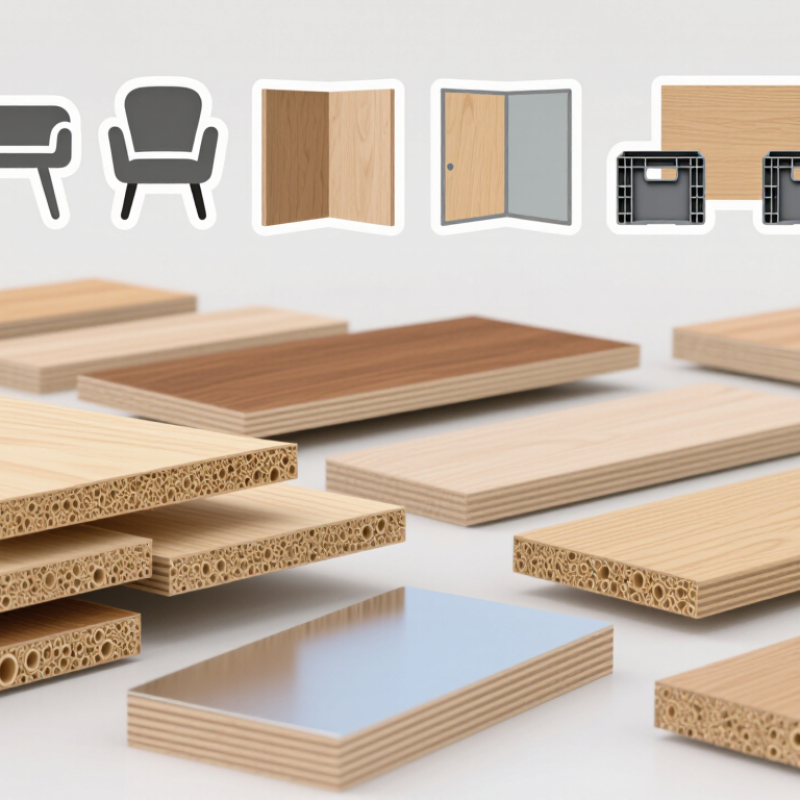
Birch plywood is built from thin birch veneers, layered with alternating grain directions. This cross-banded structure improves strength and limits warping. The panel usually has a pale surface, fine texture, and consistent machining performance. Its edges reveal the real story: many compact layers, few visible gaps, and even thickness.
Grades describe appearance, not complete performance. Common face grades include B, BB, and CP, but definitions can vary between suppliers and regions. B faces usually allow fewer repairs, while BB may contain small patches and natural defects. CP faces permit more visible repairs. A high face grade does not guarantee a strong core. Check veneer thickness, voids, bonding quality, moisture content, and thickness tolerance. I have seen attractive sheets fail during machining because the inner layers were weak. Grade names are useful, but not universal.
Tips: Ask for the full grading standard and production specification. Request samples, test reports, and photos of the panel edges. Check whether the adhesive suits interior, humid, or exterior conditions. Confirm formaldehyde-emission requirements for the destination market. Also inspect the actual batch, not only a showroom sample. Small defects matter. For furniture, smooth faces and stable thickness may matter most. For structural applications, core integrity and certified performance deserve greater attention.
Key Quality Factors for Comparing Birch Plywood Products
For global buyers, birch plywood quality starts with the wood inside, not only the visible surface. A smooth face may hide core gaps, overlaps, or uneven veneer joints. Inspect the panel edge under clear light. Consistent layers should appear tight and parallel. Thickness tolerance also matters, especially for CNC cutting, furniture assembly, and laminated parts. A small variation can create visible steps between panels.
Bonding performance deserves careful attention. Ask for the adhesive class, pressing conditions, and relevant test reports. Moisture-resistant panels should not be confused with fully weather-exposed products. Their intended service environment must match the specification. Formaldehyde emissions, moisture content, density, and bending strength are useful comparison points. Independent laboratory results are more reliable than vague claims on a product sheet.
Surface grading affects both appearance and processing cost. Check for repaired knots, color variation, open defects, and veneer patches. Grade names can differ between suppliers, so request physical samples and written grading rules. Packaging is another practical factor. I have seen good panels arrive with damaged corners after weak stacking and poor edge protection. That part is easy to underestimate. Buyers should record inspection results, batch numbers, and storage conditions. Even careful evaluation has limits; one sample cannot represent every shipment, and this is where purchase specifications need refinement.
Global Standards, Certifications, and Import Requirements
For global buyers, birch plywood selection starts with compliance, not appearance. ISO 12465 defines plywood requirements, while EN 13986 supports construction-panel use in European markets. Buyers should request test reports for bonding strength, thickness tolerance, moisture resistance, and formaldehyde emissions. E1 classification is commonly verified under EN 717-1. In the United States, TSCA Title VI or CARB Phase 2 documentation may be required for composite wood products. Requirements differ by destination, and assumptions can be expensive.
The FAO Global Forest Resources Assessment 2020 recorded about 4.06 billion hectares of forest worldwide. That figure does not prove responsible sourcing. Ask for valid FSC or PEFC chain-of-custody evidence, supplier certificates, and invoice-level material traceability. Import files usually include the commercial invoice, packing list, bill of lading, country-of-origin statement, and correct HS classification, often within heading 4412. Wooden pallets and crates may require ISPM 15 treatment marks. Some customs authorities request extra evidence. Check before loading.
Tips: Compare the certificate scope with the actual factory and product grade. A valid certificate can still cover another site. Keep recent laboratory reports, not screenshots. Request batch numbers, veneer species, adhesive type, and production date. Edge gaps and core overlaps deserve inspection; paperwork alone cannot reveal them. The UNECE/FAO Forest Products Annual Market Review shows that wood-product trade remains sensitive to transport costs and regional demand. Pricing looks clear, sometimes it is not. Recheck documents before payment and again before customs clearance.
2026 Best Birch Plywood Types for Global Buyers
Global compliance checkpoints for birch plywood imports. A value of 1 means the checkpoint is commonly relevant in that market; 0 means it is not a universal requirement. Applicability depends on product use, construction claims, packaging, and local exemptions.
Buyer note: EN 636 and EN 13986 are commonly referenced for European construction applications; PS 1 or PS 2 may apply to structural plywood in the United States; CSA O121 may apply in Canada. TSCA Title VI and CANFER address composite-wood formaldehyde emissions. FSC and PEFC are voluntary chain-of-custody certifications, while ISPM 15 applies to qualifying solid-wood packaging rather than plywood panels themselves.
How to Select and Source Birch Plywood in 2026
Choosing birch plywood in 2026 starts with the end use, not the lowest quote. Furniture makers often prefer BB/BB or better faces for visible panels. Construction buyers may choose lower face grades when strength matters more than appearance. Birch plywood offers uniform layers, clean machining, and reliable screw holding. Yet quality varies sharply between mills.
Check thickness tolerance, veneer core gaps, surface repairs, and panel flatness. Ask for recent test reports covering bonding strength, moisture resistance, and formaldehyde emissions. Requirements differ by destination, so confirm the importing country’s standards before payment. A sample should survive cutting, sanding, and edge inspection. One mistake is trusting photographs. They hide warping.
Source through suppliers with traceable production records and clear batch identification. Request the wood species, adhesive class, grade definition, and inspection method in writing. Compare total landed cost, including packaging, port handling, duties, and possible claims. Factory audits or independent pre-shipment inspections add useful evidence. I have learned that fast replies do not always mean dependable production. Allow time for retesting when results look unusually perfect.
Tips: Start with a small trial order. Measure ten random sheets, not one. Store panels flat and dry after arrival. Record defects with photos and batch numbers. If a supplier avoids technical questions, pause before scaling the purchase. Consider local climate, because a panel performing well in a dry warehouse may react differently near tropical ports.